Should You Use Your Personal Cell or a Business Number?
When you start a pool route, the phone is the cheapest decision you never think about and the most expensive one to undo. Most new pool pros hand out their personal cell number because it is free and already in their pocket. It works, right up until the day it does not: your kids answer a customer call, a lead texts at 9pm and expects you personally, or three years in you try to sell the route and realize the business phone number is your phone number.
This guide breaks down the real trade-offs between running on a personal number and setting up a dedicated business line, when each one makes sense, and how solo operators get a professional number today without carrying a second phone or paying for an office system they do not need yet.
Corey Adams, Pool Founder co-founder and 15-year pool service veteran: "The phone number is where the calls come in, so when you sell a route, the buyer wants it with everything else. If that number is your personal cell, you cannot hand it over. Set up a business number on day one, even if all it does at first is forward to your phone. It costs almost nothing and it saves you a headache later."
What Does a Personal Number Actually Cost You?
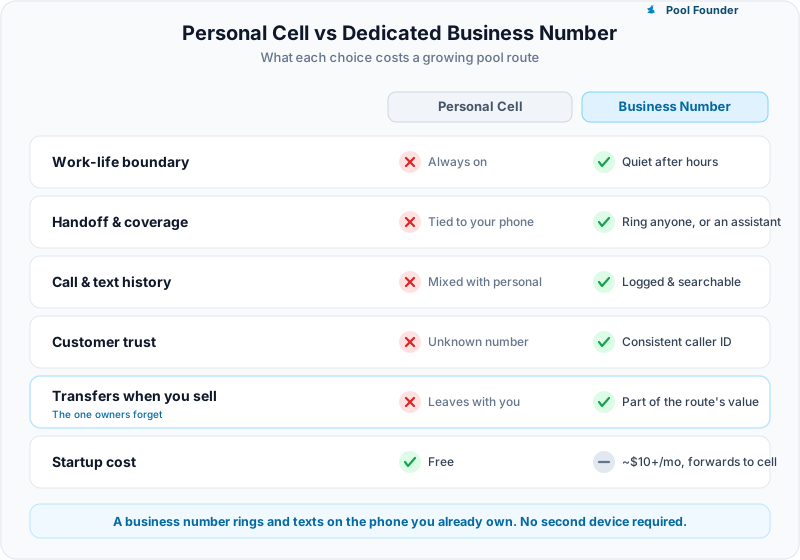
A personal number feels free because there is no line item for it. The costs are real, they are just hidden in missed calls, blurred boundaries, and a number you cannot sell. Here is where it quietly leaks money and time as your route grows.
- No off switch. When your cell is the business line, every dinner, every day off, and every family vacation is interruptible. Burnout is the number one reason solo pool pros quit before year three.
- You cannot hand it off. The day you hire a helper, add a spouse to answer calls, or take a vacation, there is no way to route the business phone to someone else. It lives and dies on your handset.
- No call tracking. You cannot separate business calls from personal ones, so you have no idea how many leads you missed, how many came from the yard sign versus the website, or what your busiest hours are.
- It is not an asset. A business phone number transfers with the company when you sell. A personal number does not, which quietly lowers what a buyer will pay for your route.
- Privacy and safety. Once your personal number is on 200 doorhangers, it is public forever. You cannot un-ring that bell.
The resale point catches almost every solo operator off guard. In a business sale, the phone number is treated as part of "enterprise goodwill," the intangible value that transfers to the buyer along with the customer list, the name, and the location. A personal cell number is tied to you, not the business, so it walks out the door with you and takes a slice of the sale value with it. (More on what a route is worth in our guide to buying and selling pool routes.)
Does a Business Number Really Help You Win More Jobs?
The professionalism argument is easy to wave off as vanity. It is not. Buyers judge a service company by how easy and safe it feels to contact, and an unknown personal cell number is neither. Consumers have become deeply wary of calls and texts from numbers they do not recognize.
75%
of Americans say they never answer calls from unknown numbers, largely out of fear of spam and scams
Source: Transaction Network Services (TNS) Robocall Survey
That statistic cuts both ways for a pool pro. When you call a lead back from a random personal cell, they may not pick up. When you text a quote from a number they cannot verify, it can read like spam. A consistent business number that appears on your website, your invoices, your truck, and your caller ID gives customers something to recognize and trust. It is the difference between "who is this?" and "oh, that is my pool guy." (For how to handle those calls once they pick up, see our pool service phone scripts guide.)
A Business Number Also Unlocks Things a Cell Cannot
- Texting at scale. A proper business line lets you text appointment reminders, on-my-way alerts, and quotes as your company, with a record you can look back on. Customers overwhelmingly prefer a text over a voicemail.
- Call and text history. Every conversation is logged and searchable, so a "you never told me that" argument is settled in seconds.
- Handoff and coverage. Calls can ring you, then a helper, then an answering service or AI assistant, so a ringing phone is never a lost lead just because you are under a pump.
- Separation of work and life. When the workday ends, the business line can go quiet without you turning off your personal phone.
When Is a Personal Number Actually Fine?
This is not an argument that you need an office phone system on week one. For a brand-new operator servicing a handful of pools, the personal cell is a reasonable starting point while you validate that this is a real business. The mistake is staying there too long. Here is a rough line to draw.
| Stage | Pools | Reasonable Setup |
|---|---|---|
| Testing the waters | 0-10 | Personal cell is fine, but reserve a business number now so it is on your first sign and invoice |
| Real side hustle | 10-40 | Dedicated business number that forwards to your cell; start texting customers from it |
| Going full-time | 40-80 | Business line with call/text history and a plan for who answers when you cannot |
| Team and beyond | 80+ | Business line with routing, coverage, and after-hours answering so no lead is missed |
The cheapest move is to claim a dedicated business number on day one and simply forward it to your personal cell. It costs almost nothing, it is the number that goes on everything public, and when you are ready to add staff, texting, or an answering service, you are not re-printing signs, re-doing truck magnets, and asking 150 customers to save a new number.
How Do You Get a Business Number Without a Second Phone?
The old objection was "I do not want to carry two phones." You do not have to. Every option below gives you a separate business number that can ring or text right on the phone you already own. They differ in what happens when you cannot answer, and how much of the work they do for you.
| Option | Best For | Rough Cost | What You Get |
|---|---|---|---|
| Google Voice | Solo operators who just want a separate number | $10/month | A second number that forwards to your cell, basic voicemail and texting |
| VoIP app (business phone service) | Small teams sharing a line | $15-$30/user/month | Business number, call routing, shared inbox, auto-attendant |
| Answering service / virtual receptionist | No office staff but cannot miss calls | $100-$300/month | A live person answers with your script when you cannot |
| Pool software with a built-in business line + AI assistant | Pool pros who want the number tied to their route data | Varies | Business number, texting, and an AI assistant that answers when you cannot, all next to your customers and schedule |
The last row is the newest and, for a pool business, often the most useful. A business line that lives inside the same software you already use to run routes and invoicing means every call and text is attached to the right customer automatically. This is exactly what Pool Founder's built-in business line and AI assistant does: you get a dedicated business number, texting, and an AI assistant that answers when you cannot, reads from your own website and pricing, and books or captures the lead instead of dropping it to voicemail. That matters because most callers who hit voicemail do not leave a message and do not call back.
80%
of people who reach a business voicemail hang up without leaving a message
Source: Ambs Call Center
Whatever you choose, keep the number portable and yours. Ask any provider whether you can take the number with you if you leave, and whether it transfers cleanly if you sell the business. A business number is only an asset if you actually control it.
What Should a New Pool Pro Do This Week?
You do not need to solve your entire phone strategy today. You need to stop putting a number on public material that you will regret in two years. Here is the short list.
- 1Claim a dedicated business number now, before it goes on your first sign, magnet, or invoice.
- 2Forward it to your personal cell so nothing changes about how you answer, day one.
- 3Start texting customers from the business number, not your personal one, so the relationship lives on the business line from the start.
- 4Have a plan for calls you cannot take: an auto-text, an answering service, or an AI assistant, so a ringing phone is never a lost customer.
- 5Keep it portable. Confirm you can move the number and that it transfers if you ever sell the route.
A business number is one of the few startup decisions that is cheap to get right and expensive to fix later. Set it up before the first yard sign goes out, and every call, text, and eventual buyer will land where it should: on the business, not on you.
Ready to streamline your pool service business?
Pool Founder gives you route optimization, automated invoicing, chemical tracking, and everything else you need to run a more profitable pool business.
Frequently Asked Questions
Do I really need a business phone number if I only service a few pools?
You can start on your personal cell while you validate the business, but you should reserve a dedicated business number before it goes on any public material — your first sign, invoice, or truck magnet. Forwarding it to your cell costs almost nothing and saves you from re-branding everything and asking customers to save a new number once you grow.
Can I get a business number without carrying a second phone?
Yes. Options like Google Voice, VoIP apps, and pool software with a built-in business line all give you a separate business number that rings and texts on the phone you already own. You keep one device; customers just see a professional, consistent number.
Why does a business phone number matter when selling a pool route?
In a business sale, the phone number is part of enterprise goodwill — the intangible value that transfers to the buyer along with the customer list and company name, because that is where the calls come in. A personal cell number is tied to you, not the business, so it cannot transfer and can lower what a buyer will pay for the route.
Is texting customers better from a business number?
Yes. A business line lets you send appointment reminders, on-my-way alerts, and quotes as your company, with a searchable history of every conversation. Consumers are wary of texts from unknown personal numbers, so a consistent, recognizable business number gets read and trusted more often.
What happens to calls I cannot answer while I am servicing a pool?
That is the whole reason to think past a bare personal cell. Set up a fallback: an automatic text reply, a virtual receptionist, or an AI assistant that answers and captures the lead. Most callers who reach voicemail hang up without leaving a message and simply call the next company, so silent voicemail is the fastest way to lose a booked customer.
Sources & References
- TNS Survey — 75% of Americans Will Never Answer Calls from Unknown Numbers
- Pew Research Center — Most Americans don’t answer cellphone calls from unknown numbers
- Ambs Call Center — The Cost of a Missed Call: Small Businesses
- Windes — Valuing Goodwill: Understanding Personal vs. Enterprise Goodwill
- Porte Brown — Goodwill: Personal or Business, and Why Does It Matter?