Why Does Northeast Pool Winterization Require a Different Standard?
Pool winterization in the Northeast is not optional, and it is not the same as winterization anywhere else. From Connecticut to upstate New York, from New Jersey to Massachusetts, nighttime temperatures regularly drop below 0 degrees F, sustained freezes last weeks or months, and ice formation extends well below the frost line. A single incompletely cleared return line can freeze, crack the PVC underground, and create a repair bill of $1,500 to $5,000 that surfaces when the pool opens in spring. Northern companies charge $350 to $600 per closing because the process demands industrial-grade equipment, higher antifreeze volumes, and a level of thoroughness that companies in mild climates never face.
This guide covers the specific blowout procedures, timing decisions, verification methods, and pricing strategies for pool service companies operating in the Northeast. The techniques and standards reflect USDA hardiness zones 4 through 6, where the average first freeze falls between September 25 and October 31 depending on location and elevation, per NOAA historical climate data.
Corey Adams, Pool Founder co-founder and 15-year pool service veteran, operated in a seasonal market before moving to the Sunbelt. His approach to winterization: "You never regret being too thorough. You always regret the line you thought was clear but was not."
When Should Northeast Pool Companies Schedule Closings?
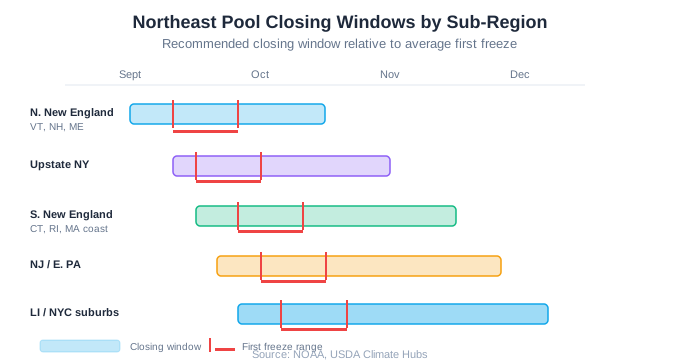
Timing your closing schedule is a balance between two risks. Close too early and you leave warm water under a cover for weeks, creating an algae problem that increases spring opening work. Close too late and an early freeze catches unprotected plumbing. The target window for Northeast pool closings is when water temperature drops consistently below 65 degrees F and before nighttime air temperatures reach 32 degrees F.
| Sub-Region | Average First Freeze | Recommended Closing Window | Peak Booking Period |
|---|---|---|---|
| Northern New England (VT, NH, ME) | Sept 25 - Oct 10 | Sept 15 - Oct 15 | Sept 20 - Oct 5 |
| Upstate New York | Oct 1 - Oct 15 | Sept 25 - Oct 20 | Oct 1 - Oct 10 |
| Southern New England (CT, RI, MA coast) | Oct 10 - Oct 25 | Oct 1 - Oct 30 | Oct 5 - Oct 20 |
| New Jersey / Eastern PA | Oct 15 - Nov 1 | Oct 5 - Nov 10 | Oct 10 - Oct 25 |
| Long Island / NYC suburbs | Oct 20 - Nov 5 | Oct 10 - Nov 15 | Oct 15 - Nov 1 |
Book your closing calendar before Labor Day. Customers who wait until the first frost warning are calling every pool company in the area, and you will not be able to serve everyone. A pre-booking system where annual customers are automatically scheduled based on their zone and your route flow is the most efficient approach. Charge a late-season surcharge of 15-25% for closings booked after your recommended window.
Monitor NOAA 10-day forecasts starting October 1. If an early freeze is predicted, move up closings for pools that are not yet winterized. A customer whose pool freezes before you close it will hold you responsible even if they booked a later date.
What Blowout Equipment Do Northeast Companies Need?
Northeast winterization requires commercial-grade air compressors, not the shop-vac-and-hope approach that works in the Mid-Atlantic. Underground plumbing in the Northeast must be cleared completely because freeze cycles are too long and temperatures too low for any residual water to remain safely. The equipment investment pays for itself after 10 to 15 closings.
Required Equipment
- Air compressor: Minimum 5 CFM at 50 PSI sustained output. A 6 to 8 CFM unit is ideal for pools with long pipe runs or multiple return lines. Pancake and small portable compressors are insufficient.
- Compressor-to-plumbing adapters: 1.5-inch and 2-inch threaded adapters that connect the compressor hose to the skimmer port and return manifold. Carry both sizes.
- Expansion plugs: Rubber or threaded winter plugs for every return jet, skimmer, and open pipe. Carry extras in multiple sizes. A #9 and #10 rubber plug fits most residential return fittings.
- Gizzmo or skimmer guard: Absorbs ice expansion inside the skimmer to prevent cracking. One per skimmer.
- Pool antifreeze: Non-toxic propylene glycol. Budget 3 to 5 gallons per standard residential pool in the Northeast.
- Teflon tape: For threaded expansion plugs. Ensures a tight seal that will not loosen over winter.
A dedicated winterization setup costs $800 to $1,500 for the compressor, adapters, and a season supply of plugs and antifreeze. At $400 per closing, you recoup the equipment cost in 3 to 4 jobs. Companies doing 50 or more closings per season should consider a truck-mounted compressor for faster setup and teardown between stops.
How Do You Confirm All Lines Are Fully Clear?
The line blowout is only as good as your verification. Compressed air can bypass water pockets in pipe bends, low spots, and tees, creating the illusion that a line is clear when trapped water remains. In the Northeast, where freeze cycles last months, even a small pocket of water will freeze and damage the pipe. Verification separates a professional closing from a homeowner attempt.
Verification Methods
- 1Visual confirmation at every return: Blow each return line individually and watch for steady, continuous air bubbles at the jet for at least 30 seconds after the initial water discharge clears. If bubbles are intermittent, water remains.
- 2The volume test: After blowing a line, cap the return with your hand and feel for pressure buildup. If the compressor builds pressure quickly, the line is clear. If it takes a long time to pressurize, water is absorbing the air volume.
- 3Sound check: A clear line produces a sharp, consistent hiss at the return. A line with trapped water produces a gurgling or burbling sound. Experienced techs can tell the difference by ear.
- 4Main drain verification: The main drain cannot be fully cleared in most pools because it sits below water level. After blowing as much water as possible, add double the standard antifreeze volume to the main drain line. The antifreeze displaces any remaining water.
- 5Re-blow after 5 minutes: After the initial blowout, wait 5 minutes and blow each line again. Water trapped in bends and low spots will settle during the pause. If significant water comes out on the second pass, you were not done.
The 5-minute re-blow is the single most effective verification technique. Water trapped in pipe bends drains back to low spots after the initial blowout. A second pass catches what the first one missed. Make this standard practice for every Northeast closing.
What Northeast-Specific Steps Are Often Missed?
Beyond the standard closing procedure, Northeast pools have specific vulnerabilities that companies in milder climates never encounter. Missing any of these steps creates spring damage that your company will be held responsible for.
Commonly Missed Steps
- Heater heat exchanger drain: Many heaters have small drain plugs in locations that are not obvious. A heater with a frozen heat exchanger costs $800 to $2,000 to replace. Check the manufacturer manual for every drain point.
- Slide valve or check valve drain: Water trapped inside a closed slide valve or check valve freezes and cracks the valve body. Open or remove these valves after the blowout.
- Spa spillover line: Pools with attached spas have a spillover line between the spa and pool that holds water. This line must be blown separately.
- Water feature plumbing: Deck jets, bubblers, laminar jets, and waterfall lines all hold water. Each must be blown and plugged individually.
- Equipment pad drainage: In the Northeast, standing water on the equipment pad freezes into ice sheets that can damage pipe connections and shift equipment. Ensure the equipment pad drains properly.
- Safety cover anchor inspection: Brass anchors recessed into the deck can fill with water and freeze, popping the anchor out of the concrete. Flush anchors and insert spring caps after the cover is tensioned.
Create a specific winterization addendum for every pool that has a heater, salt cell, automation, spa, or water features. These pools take longer, cost more in materials, and have more failure points. Price accordingly.
How Should Northeast Companies Price Winterization Services?
Winterization pricing in the Northeast should reflect the actual labor time, material cost, and liability risk of the service. Underpricing closings is one of the most common mistakes seasonal pool companies make because they treat winterization as a commodity service rather than a high-skill, high-stakes job. A cracked line from an incomplete closing creates a repair bill that far exceeds the closing fee.
| Pool Type | Recommended Price Range | Materials Cost | Labor Time |
|---|---|---|---|
| Standard residential (up to 20K gal) | $350 - $450 | $30 - $50 | 60-75 min |
| Large residential (20K-40K gal) | $400 - $550 | $40 - $70 | 75-90 min |
| Residential with spa + heater | $450 - $600 | $50 - $80 | 90-120 min |
| Complex (automation, salt, water features) | $550 - $750 | $60 - $100 | 90-120 min |
| Commercial / HOA | $800 - $1,500+ | $100 - $200+ | 2-4 hours |
Pricing Add-Ons
- Safety cover installation (if not included): $75 - $150
- Extra antifreeze beyond standard allocation: $10 - $15 per gallon
- Salt cell removal and cleaning: $50 - $75
- Late-season surcharge (after recommended window): 15-25% premium
- Cover cleaning and storage: $50 - $100
Offer a bundled opening and closing package at a 10-15% discount. This locks in both services, improves customer retention, and gives you a predictable fall and spring calendar. A pool that you close is a pool you are more likely to open, and vice versa.
How Do You Handle Spring Damage Claims from Winter Closings?
When spring arrives and a customer reports cracked plumbing, a burst pump housing, or a fractured heater core, the immediate assumption is that you did not close the pool correctly. How you handle these situations determines whether you pay for the repair, your insurance covers it, or you successfully demonstrate the damage was not caused by your work.
Documentation That Protects You
- Pre-closing equipment condition photos: Photograph all equipment before winterization. Existing cracks, corrosion, or wear are documented before your work begins.
- Line blowout completion log: Record which lines were blown, verification method used, and confirmation of air flow at each return.
- Antifreeze volume log: Document exactly how many gallons were applied and to which lines.
- Equipment drain plug log: Record which plugs were removed and where they were stored.
- Cover installation photos: Show the cover properly secured at departure.
If a customer reports damage, inspect the pool before spring opening. Determine whether the damage is consistent with freeze damage (cracked pipe, split housing) or could have another cause (ground shift, rodent damage, equipment failure from age). If the damage is freeze-related and your documentation shows a thorough closing, report the claim to your GL carrier and let them investigate.
Your service agreement should include a clause stating that winterization reduces but does not eliminate freeze risk, and that you are not responsible for damage caused by extreme weather events beyond the design parameters of standard winterization procedures.
Run a pool route?
The business side of what you just read.
Pricing, chemical costs, and the tools owners use to keep the numbers straight.
- Commercial pool service pricing2026 rate tables and the cost-plus formula
- Chemical cost per poolWhat chemicals actually cost per stop
- Chemical tracking softwareLog readings and dosing from the pool deck
- Pool service softwareRoutes, invoicing, and service reports in one app
- Free profit & rate calculatorsProfit per pool, minimum rate, break-even
Frequently Asked Questions
When should I close pools in the Northeast?
Schedule closings when water temperature drops below 65 degrees F and before nighttime air temperatures reach 32 degrees F. In the Northeast, that typically means October 1 through November 15 depending on your sub-region. Northern New England closes earliest, Long Island and southern Connecticut close latest.
What size air compressor do I need for pool winterization?
A minimum of 5 CFM at 50 PSI sustained output. A 6 to 8 CFM unit is ideal for pools with long pipe runs. Pancake compressors and shop vacuums are insufficient for Northeast winterization where complete line clearance is critical.
How much antifreeze do Northeast pools need?
Budget 3 to 5 gallons of non-toxic propylene glycol pool antifreeze per standard residential pool. Apply 1 gallon per 10 feet of pipe, and double the volume for the main drain line. Cost is $8 to $12 per gallon.
How much should I charge for pool winterization in the Northeast?
Standard residential closings range from $350 to $450. Pools with spas and heaters run $450 to $600. Complex pools with automation and water features go $550 to $750. Commercial pools start at $800 and go up based on size and equipment.
Am I liable if a pool I closed has freeze damage in spring?
Potentially, if the damage resulted from an incomplete closing. Thorough documentation including blowout verification, antifreeze logs, equipment photos, and drain plug records is your defense. Your service agreement should note that winterization reduces but does not eliminate freeze risk.