Why Does a Professional Pool Closing Require a Standardized Checklist?
A professional pool closing is the mirror image of a spring opening, and in many ways it is more consequential. A missed step during opening creates a callback. A missed step during closing creates freeze damage that costs $2,000 to $15,000 to repair, specifically cracked plumbing, burst pump housings, split filter tanks, and fractured heater cores. Professional closing costs range from $200 to $500 per pool according to Angi 2026 data, with most companies charging $300 to $400 for a standard in-ground pool. At 4 to 6 closings per tech per day during peak season, this is a high-volume, high-margin service window that demands precision.
This checklist is built for the pool service company running closing crews through October and November, not the homeowner closing one pool. It covers the full professional sequence: water chemistry adjustment, water level reduction, line blowout, equipment winterization, antifreeze application, chemical treatment, and cover installation. Each phase is in the order it should be performed, with specific checks that protect both the pool and your reputation.
Pool closings should be scheduled before nighttime temperatures consistently drop below 32 degrees F. In the Northeast, that typically means mid-October through mid-November. In the Mid-Atlantic, late October through early December. Closing too early means algae growth under the cover from warm water. Closing too late means risking freeze damage to lines and equipment.
What Is the Correct Sequence for a Professional Pool Closing?
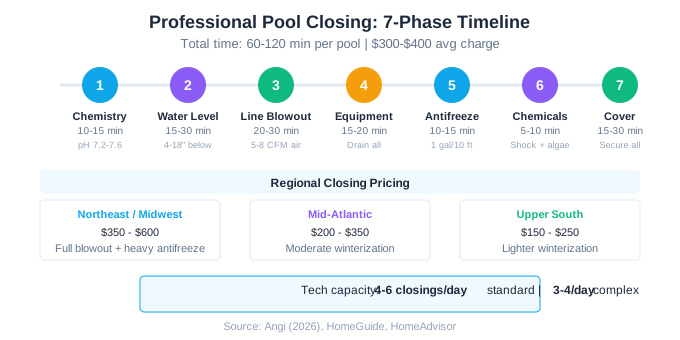
A professional pool closing follows a 7-phase sequence: final chemistry adjustment, water level reduction, plumbing blowout, equipment winterization, antifreeze application, winterizing chemical treatment, and cover installation. The sequence matters because each phase depends on the one before it. You need the pump running to circulate final chemistry. You need the water lowered before blowing lines. You need lines blown before adding antifreeze.
| Phase | Time Estimate | Key Metric |
|---|---|---|
| 1. Final chemistry adjustment | 10-15 min | pH 7.2-7.6, alkalinity 80-120 ppm |
| 2. Water level reduction | 15-30 min | 4-18 inches below skimmer depending on cover type |
| 3. Plumbing blowout | 20-30 min | Air visible at all return jets, clear bubbles |
| 4. Equipment winterization | 15-20 min | All equipment drained, plugs removed |
| 5. Antifreeze application | 10-15 min | 1 gallon per 10 feet of pipe |
| 6. Winterizing chemical treatment | 5-10 min | Shock, algaecide, and enzyme treatment |
| 7. Cover installation | 15-30 min | Cover secure, water bags or anchors in place |
Total time per closing ranges from 60 to 120 minutes depending on pool size, equipment complexity, and condition. Standard residential pools with basic equipment and mesh covers fall toward the shorter end. Large pools with heaters, salt systems, automation, and solid covers push toward two hours. Consistent tracking of closing times helps you price accurately and schedule your fall calendar.
How Should You Handle Final Chemistry Before Closing?
Final chemistry adjustment is the first step because it requires pump circulation and sets the pool up for a clean winter. Water that is balanced at closing stays clearer under the cover, reduces spring opening work, and prevents surface damage during the months the pool sits idle.
Target Ranges for Closing Chemistry
| Parameter | Target Range | Why It Matters |
|---|---|---|
| pH | 7.2 - 7.6 | Prevents surface etching or scaling over winter |
| Total alkalinity | 80 - 120 ppm | Buffers pH stability through winter |
| Calcium hardness | 200 - 400 ppm | Prevents plaster damage from aggressive water |
| Free chlorine | 3.0 - 5.0 ppm (pre-shock) | Starting sanitizer before shock treatment |
| CYA (stabilizer) | 30 - 50 ppm | Protects residual chlorine through fall |
Adjust chemistry 24 to 48 hours before the closing appointment if possible. This allows chemicals to fully circulate and dissolve. If you are adjusting and closing in the same visit, add chemicals with the pump running for at least 30 minutes before proceeding to the blowout phase.
Do not add shock during the chemistry adjustment phase. Shock is applied after the blowout, as part of the winterizing chemical treatment. Adding shock before blowing lines wastes product because you are about to lower the water level and displace water from the plumbing.
How Do You Properly Blow Out Pool Lines?
The line blowout is the most critical step in winterization. Water left in underground plumbing expands when it freezes and cracks PVC pipes, which are buried under decks and patios where repairs cost $500 to $3,000 or more. A commercial air compressor rated at 5 to 8 CFM at 50 to 80 PSI is required. Shop vacuums and leaf blowers do not produce sufficient sustained pressure to clear long runs of pipe.
Line Blowout Procedure
- 1Lower water level 4 to 6 inches below the skimmer mouth for mesh covers, or 12 to 18 inches below for solid covers that will collect rainwater and snowmelt.
- 2Disconnect the pump from the plumbing or remove drain plugs to allow air to enter the system.
- 3Connect the compressor to the skimmer line using a threaded adapter or rubber coupling.
- 4Blow air through the skimmer line until you see steady air bubbles at the main drain or through the returns. Hold pressure for 30 to 60 seconds after visible bubbles appear.
- 5Move to each return line individually. Blow until air is visible at the return jet, then immediately plug the return with a threaded expansion plug or rubber winter plug.
- 6Blow the main drain line last. You cannot fully clear the main drain in most pools, which is why antifreeze is critical for this line.
- 7Blow through the skimmer line one final time, then install a Gizzmo or skimmer guard in the skimmer to absorb ice expansion.
Never exceed 25 PSI of sustained pressure on PVC pool plumbing. Higher pressure can blow fittings, crack old PVC, or damage underground joints. Use the compressor volume (CFM) to move water, not pressure.
How Do You Winterize Pool Equipment?
Every piece of pool equipment that holds water must be drained before freezing temperatures arrive. Water trapped in a pump housing, filter tank, heater core, or salt cell will freeze and crack the component. Replacement costs range from $200 for a pump housing to $2,000 or more for a heater heat exchanger.
Equipment Winterization Checklist
- Pump: Remove drain plugs from the pump housing and impeller area. Leave plugs in the pump basket or tape them to the pump so they are not lost.
- Filter: For sand filters, set the multiport valve to the winterize position or between two positions to prevent internal freeze damage. For cartridge filters, remove the cartridge, clean it, and store it inside. For DE filters, backwash, drain, and remove the internal grid assembly.
- Heater: Drain the header and heat exchanger. Remove drain plugs and leave them loose. If the heater has an internal pressure switch, open it. Consult manufacturer instructions for your specific model.
- Salt cell: Remove the salt cell from the plumbing. Clean it with a diluted acid solution if there is calcium buildup. Store indoors over winter.
- Chemical feeder: Remove any remaining tablets from chlorinators and erosion feeders. Drain and leave the lid open.
- Automation controller: Turn off all circuits. Some controllers have a freeze protection mode that keeps the pump running when temperatures drop. If the pool is fully winterized with lines blown, disable freeze protect and turn off the breaker.
- Booster pump (if applicable): Drain plugs and remove from plumbing if possible.
Place all removed drain plugs in a zip-lock bag and tape it to the pump or equipment pad with a label. Lost drain plugs are the number one cause of spring opening delays.
When and How Should You Apply Pool Antifreeze?
Pool antifreeze provides a safety margin in lines that cannot be fully cleared by air alone, specifically the main drain line and any plumbing with low spots or complex bends. Use non-toxic propylene glycol swimming pool antifreeze only. Never use automotive antifreeze (ethylene glycol), which is toxic and will contaminate the pool water at spring opening.
Antifreeze Application Guidelines
- Apply 1 gallon of pool antifreeze per 10 feet of pipe as a general rule
- Pour antifreeze directly into the skimmer after blowing the skimmer line, before installing the Gizzmo
- Add antifreeze to the main drain line through the pump pot after the system is disconnected
- In extremely cold climates (zone 4 and above), double the antifreeze volume for main drain lines
- Pool antifreeze typically costs $8 to $12 per gallon. Budget 2 to 4 gallons per standard residential pool.
Some pool service companies skip antifreeze entirely and rely solely on a thorough blowout. This is acceptable in mild climates where temperatures rarely drop below 20 degrees F. In the Northeast, Midwest, and any region where sustained temperatures below 10 degrees F are common, antifreeze is an insurance policy against incomplete blowouts. The $20 to $40 in antifreeze cost is trivial compared to the liability of a cracked main drain line.
What Winterizing Chemicals Should Be Added at Closing?
Winterizing chemicals are added after the line blowout and water level reduction. The goal is to maintain a sanitizer residual and prevent algae growth under the cover for the duration of winter. A pool that stays clean under the cover opens faster in spring, reducing your opening labor time.
Standard Winterizing Chemical Package
| Chemical | Dosage (per 20,000 gallons) | Purpose |
|---|---|---|
| Calcium hypochlorite shock | 1-2 lbs | Kills bacteria and oxidizes organic matter |
| Winter algaecide (copper-based or poly) | 1 quart | Prevents algae growth for 3-4 months |
| Enzyme treatment | 1 quart | Breaks down organic matter that feeds algae |
| Stain and scale preventer | 1 quart | Prevents metal staining and calcium scaling |
Add shock first with whatever circulation you have (pour around the pool perimeter). Then add algaecide. Wait at least 15 minutes between shock and algaecide to prevent the chlorine from neutralizing the algaecide. Enzyme and stain treatments can be added last.
Do not add trichlor tablets to the skimmer for winter. Concentrated trichlor sitting in a stagnant skimmer creates extremely acidic water that corrodes the skimmer body, eats through copper plumbing, and can cause underground pipe damage. If you want sustained chlorine, use a floating dispenser in the pool with a low-output setting.
How Do Regional Differences Affect Pool Closing Procedures?
Pool closing procedures vary based on climate severity, and companies should adjust their standard process by region. The fundamental steps are the same, but the intensity and some specific details change based on how cold it gets and for how long.
| Region | Typical Closing Window | Key Differences |
|---|---|---|
| Northeast (NY, NJ, CT, MA, PA) | October 1 - November 15 | Full blowout required, heavy antifreeze, snow-rated covers, Gizzmo in every skimmer |
| Midwest (OH, MI, IL, IN, WI, MN) | September 25 - November 1 | Earliest closings due to early freeze, extra antifreeze volume, safety cover preferred |
| Mid-Atlantic (MD, VA, DE, NC) | October 15 - December 1 | Moderate blowout, antifreeze on main drain, mesh covers common |
| Pacific Northwest (OR, WA) | October 15 - November 15 | Rain management as important as freeze protection, mesh covers with debris handling |
| Upper South (TN, KY, MO) | November 1 - December 15 | Lighter winterization, some pools run year-round with freeze protection |
Northern companies charge $350 to $600 for closings because the process is more intensive. Companies in transitional climates charge $200 to $350 because they can skip or reduce some steps. Price your closing service based on the actual labor time and materials required for your region, not on a national average that may not reflect your procedures.
Run a pool route?
The business side of what you just read.
Pricing, chemical costs, and the tools owners use to keep the numbers straight.
- Commercial pool service pricing2026 rate tables and the cost-plus formula
- Chemical cost per poolWhat chemicals actually cost per stop
- Chemical tracking softwareLog readings and dosing from the pool deck
- Pool service softwareRoutes, invoicing, and service reports in one app
- Free profit & rate calculatorsProfit per pool, minimum rate, break-even
Frequently Asked Questions
How much should I charge for a professional pool closing?
Professional pool closings range from $200 to $500 per pool according to Angi 2026 data, with most companies charging $300 to $400 for a standard in-ground pool. Northeast and Midwest companies charge $350 to $600 due to more intensive blowout and antifreeze requirements.
When should I close pools for winter?
Close pools before nighttime temperatures consistently drop below 32 degrees F. In the Northeast, that means mid-October through mid-November. In the Mid-Atlantic, late October through early December. Closing too early causes algae growth under the cover.
Do I need a commercial air compressor to blow out pool lines?
Yes. A commercial compressor rated at 5 to 8 CFM at 50 to 80 PSI is required. Shop vacuums and leaf blowers do not produce sufficient sustained pressure to clear long pipe runs. Never exceed 25 PSI of sustained pressure on PVC plumbing.
Is pool antifreeze necessary if I blow out the lines?
In mild climates, a thorough blowout alone may be sufficient. In the Northeast, Midwest, and any region with sustained temperatures below 10 degrees F, antifreeze is essential for lines that cannot be fully cleared, especially the main drain line. Use non-toxic propylene glycol pool antifreeze at 1 gallon per 10 feet of pipe.
How many pool closings can one tech do per day?
A trained tech can complete 4 to 6 closings per day for standard residential pools, depending on travel time between stops and pool complexity. Large pools with heaters, salt systems, and automation push the number toward 3 to 4 per day.