How Do Pool Companies Make Money in the Off-Season?
Pool service companies in seasonal markets lose 60-80% of weekly revenue between November and March, face $40,000-$60,000 in uncovered fixed costs over five months, and risk losing trained technicians to competitors who offer year-round work.
The companies that survive long-term figured out what to do between October and March. The off-season is roughly five months in most markets — 40% of the year where you're either bleeding cash or building something.
40%
of the year falls in the off-season for most pool service markets
Source: Pool & Hot Tub Alliance seasonal data
Why Do Pool Companies Need Off-Season Revenue?
Weekly service revenue drops 60-80% between November and March while fixed costs — truck payments, insurance, storage, phone lines, software subscriptions — remain constant, creating a cash flow gap that forces seasonal pool companies to either find alternative income or drain reserves.
Releasing a technician in November means a competitor hires them by April. Recruiting and training a replacement costs $3,000-$5,000 in lost productivity, making it cheaper to find off-season work that keeps your crew employed.
The average pool service company with 150 accounts and two technicians faces a monthly overhead of $8,000-$12,000 during winter with almost no recurring revenue to offset it. Five months of that is a $40,000-$60,000 gap.
Off-season revenue bridges the gap so you start spring with cash in the bank, your crew intact, and a pipeline full of customers who already know your name.
What Pool Services Can You Sell in the Off-Season?
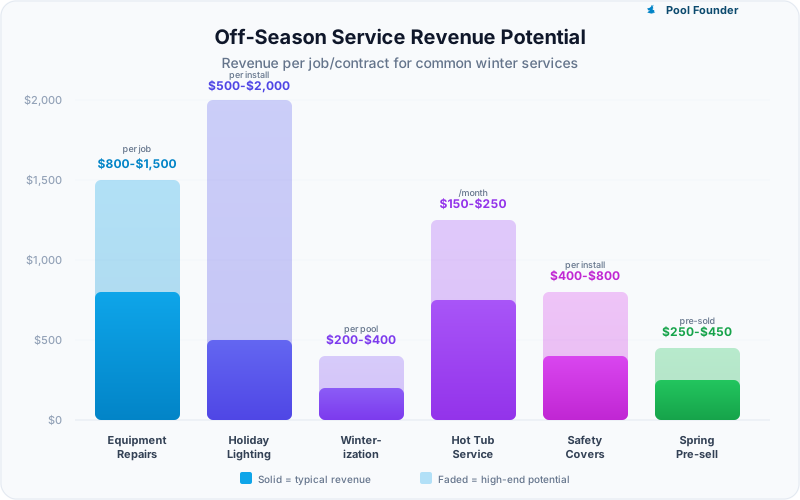
Equipment repairs, premium winterization packages, and hot tub maintenance generate immediate off-season revenue using skills, tools, and customer relationships you already have — the key is proactive outreach with seasonal offers before Thanksgiving rather than waiting for inbound calls.
How Much Can Equipment Repairs Earn in Winter?
Winter is the perfect time to replace aging pumps, heaters, filters, and automation systems. Your customers aren't using their pools, so there's no downtime pressure. You can schedule jobs on your terms instead of doing emergency repairs in July when you're already slammed.
Send an email to every customer whose equipment you flagged during the summer season. That heater with the corroded heat exchanger? The pump that's pulling higher amps than it should? You've been noting these things all year — now use those notes. A targeted email like "We noticed your pool heater is showing signs of wear — winter is the best time to replace it before spring" converts surprisingly well.
| Service | Avg. Revenue per Job | Time Investment | Margin |
|---|---|---|---|
| Pump replacement | $800-$1,500 | 2-3 hours | 45-55% |
| Heater replacement | $2,500-$5,000 | 3-5 hours | 35-45% |
| Filter replacement | $600-$1,200 | 1.5-2.5 hours | 50-60% |
| Automation upgrade | $3,000-$7,000 | 4-8 hours | 30-40% |
| LED light conversion | $400-$900 | 1-2 hours | 55-65% |
How Do Premium Winterization Packages Increase Revenue?
Premium winterization packages averaging $450-$650 generate 2-3x the revenue of basic closings, and roughly 30% of existing maintenance customers will upgrade when presented with a tiered option at the end of the season. Your basic service covers blowing lines, adding antifreeze, and covering the pool. Your premium tier adds equipment inspection, a written condition report, chemical balancing before cover-on, and a spring opening guarantee at a locked-in price.
The premium tier typically runs $150-$250 more than basic, and in my experience about 30% of customers will take it if you explain the value clearly. On 100 winterization jobs, that's an extra $4,500-$7,500 in revenue just from the upgrade.
Is Hot Tub Maintenance a Good Off-Season Service?
Hot tubs are used most heavily in fall and winter — the exact months pool companies need work. Monthly hot tub service runs $75-$150 per visit, and the chemistry and equipment knowledge transfers directly from pool work.
Start by surveying your existing customers. You'd be surprised how many of them have a hot tub that someone else services — or worse, that nobody services. A simple "Do you have a hot tub?" checkbox on your fall closing paperwork can uncover 15-20 new monthly accounts from your existing customer base alone.
Can Pool Companies Earn Revenue From Winter Renovations?
Tile work, resurfacing, coping replacement, deck repairs — all of this is easier and cheaper to do when the pool is already closed for winter. If you don't do this work yourself, partner with a local contractor and take a referral fee (typically 10-15% of the job). A single pool resurface runs $8,000-$15,000, so even a referral fee of $800-$2,250 is meaningful revenue for a phone call and an introduction.
What Non-Pool Services Can Pool Companies Offer in Winter?
Pressure washing, holiday lighting installation, and outdoor hardscape maintenance leverage the trucks, ladders, and labor you already have while generating $200-$2,000 per job during months when pool routes produce zero income.
Is Pressure Washing Profitable for Pool Companies?
Deck and patio pressure washing generates $200-$500 per job using equipment most pool companies already own, with minimal additional training required and a natural upsell path from existing pool customers who want their entire backyard maintained. Driveways, patios, house exteriors, and commercial storefronts all need cleaning, and the demand peaks in fall and early spring — right when your pool routes thin out. An experienced tech can knock out two or three residential jobs per day.
Pro tip: Offer pressure washing to your existing pool customers first. They already trust you, you're already on their property regularly, and the conversion rate from a simple postcard or email is 5-10x higher than cold outreach.
How Much Can Pool Companies Earn From Holiday Lighting?
Holiday lighting installation runs $500-$2,000 per home, with installations in November and removal in January. Startup cost is $2,000-$3,000 for initial light inventory and training, and first-season revenue of $15,000-$30,000 is realistic for pool companies that market to their existing customer base.
Homeowners with pools tend to have larger homes with more roofline, care about curb appeal, and already trust you on a ladder near their house — making the customer overlap between pool service and holiday lighting nearly perfect.
Is Hardscape and Outdoor Kitchen Maintenance Worth Adding?
Many of your pool customers also have outdoor kitchens, fire pits, water features, and decorative hardscaping. Fall and winter maintenance — covering grills, winterizing outdoor plumbing, cleaning and sealing pavers, draining fountains — is work that nobody is actively marketing for. Charge $150-$400 per visit depending on scope and you'll find minimal competition.
What Should Pool Companies Do During the Off-Season to Prepare for Spring?
Setting up pool service software, launching a referral program, and investing in local SEO during winter months can add 10-25 new accounts by spring — the kind of business-building work that gets pushed aside when you're running 40 stops a day.
When Is the Best Time to Set Up Pool Service Software?
Winter setup of pool service software saves 15-20 hours of data entry compared to mid-season migration, gives technicians a full off-season to learn the platform, and positions your company to capture spring demand with optimized routes from day one. Import your customer database, build out your route sheets, and configure your invoicing templates. When March hits, you want to be dispatching in two clicks, not forty-five minutes of phone calls.
Pool Founder offers free white-glove onboarding and AI-powered data import — so you can hand over your messy spreadsheet and have a clean customer database set up without doing the data entry yourself. The off-season is the perfect window to get this done while the pressure is low.
How Do You Build a Referral Program That Adds Accounts?
Word-of-mouth drives 50-60% of new pool service customers, yet most companies never formalize it. Build a referral program over the winter: $25-$50 credit per referred customer, a one-page explainer you can email or hand out, and tracking to ensure you follow through on payouts.
Send a referral request to every current customer in January, before they start thinking about spring. Something like: "Know a neighbor who needs pool service? Refer them before March 1st and you both get $50 off your first spring service." I've seen this single move add 10-15 new accounts in a single off-season.
How Can Winter SEO Work Generate Spring Leads?
Google Trends data shows pool service searches increase 300-400% between January and April, giving companies that publish local content during winter a 2-3 month head start on competitors who wait until spring to think about marketing. Claim and optimize your Google Business Profile. Post photos from jobs you did last summer. Ask your happiest customers for Google reviews — aim for at least 5-10 new ones during the off-season.
A pool company that goes from 15 reviews to 40 reviews over one winter will see a measurable jump in spring inbound leads — free work with outsized ROI.
What Training Should Pool Techs Complete During the Off-Season?
Certifications, manufacturer training programs, new product knowledge — all of this is easier to do when your techs aren't running six routes a week. The Pool & Hot Tub Alliance offers the Certified Pool/Spa Operator (CPO) certification, which takes about two days. Having CPO-certified techs on staff lets you market your company differently and command higher rates.
| Training/Certification | Cost | Time | Revenue Impact |
|---|---|---|---|
| CPO Certification | $300-$400/person | 2 days | Justifies $10-15/mo higher service rates |
| Manufacturer product training | Often free | 1-3 days | Enables equipment sales and warranty work |
| Salt system specialist | $200-$300 | 1 day | Opens $2,000-$4,000 install jobs |
| Business management courses | $0-$500 | Self-paced | Better margins across the board |
How Should Pool Companies Budget for the Off-Season?
Reserving 30% of peak-season net income, converting customers to annual service agreements, and tracking off-season job profitability are the three financial disciplines that separate pool companies who coast through winter from those scrambling for work in December.
What Is the 70/30 Summer Savings Rule?
During your peak months (May through September), live on 70% of your net income and bank the other 30%. For a company netting $12,000/month in the summer, that's $3,600/month going into a dedicated off-season reserve. Five months of that gives you an $18,000 cushion — enough to cover baseline expenses for most small operations through winter without touching a credit card.
Open a separate business savings account specifically for off-season reserves. If it's in your operating account, you'll spend it. The mental separation matters more than the interest rate.
How Do Annual Service Agreements Smooth Cash Flow?
Annual service agreements are the single most effective cash flow smoothing tool. Instead of charging $200/month for seven months, offer $150/month for twelve months — the customer pays $1,800/year instead of $1,400, gets year-round coverage including winterization and spring opening, and you get twelve months of predictable income.
Even converting 25% of your customer base to annual agreements makes a dramatic difference. If 30 of your 120 customers switch to annual billing at $150/month, that's $4,500/month coming in through January and February regardless of weather.
$4,500/mo
potential winter revenue from converting just 25% of customers to annual service agreements
How Should You Track Off-Season Revenue for Next Year?
If you don't know exactly how much you made and spent during last year's off-season, you can't improve this year's. Use your pool service software to track every off-season job, every referral, every equipment sale. Pool Founder's invoicing and job tracking work year-round — tag your winter work separately so you can pull reports in the spring and see what actually made money versus what just kept you busy.
What Does a Realistic Off-Season Plan Look Like?
A two-person pool company that combines premium winterization in October, holiday lighting in November-December, and equipment replacements in January can realistically generate $18,000-$33,000 across five off-season months — pick three or four strategies that fit your market and skills.
| Month | Primary Focus | Revenue Target |
|---|---|---|
| October | Premium winterization packages + equipment repair outreach | $6,000-$10,000 |
| November | Holiday lighting installs + hot tub service launch | $4,000-$8,000 |
| December | Holiday lighting (continued) + referral program launch | $3,000-$6,000 |
| January | Equipment replacements + SEO/review push + training | $3,000-$5,000 |
| February | Spring prep marketing + early-bird promotions + system setup | $2,000-$4,000 |
That's $18,000-$33,000 in off-season revenue from a combination of actual work and smart business building. It won't fully replace your summer income — nothing will — but it bridges the gap between "we might not make it" and "we're set up for the best spring we've ever had."
The companies that treat the off-season as an opportunity rather than a sentence are the ones still around in five years. Start planning in August, refine next winter when you have the data to know what worked.

Ready to streamline your pool service business?
Pool Founder gives you route optimization, automated invoicing, chemical tracking, and everything else you need to run a more profitable pool business.
Frequently Asked Questions
How much revenue can a pool service company realistically earn in the off-season?
It depends heavily on your market and how aggressively you pursue it, but most small pool companies (1-3 technicians) can generate $15,000-$35,000 during the off-season through a combination of equipment work, adjacent services, and winterization upsells. That typically covers 40-60% of winter overhead costs.
What off-season service has the lowest startup cost?
Equipment repairs and replacements have essentially zero startup cost since you already have the skills, tools, and customer relationships. You're just proactively reaching out to customers whose equipment you flagged during the summer instead of waiting for something to break.
Should I offer discounts to keep customers paying through winter?
Annual service agreements are better than discounts. Rather than cutting your summer rate, offer a twelve-month plan that includes winterization and spring opening at a slightly lower monthly rate. The customer gets more value, and you get twelve months of predictable revenue. Straight discounting just trains customers to expect lower prices.
Is holiday lighting installation worth it for a pool company?
For many pool companies, yes. The startup cost is around $2,000-$3,000, the customer demographic overlaps heavily with pool owners, and first-year revenue of $15,000-$30,000 is realistic. The main consideration is whether your crew is willing to work on roofs and ladders — and whether your insurance covers it.
How do I keep my best technicians employed through winter?
A combination of off-season service work, training and certifications, and equipment projects usually keeps good technicians busy enough to stay. Some companies supplement with a reduced winter schedule (30 hours instead of 40) rather than full layoffs. The cost of keeping a tech on reduced hours is almost always less than the cost of losing them and hiring someone new in spring.
When should I start planning for the off-season?
August or September — before you're actually in the slow period. Start flagging equipment issues during summer service visits, build your winterization packages in August, launch your hot tub service marketing in September, and have your referral program ready to send by October. The companies that wait until November to think about winter are already behind.