Why Do Professional Pool Service Companies Need a Standardized Opening Checklist?
Spring pool openings are the highest-revenue, highest-volume service window of the year. A company doing 20+ openings per week across multiple techs cannot afford to wing it. A missed winterization plug means a flooded equipment pad. A skipped salt cell inspection means a callback two days later. A forgotten filter baseline means you are troubleshooting pressure problems blind for the rest of the season. The PHTA Seasonal Pool Opening Checklist identifies 59 individual steps in a proper opening procedure, and most of those steps have a specific sequence that matters.
This checklist is built for the service company running crews through 4-8 openings per day, not the homeowner opening one pool. It covers the full professional procedure: cover removal, plumbing reconnection, equipment inspection, priming, filter startup, chemistry, automation reactivation, and customer documentation. Every section is sequenced in the order you should actually perform the work, with the specific checks that separate a professional opening from a DIY job.
Professional pool openings typically run $250-$500 per pool depending on size, condition, and market (Angi 2026 data). At 4-8 openings per tech per day during peak March-May season, this is the most profitable service window of the year. A standardized process protects that margin by eliminating callbacks.
What Is the Correct Sequence for a Professional Pool Opening?
A professional pool opening follows an 8-phase sequence: cover removal, plumbing reconnection, equipment inspection, priming and startup, filter preparation, chemistry adjustment, automation reactivation, and customer documentation. The sequence matters because each phase depends on the one before it. You cannot prime the pump until plumbing is reconnected. You cannot set a filter baseline until the system is running. You cannot adjust chemistry until you have circulation. Skipping ahead or working out of order creates rework.
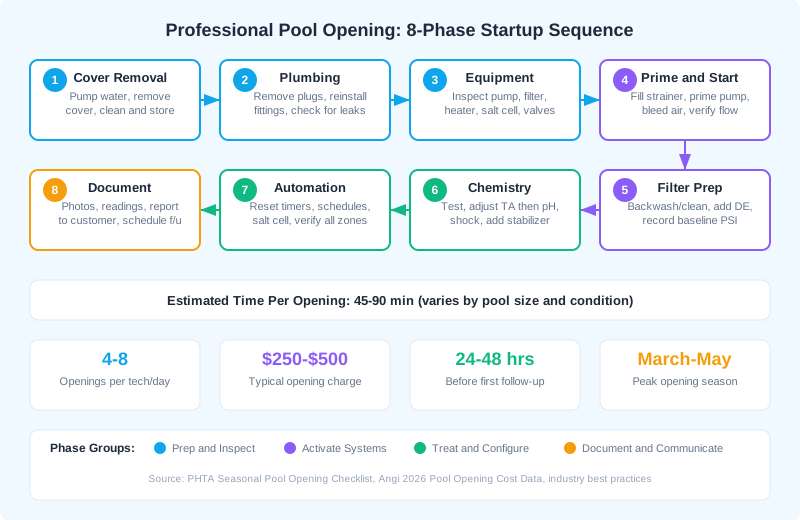
The total time per opening ranges from 45 to 90 minutes depending on pool size, equipment complexity, and winter condition. Standard residential pools with mesh covers and basic equipment fall on the shorter end. Large pools with safety covers, salt systems, automation controllers, and heaters push toward 90 minutes. Companies that track their average time per opening can staff and schedule their spring calendar accurately instead of guessing.
| Pool Type | Avg. Opening Time | Key Variables | Openings/Tech/Day |
|---|---|---|---|
| Standard residential (up to 20K gal) | 45-60 min | Mesh cover, basic pump/filter | 6-8 |
| Large residential (20K-40K gal) | 60-75 min | Safety cover, heater, salt cell | 5-6 |
| Complex residential (40K+ gal) | 75-90 min | Automation, multiple pumps, water features | 4-5 |
| Commercial/HOA | 90-120+ min | VGB compliance, health dept requirements | 3-4 |
Phase 1: How Should You Handle Cover Removal and Storage?
Cover removal is the first physical step and sets the tone for the entire opening. A rushed cover removal dumps debris into clean water, damages the cover, or misses anchor hardware that becomes a trip hazard. Professional techs pump standing water off the cover before removal, clean debris from the surface, and store the cover properly to extend its life.
What Is the Step-by-Step Cover Removal Process?
- 1Use a submersible cover pump or siphon to remove all standing water from the top of the cover. Never pull a cover with water still on it. The weight can tear the cover or dump hundreds of pounds of dirty water into the pool.
- 2Sweep or blow off leaves, debris, and sediment from the cover surface while the pump runs.
- 3For safety covers: use the installation rod to disconnect springs from deck anchors. Work around the perimeter systematically. Bag all springs and hardware together. Lower brass anchors flush with the deck using the hex key.
- 4For solid winter covers: remove water bags or clips. Fold the cover accordion-style toward one end. Two people make this faster and prevent dragging the cover across the deck.
- 5For mesh covers: disconnect straps from anchors in the same systematic pattern as safety covers. Fold toward one end.
- 6Inspect the cover for tears, stretched grommets, broken springs, or UV degradation. Note any damage for the customer and flag replacement recommendations.
- 7Clean the cover with mild soap and water if needed, allow it to dry completely, then fold and store it in a bag or container. Storing a wet cover causes mildew and shortens its life.
Pro tip: bag each pool's springs and hardware separately with a label. When you return for closing season, you will not be hunting for missing springs or dealing with mismatched hardware across customers.
Phase 2: How Do You Reconnect Plumbing After Winterization?
Plumbing reconnection reverses every step taken during winterization. Every plug that was removed to drain lines needs to go back. Every fitting that was disconnected needs to be reattached. The goal is a fully sealed, leak-free plumbing system before you add water or turn on the pump. Missing a single plug can cause air leaks that prevent priming, water leaks that flood the equipment pad, or worse.
What Is the Plumbing Reconnection Checklist?
- 1Remove all winterization plugs from skimmer lines, return lines, and the main drain line. Remove any Gizzmo devices from skimmers. Remove foam rope from the main drain line if used.
- 2Reinstall all drain plugs on equipment: pump housing, filter tank, heater, chlorinator, and any auxiliary equipment. Hand-tighten. Do not over-tighten or cross-thread.
- 3Reconnect any unions, valves, or hoses that were disconnected during winterization. This includes salt cell unions, heater connections, chemical feeder lines, and bypass valves.
- 4Reinstall return eyeball fittings and any decorative escutcheons that were removed from wall fittings.
- 5Verify the water level is at the midpoint of the skimmer opening. If low, begin filling and continue with other phases while it fills.
- 6Open all suction and return valves. Make sure multiport valves are set to "filter" (not "winterize" or "closed").
- 7Do a visual walk of all plumbing runs from skimmer to equipment and from equipment back to returns. Look for cracked PVC, disconnected fittings, rodent damage to flexible hoses, or frost heave damage.
The PHTA guidelines emphasize checking that main drain grates and sumps are VGB Act compliant during every opening. This is both a safety requirement and a liability issue. If a drain cover is cracked, missing, or non-compliant, flag it immediately and do not start the pump until it is resolved.
Phase 3: What Equipment Should You Inspect Before Startup?
Equipment inspection happens before you turn anything on. The goal is to identify any damage, wear, or failure that occurred over the winter so you can address it before startup, not after. Running a pump with a cracked impeller or firing a heater with a blocked exhaust creates bigger problems than the ones you are trying to find.
What Should You Check on Each Piece of Equipment?
| Equipment | Inspection Points | Common Winter Issues |
|---|---|---|
| Pump | Housing cracks, shaft seal condition, strainer lid O-ring, wiring connections, capacitor (if applicable) | Freeze damage to housing, dried-out shaft seal, cracked strainer lid |
| Filter (all types) | Tank condition, pressure gauge function, multiport valve or cartridge seating, internal grid/cartridge condition | Cracked laterals (sand), torn grids (DE), collapsed cartridges |
| Heater | Exhaust/flue clear, gas line connection, heat exchanger condition, igniter, pressure switch | Bird nests in exhaust, rodent damage to wiring, corrosion on heat exchanger |
| Salt chlorine generator | Cell condition (scale buildup), flow sensor, control board lights, union connections | Calcium scale on cell plates, expired cell (3-5 year life), corrosion on terminals |
| Automation controller | Display function, relay clicks, valve actuator movement, remote/app connectivity | Dead backup battery, corroded relay contacts, firmware needing update |
How Do You Inspect a Salt Cell at Spring Opening?
Remove the salt cell from its housing and visually inspect the plates. If you see white calcium scale on the plates, clean the cell before startup using a mild acid solution (typically 4:1 water to muriatic acid) per the manufacturer guidelines. Reinstall the cell with unions hand-tight. Do not turn on chlorine generation until the pool water is circulating, the salt level has been tested, and chemistry is balanced. Running a salt cell in unbalanced water accelerates scale buildup and shortens cell life.
Phase 4: How Do You Properly Prime the Pump and Start Circulation?
Priming is the step where most callbacks originate. A pump that will not prime, loses prime, or cavitates after startup almost always traces back to an air leak in the suction side plumbing, a missing plug, or a lid O-ring that was not lubricated. Taking an extra two minutes to prime correctly saves a return trip.
What Is the Correct Priming Procedure?
- 1Confirm all suction-side valves are open and all drain plugs are installed.
- 2Remove the pump strainer lid. Fill the strainer housing completely with water using a garden hose.
- 3Inspect the lid O-ring for cracks, flat spots, or debris. Lubricate with a silicone-based O-ring lubricant (not petroleum-based). Replace the O-ring if it is damaged.
- 4Reinstall the strainer lid and hand-tighten evenly.
- 5Open the air relief valve on top of the filter tank.
- 6Turn the pump on. Watch the strainer basket for water flow. The pump should catch prime within 30-60 seconds.
- 7Once a steady stream of water flows from the air relief valve, close it.
- 8Check the pump for unusual noise: grinding indicates a bearing issue, cavitation (sounds like gravel) indicates an air leak or suction restriction.
- 9Verify flow at the return jets inside the pool. All returns should have visible, even flow.
If the pump does not prime within 90 seconds, turn it off. Running a pump dry causes shaft seal damage within minutes. Recheck suction-side plugs, the strainer lid O-ring, and valve positions before trying again.
Phase 5: How Do You Prepare the Filter for the Season?
Filter preparation at opening sets your performance baseline for the entire season. The clean startup pressure reading tells you when the filter needs service all year. If you skip this step, you are guessing at filter condition for months. The procedure differs by filter type, and professional techs should know all three.
What Are the Startup Procedures for Each Filter Type?
| Filter Type | Startup Procedure | Baseline PSI Note |
|---|---|---|
| Sand | Backwash for 2-3 minutes until sight glass runs clear. Rinse for 30 seconds. Set to "filter." Record clean startup PSI. | Backwash when 8-10 PSI above startup reading |
| DE (diatomaceous earth) | Backwash if needed. Add fresh DE through the skimmer at 1 lb per 5 sq ft of filter area. Record clean startup PSI. | Backwash when 8-10 PSI above startup reading. Recharge DE after every backwash. |
| Cartridge | Remove cartridge(s) and hose clean top to bottom. Inspect for tears or collapse. Reinstall. Record clean startup PSI. | Clean when 5-8 PSI above startup reading or flow visibly drops |
Write the clean startup PSI on the filter tank with a permanent marker or log it in your service software. This number is the single most important reference point for filter maintenance all season. Without it, you cannot tell whether 18 PSI is normal for that filter or 8 PSI above baseline.
Phase 6: What Is the Professional Startup Chemistry Procedure?
Startup chemistry follows a specific sequence: test everything first, then adjust alkalinity, then pH, then sanitizer, then stabilizer. This order matters because alkalinity buffers pH. Adjusting pH before alkalinity means you will likely need to adjust it again. Adding chlorine before adjusting pH means the chlorine works at reduced effectiveness. Professional techs doing 20+ openings know this sequence by heart.
What Should You Test and What Are the Target Ranges?
| Parameter | Target Range | Adjust With | Sequence Priority |
|---|---|---|---|
| Total Alkalinity | 80-120 ppm | Sodium bicarbonate (raise) / Muriatic acid (lower) | 1st |
| pH | 7.4-7.6 | Soda ash (raise) / Muriatic acid (lower) | 2nd |
| Calcium Hardness | 200-400 ppm (plaster) / 150-250 ppm (vinyl/fiberglass) | Calcium chloride (raise) | 3rd |
| Free Chlorine | 1-3 ppm (maintenance) / 10+ ppm (shock) | Liquid chlorine or cal-hypo shock | 4th |
| Cyanuric Acid (CYA) | 30-50 ppm | Stabilizer (conditioner) | 5th (outdoor pools only) |
| Salt (if SWG) | Per manufacturer (typically 2,700-3,400 ppm) | Pool salt | 6th |
How Do You Shock a Pool at Opening?
Opening shock dosing is heavier than weekly maintenance dosing. Use 1 lb of cal-hypo shock or 1 gallon of liquid chlorine (12.5% sodium hypochlorite) per 10,000 gallons to reach breakpoint chlorination. Add shock in the evening so sunlight does not degrade the chlorine before it works. Run the pump continuously for 24 hours after shocking. Do not turn on the salt cell until chlorine comes down to normal operating range (1-3 ppm).
Never add chemicals to a pool without circulation running. Never mix chemicals together before adding to the pool. Pre-dissolve granular chemicals in a bucket of pool water before broadcasting. These are basic safety practices, but they save you from staining, equipment damage, and hazardous reactions.
How Do You Handle a Green Pool at Opening?
If the pool is green, do not skip straight to shocking. First, remove as much debris as possible with a leaf net. Vacuum to waste if available (bypasses the filter). Then brush all surfaces to break up algae biofilm. Only then shock at 2-3x the normal dose. Run the pump 24/7 until the water clears, backwashing the filter every 6-8 hours as needed. A green pool opening takes 2-3 visits instead of one, and you should price accordingly. Customers appreciate transparency about why a neglected pool costs more to open.
Phase 7: How Do You Reactivate Automation and Scheduling?
Automation reactivation is the phase most commonly rushed or skipped entirely. Techs get the water circulating and the chemistry dosed and move on. But a pool with a misconfigured timer, a dead automation battery, or a salt cell still set to winter mode will generate a callback within the week. Five minutes of automation checks at opening prevents that.
What Automation Systems Need Reconfiguration at Opening?
- Pump timers: Set run time to 8-12 hours per day for spring startup. Many pools need extended run times during the first week to clear startup turbidity and distribute chemicals.
- Automation controllers (Pentair IntelliCenter, Hayward OmniHub, Jandy AquaLink): Verify the display powers on, check the backup battery, confirm all relay-controlled equipment responds. Test valve actuators for full rotation.
- Salt chlorine generators: Set to 50% output initially. Do not run at 100% until salt level is confirmed and chemistry is balanced. Verify the flow sensor reads correctly.
- Heater scheduling: Confirm the heater fires on demand and set the target temperature. Check for error codes on the display.
- Lighting: Test all pool and spa lights. Replace any burned-out bulbs. For LED systems, verify color and program settings.
- Water features: Run each water feature (spillovers, bubblers, deck jets) individually to confirm valve actuator operation and check for clogs or broken nozzles.
If the pool has app-based control (Pentair ScreenLogic, Hayward OmniLogic, Jandy iAquaLink), confirm the controller connects to the home Wi-Fi and the app shows current status. Customers who paid for automation expect to control their pool from their phone. If the connection is down, flag it in the service report.
Phase 8: How Should You Document and Communicate the Opening?
Documentation is the phase that separates a professional opening from a guy-with-a-truck opening. A complete opening report with before-and-after photos, chemistry readings, equipment notes, and follow-up recommendations creates trust, reduces customer questions, and protects you from liability disputes. According to industry surveys, 82% of pool owners say they would stay with a company that communicates like a concierge, even if rates were slightly higher.
What Should the Opening Service Report Include?
- Before photo: Taken at arrival showing pool condition before any work.
- After photo: Taken at completion showing pool condition after opening.
- Chemistry readings: All parameters tested, with both the starting readings and what you adjusted to.
- Chemicals added: Specific products and quantities used.
- Equipment notes: Condition of pump, filter (including startup PSI), heater, salt cell, and automation. Flag anything that needs repair or replacement.
- Cover condition: Note any damage or recommended replacement.
- Follow-up schedule: When you will return for the first follow-up visit (typically 24-48 hours after opening to recheck chemistry and verify equipment is running correctly).
- Upsell recommendations: Replacement parts needed, equipment upgrades, or additional services identified during the opening inspection.
Send the report digitally the same day, ideally within an hour of completion. Pool service software can automate this with templated reports, customer-facing portals, and automatic photo attachments. The opening report also becomes your baseline documentation for the entire season. If a customer disputes equipment condition in August, your March opening report with photos is your evidence.
The opening visit is the best upsell opportunity of the year. You have the customer's attention, you are inspecting everything, and they are excited about pool season. Equipment replacements, heater upgrades, salt system installations, and automation add-ons close at their highest rate during opening season.
How Should You Schedule and Price Pool Openings?
Scheduling and pricing pool openings correctly protects your margin during the busiest window of the year. Companies that undercharge for openings or overbook their calendar end up with burned-out techs, sloppy work, and callbacks that eat the profit. The goal is to run a tight, profitable schedule from March through May.
How Much Should You Charge for a Pool Opening?
Professional pool opening costs range from $250 to $500 for inground pools according to Angi 2026 data, with the national average around $300. Above-ground pools run $150 to $250. Factors that push pricing higher include pool size, equipment complexity (salt systems, automation, heaters), pool condition (green or neglected), and whether chemicals are included in the price or billed separately. Many companies charge a flat opening fee plus chemicals at cost with a markup.
How Many Openings Can a Tech Do Per Day?
A trained technician handling standard residential pools can complete 6-8 openings per day when pools are geographically clustered. Complex pools with automation, salt systems, and heaters bring that down to 4-5 per day. Commercial and HOA pools may take 2-3 hours each due to VGB compliance checks and health department documentation requirements. Geographic batching is critical during opening season. Sending a tech across town between openings wastes 30-60 minutes per trip in drive time alone.
Start marketing pool openings in January and February. Companies that fill their opening calendar before March have predictable revenue and can staff appropriately. Companies that wait until customers call in March are scrambling, double-booking, and running behind for weeks.
What Are the Most Common Pool Opening Mistakes?
Even experienced techs make opening mistakes when they are rushing through a packed spring calendar. These are the errors that generate the most callbacks, customer complaints, and equipment damage. Knowing the list keeps your crew from repeating them.
- Pulling the cover with water on it: Dumps hundreds of pounds of dirty water into the pool. Always pump first.
- Missing a winterization plug: Causes air leaks that prevent priming or water leaks that flood the pad. Walk every line before startup.
- Not lubricating the pump lid O-ring: Leads to air leaks and prime loss. Takes 10 seconds to prevent.
- Running the pump dry: Damages the shaft seal within minutes. If it does not prime in 90 seconds, shut it off and recheck.
- Adding chemicals without circulation: Causes staining on pool surfaces and uneven distribution. Always wait until the pump is running.
- Adjusting pH before alkalinity: You will end up adjusting pH twice. Alkalinity always comes first.
- Turning on the salt cell before testing salt level: Running a cell in low-salt water damages the cell and produces no chlorine.
- Skipping the filter baseline PSI: You lose your only reference point for filter maintenance all season.
- Not scheduling the follow-up visit: Chemistry shifts significantly in the first 48 hours. The follow-up is where you catch issues before the customer does.
- Forgetting to send the service report: The customer has no idea what you did. Documentation builds trust and justifies your price.
Run a pool route?
The business side of what you just read.
Pricing, chemical costs, and the tools owners use to keep the numbers straight.
- Commercial pool service pricing2026 rate tables and the cost-plus formula
- Chemical cost per poolWhat chemicals actually cost per stop
- Chemical tracking softwareLog readings and dosing from the pool deck
- Pool service softwareRoutes, invoicing, and service reports in one app
- Free profit & rate calculatorsProfit per pool, minimum rate, break-even
Frequently Asked Questions
How long does a professional pool opening take?
A standard residential pool opening takes 45-60 minutes for a trained technician. Large pools with heaters, salt systems, and automation take 60-90 minutes. Commercial and HOA pools can take 90-120+ minutes due to additional compliance requirements. The total time depends on pool size, equipment complexity, and winter condition.
How much should a pool service company charge for openings?
Professional inground pool openings typically cost $250-$500 according to Angi 2026 data, with a national average around $300. Above-ground openings run $150-$250. Price higher for pools with salt systems, automation, heaters, or neglected winter condition. Many companies charge a flat fee plus chemicals billed separately.
What order should you add chemicals when opening a pool?
Always adjust total alkalinity first (80-120 ppm), then pH (7.4-7.6), then calcium hardness (200-400 ppm for plaster), then shock with chlorine, then add stabilizer (CYA 30-50 ppm for outdoor pools). This sequence matters because alkalinity buffers pH, and pH affects chlorine effectiveness. Adding chemicals out of order wastes product and creates rework.
When should you schedule the first follow-up after a pool opening?
Schedule the first follow-up visit 24-48 hours after the opening. Chemistry shifts significantly in the first two days as the shock works, debris settles, and the filter removes startup turbidity. The follow-up is where you retest and fine-tune chemistry, verify equipment is running correctly, and catch any issues before the customer notices them.
Should you turn on the salt cell immediately at opening?
No. Do not turn on the salt chlorine generator until you have tested and confirmed the salt level, balanced the pH and alkalinity, and verified the cell is clean and free of calcium scale. Running a salt cell in unbalanced or low-salt water damages the cell plates and produces little to no chlorine. Start the cell at 50% output and adjust based on chlorine demand over the first week.
How many pool openings can one technician do per day?
A trained tech can handle 6-8 standard residential openings per day when pools are geographically clustered. Complex pools with automation, salt systems, and heaters reduce that to 4-5 per day. Commercial pools may take 2-3 hours each. Geographic batching is the biggest factor in daily capacity, as drive time between spread-out openings can cut your count in half.
Sources & References
- PHTA - Seasonal Pool Opening Checklist (59 Steps)
- PHTA - Pool Opening Is NOT Just One Day (CPO Newsletter March 2025)
- Angi - 2026 Pool Opening Cost Data
- HomeGuide - How Much Does It Cost to Open a Pool (2026)
- LOOP-LOC - Removing and Storing Your Safety Cover
- Pool Chemical Calculator - Pool Water Chemistry Complete Guide (2026)
- Swim University - Pool Opening Chemicals Guide
- Pool Magazine - State of Pool Service in 2026