The Water Coming Out of the Hose Matters More Than Most Techs Realize.
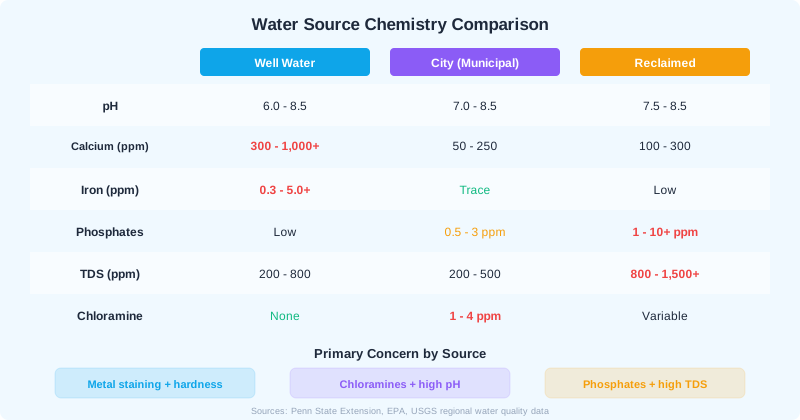
Every pool fill starts with source water, and that source water is not neutral. Well water in Central Florida can carry 2-5 ppm iron and 800+ ppm calcium hardness. Municipal water in Phoenix arrives with 300-400 ppm hardness and chloramine residual that interferes with DPD test kits. Reclaimed water, increasingly used in drought-prone regions, brings elevated phosphates and total dissolved solids that create problems most techs do not anticipate. If you treat every fill the same way, you are starting behind.
"I learned this the hard way on a well water fill in Ocala," says Corey Adams, Pool Founder co-founder and 15-year pool service veteran. "I shocked the pool like I always did, and the next morning it was brown from top to bottom. The chlorine oxidized the iron in the well water and turned the whole pool into a rust stain waiting to happen. Now I test the source water before I ever turn on the hose."
Always test your source water with a complete panel (pH, alkalinity, calcium hardness, metals, phosphates, TDS) before filling or topping off a pool. Knowing what is coming out of the hose lets you pre-treat and avoid staining, scaling, and chemical waste.
How Does Well Water Affect Pool Chemistry?
Well water is the most variable source you will encounter in pool service. Its composition depends entirely on local geology, aquifer depth, and regional mineral deposits. The defining characteristics are high mineral content (calcium, magnesium, iron, manganese, copper), no chlorine or chloramine residual, and pH that can range anywhere from 6.0 to 8.5 depending on the region. According to Penn State Extension, iron concentrations above 0.3 ppm cause visible staining, and manganese above 0.05 ppm creates brown-black deposits.
Common Well Water Problems in Pools
- Iron staining (0.3+ ppm) - Chlorine oxidizes dissolved iron instantly, turning clear water brown, orange, or rust-colored. Never shock a freshly filled well water pool without pre-treating for metals first.
- Manganese staining (0.05+ ppm) - Oxidized manganese creates purple-black stains on plaster and vinyl. Even trace amounts cause discoloration when chlorine is added.
- High calcium hardness (300-1,000+ ppm) - Common in limestone aquifer regions like Florida and Texas. Pushes the LSI positive immediately, promoting scale on heaters and salt cells.
- Low pH / high CO2 - Some well water is acidic (pH 6.0-6.5) with dissolved carbon dioxide. This aggressively etches plaster if not corrected before circulation begins.
- Hydrogen sulfide (rotten egg smell) - Common in sulfur-rich aquifers. Aeration and superchlorination break it down, but the smell alarms customers.
How to Pre-Treat Well Water Before Filling a Pool
- 1Test the well water source for iron, manganese, copper, calcium hardness, pH, and alkalinity before filling.
- 2Add a metal sequestering agent to the pool at the recommended dose before you begin filling. The sequestrant bonds to dissolved metals and prevents oxidation.
- 3Fill the pool with the pump off. Do not circulate or add chlorine until the pool is full and the sequestrant has had 24 hours to work.
- 4After 24 hours, turn on circulation and test again. Adjust pH to 7.4-7.6 and alkalinity to 80-120 ppm.
- 5Add chlorine slowly. If iron is present, start with liquid chlorine at 1 ppm and observe for color change. If no discoloration occurs, increase to normal sanitizer levels.
- 6Run the filter continuously for 48 hours after the first chlorine addition. Clean or backwash the filter daily during this period to remove filtered metals.
A hose-end pre-filter with a metal-removal cartridge ($25-40) can reduce iron and copper by 50-80% during the fill. For pools in heavy well water areas, this one tool prevents most staining issues before they start.
How Does Municipal (City) Water Affect Pool Chemistry?
Municipal water is treated at a water plant before it reaches your hose, which means it arrives with intentional chemical additions. The two biggest factors for pool service are chloramine disinfection residual and pH adjustment chemicals. According to the EPA, about 30% of U.S. municipal water systems now use chloramines (combined chlorine) instead of free chlorine for disinfection. This matters because chloramines interfere with DPD test kits and are harder to break down than free chlorine.
What Chemicals Does City Water Add to Your Pool?
| Additive | Typical Range | Effect on Pool Chemistry |
|---|---|---|
| Chloramine residual | 1-4 ppm | Reads as combined chlorine on DPD tests. Requires breakpoint chlorination to remove. |
| Fluoride | 0.5-1.2 ppm | Minimal direct pool impact but contributes to TDS over time. |
| pH adjustment (lime/soda ash) | Raises pH to 7.0-8.5 | City water often arrives at pH 7.8-8.2, higher than ideal pool range. |
| Calcium (from lime treatment) | 50-250 ppm | Adds to total hardness. Varies widely by region. |
| Phosphates (from corrosion inhibitors) | 0.5-3 ppm | Feeds algae growth. May require phosphate remover in warm climates. |
City Water Best Practices for Pool Fills
The good news about city water is consistency. Unlike well water, the chemistry does not change week to week. Once you know your local water report, you can predict exactly what every fill will look like. Most municipalities publish an annual Consumer Confidence Report (CCR) that lists all tested parameters. Pull this report once a year and keep it in your truck.
- Check your city's annual water quality report (CCR) to know baseline calcium, pH, alkalinity, and whether they use chloramine vs free chlorine.
- If your city uses chloramines, add ascorbic acid or sodium thiosulfate to neutralize the chloramine residual before adding your own sanitizer.
- Expect pH to arrive between 7.6 and 8.2. Budget for acid addition on every fill.
- Monitor phosphate levels quarterly in warm climates. City water corrosion inhibitors (polyphosphates) add phosphates that feed algae.
- City water calcium hardness is usually moderate (50-250 ppm). Test and adjust to target based on your LSI calculation.
How Does Reclaimed Water Affect Pool Chemistry?
Reclaimed water (also called recycled or reclaimed effluent) is treated wastewater that has been processed for non-potable reuse. In drought-prone states like Florida, California, Arizona, and Texas, reclaimed water is increasingly available for landscape irrigation. While most states prohibit using reclaimed water to directly fill swimming pools, it enters pools indirectly through irrigation overspray, rainfall runoff from reclaimed-irrigated landscapes, and topping off by homeowners who do not realize the difference.
Why Is Reclaimed Water Problematic for Pools?
- Elevated phosphates (1-10+ ppm) - Reclaimed water frequently contains phosphates from detergents and biological processes. These feed algae aggressively in warm pool water.
- High TDS (800-1,500+ ppm) - Total dissolved solids accumulate through the treatment process. High TDS makes water feel "heavy," reduces sanitizer efficiency, and accelerates corrosion.
- Nitrogen compounds - Residual nitrates and ammonia compounds consume chlorine rapidly and contribute to combined chlorine formation.
- Higher alkalinity and pH - Reclaimed water treatment often raises alkalinity above 150 ppm and pH above 8.0.
- Microbial concerns - While reclaimed water is treated, it does not meet drinking water standards. Proper sanitation is critical if it enters the pool.
If a customer uses reclaimed water for their yard irrigation, check that the irrigation system has a functioning backflow preventer and that sprinkler heads are not pointed at the pool. Overspray is the most common way reclaimed water enters residential pools.
When you suspect reclaimed water contamination, test phosphates first. If phosphate levels spike between visits despite no chemical additions, reclaimed water is the likely source. Add a phosphate remover to bring levels below 200 ppb, then investigate the source of ingress. Long-term, the customer needs to adjust their irrigation pattern or install a physical barrier between the sprinkler zone and the pool.
How Should You Test Source Water Before a Fill?
A complete source water test takes five minutes and prevents hours of corrective chemistry later. The goal is to know exactly what you are putting into the pool before it mixes with existing water or contacts a fresh surface. This is especially critical on new pool startups, drain-and-refills, and any pool that uses well water.
Source Water Test Panel
| Parameter | Why It Matters | Tool Needed |
|---|---|---|
| pH | Determines acid or base demand. Well water can be extremely acidic or alkaline. | Test kit or meter |
| Total alkalinity | Buffers pH. Low TA means pH will swing wildly during fill. | Test kit |
| Calcium hardness | Drives LSI calculation. High CH means scale risk on day one. | Test kit |
| Iron | Above 0.3 ppm causes brown staining on contact with chlorine. | Iron-specific test strip or reagent |
| Copper | Above 0.2 ppm causes blue-green staining. Common in well water and older copper plumbing. | Metal test kit |
| Phosphates | Above 200 ppb feeds algae. Common in city water and reclaimed water. | Phosphate test kit |
| TDS | Above 1,500 ppm reduces sanitizer efficiency and water clarity. | TDS meter ($15-30) |
Run this panel on a fresh source water sample before every major fill. For weekly top-offs with a known water source, a quick pH and metals check is sufficient. Keep a log of your source water results. Over time, you will build a reference that lets you predict exactly what each customer's water needs before you arrive.
How Do You Adjust Your Treatment Plan Based on Water Source?
Once you know what is in the source water, adjust your standard treatment protocol accordingly. The biggest mistake technicians make is applying the same startup or fill procedure regardless of water source. A well water fill in Central Florida requires a completely different approach than a city water fill in Southern California.
| Water Source | Pre-Fill Treatment | During Fill | Post-Fill Priority |
|---|---|---|---|
| Well water (high metals) | Add sequestering agent before fill | No chlorine until full | Slow chlorine addition, filter 48 hrs |
| Well water (high calcium) | Calculate LSI target | Monitor CH as pool fills | Lower pH to offset high CH, consider partial drain/refill blend |
| City water (chloramine) | None needed pre-fill | Normal fill procedure | Breakpoint chlorinate to destroy chloramines, re-test FC/CC |
| City water (high pH) | None needed pre-fill | Normal fill procedure | Acid addition to lower pH to 7.4-7.6 |
| Reclaimed (indirect entry) | Check irrigation backflow preventer | Redirect sprinkler heads | Phosphate remover, extra chlorine demand |
"Know your water before you treat your water. I keep a source water log for every route stop. When a customer says they topped off with the garden hose, I already know what that hose is delivering and can adjust my chemical plan on the spot." - Corey Adams
Run a pool route?
The business side of what you just read.
Pricing, chemical costs, and the tools owners use to keep the numbers straight.
- Commercial pool service pricing2026 rate tables and the cost-plus formula
- Chemical cost per poolWhat chemicals actually cost per stop
- Chemical tracking softwareLog readings and dosing from the pool deck
- Pool service softwareRoutes, invoicing, and service reports in one app
- Free profit & rate calculatorsProfit per pool, minimum rate, break-even
Frequently Asked Questions
Can I use well water to fill a swimming pool?
Yes, but you must test the well water first and pre-treat for metals. Well water commonly contains iron (above 0.3 ppm causes staining), manganese, copper, and high calcium hardness. Add a metal sequestering agent before filling and avoid adding chlorine until the sequestrant has circulated for 24 hours.
Why did my pool turn brown after I added chlorine to well water?
Chlorine oxidizes dissolved iron in the well water, converting it from invisible dissolved iron to visible rust-colored iron oxide. The brown color is oxidized iron suspended in the water. Add a metal sequestering agent, run the filter continuously, and avoid shocking until the iron is filtered out. A hose-end pre-filter on future fills can prevent this.
Does city water have chlorine or chloramine, and does it matter for pools?
About 30% of U.S. municipal water systems use chloramines instead of free chlorine. Chloramines read as combined chlorine on DPD test kits, which can give misleading readings. They also require breakpoint chlorination to remove. Check your city's annual water quality report (CCR) to find out which disinfectant your utility uses.
Can reclaimed water be used to fill a pool?
Most states prohibit directly filling pools with reclaimed water because it does not meet drinking water standards. However, reclaimed water enters pools indirectly through irrigation overspray and landscape runoff. If you suspect this is happening, test for elevated phosphates and TDS, both common markers of reclaimed water contamination.
How often should I test source water for pool fills?
Test source water before every major fill (new pool, drain-and-refill, or adding more than 25% of pool volume). For routine weekly top-offs with a known source, test quarterly. Well water chemistry can shift seasonally, so test at least every three months if your customers are on wells.
Sources & References
- Penn State Extension — Iron and Manganese in Private Water Systems
- EPA — Secondary Drinking Water Standards (Iron, Manganese Thresholds)
- Orendaltech Blog — Heavy Metal Oxidation and Staining in Pools
- AQUA Magazine — Tech Notes: Metals and Metal Staining
- CuLator — Metal Sequestering Agent Science
- USGS — Regional Water Quality Data