Why Does the Order of Spring Startup Chemicals Matter So Much?
Spring pool startup chemistry has a specific sequence, and getting it wrong wastes chemicals, damages surfaces, and creates callbacks. Shocking before balancing pH and alkalinity burns through chlorine at double the normal rate. Adding algaecide at the same time as shock destroys the algaecide polymer chains before they can work. Skipping stain and scale treatment before shocking leaves metal stains that are nearly impossible to remove later. Every step in the spring startup sequence exists for a chemical reason.
This guide covers the correct order for spring pool opening chemistry, the science behind why each step goes where it does, common mistakes that create callbacks, and the timing between additions. Written for pool service professionals who open dozens or hundreds of pools every spring.
This chemistry sequence applies to chlorine-sanitized pools. Saltwater pools follow the same general order but require additional steps for salt cell inspection and salinity adjustment. Biguanide pools have a completely different protocol.
What Should You Do Before Adding Any Chemicals?
The physical preparation before chemistry matters just as much as the chemical sequence. Skipping these steps means your chemicals work against debris, stagnant water, and equipment problems instead of actually treating the pool. A clean start gives every chemical addition maximum effectiveness and reduces the total amount of product you need.
- 1Remove the winter cover, clean it, and store it properly (a dirty cover stored wet grows mold)
- 2Remove visible debris from the pool surface and bottom with a leaf net
- 3Reinstall drain plugs, return fittings, ladders, and handrails
- 4Fill the pool to mid-skimmer level (low water means the pump runs dry)
- 5Prime and start the pump, check for leaks at all unions and connections
- 6Run the filter for 4-6 hours to circulate stagnant water before testing
- 7Brush walls and floor to suspend settled particles and algae
- 8Take a comprehensive water sample after circulation (not from the surface)
Always pull your water sample from elbow depth, 18 inches below the surface and away from return jets. Surface water gives inaccurate readings because it is exposed to sunlight, evaporation, and concentrated chemical residue from the winter.
What Is the Correct Chemical Addition Sequence?
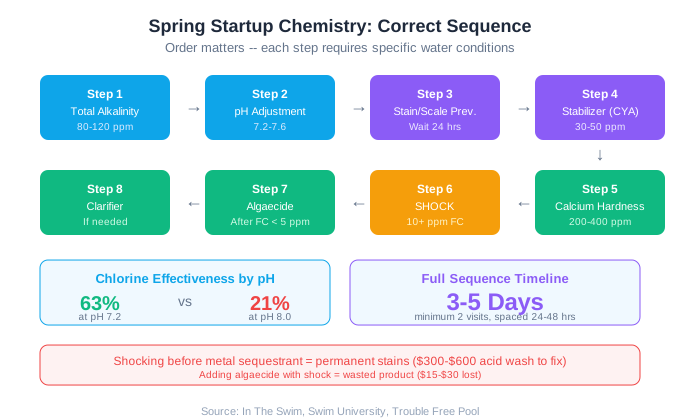
The spring startup sequence follows a specific order because each chemical needs certain water conditions to work effectively. Chlorine works best in balanced pH water. Stain and scale preventatives need time to sequester metals before you oxidize the water with shock. Algaecide polymer chains break down in the presence of high chlorine. Here is the correct sequence with timing between each step.
| Step | Chemical | Target | Wait Before Next Step |
|---|---|---|---|
| 1 | Total Alkalinity adjustment | 80-120 ppm | 4-6 hours |
| 2 | pH adjustment | 7.2-7.6 | 2-4 hours |
| 3 | Stain & Scale preventative (sequestrant) | Per label dose | 24 hours |
| 4 | Cyanuric acid (stabilizer) | 30-50 ppm | 24-48 hours to dissolve |
| 5 | Calcium hardness adjustment | 200-400 ppm | 4-6 hours |
| 6 | Shock treatment (superchlorination) | 10+ ppm FC | 24 hours (until FC drops below 5 ppm) |
| 7 | Algaecide | Per label dose | 24 hours |
| 8 | Clarifier (if needed) | Per label dose | Ongoing filtration |
This entire sequence takes three to five days when done correctly. You cannot compress it into one visit without compromising results. Plan your spring opening schedule accordingly, because the first visit (steps 1-3) and the return visit (steps 4-8) need to be spaced at least 24-48 hours apart.
Why Must Alkalinity and pH Be Adjusted First?
Total alkalinity acts as a buffer for pH, which is why it gets adjusted first. If you adjust pH without correcting alkalinity, the pH will drift back within hours because there is nothing stabilizing it. And pH directly controls how effective every other chemical addition will be. At a pH of 7.2, roughly 63% of your free chlorine is in the active hypochlorous acid form. At pH 8.0, that drops to about 21%. That means pool shock at high pH is roughly three times less effective.
63% vs 21%
active chlorine (HOCl) at pH 7.2 versus pH 8.0
After months of sitting with a winter cover, most pools have alkalinity that has drifted high (120-180 ppm range) and pH that has crept up (7.8-8.4). Start with muriatic acid or sodium bisulfate to bring alkalinity down to 80-120 ppm, then fine-tune pH to 7.2-7.6. Let the water circulate for four to six hours before retesting and moving to the next step.
Never add muriatic acid directly to the pool undiluted in a concentrated stream. Broadcast it across the deep end with the pump running to prevent localized acid damage to plaster, vinyl, or fiberglass surfaces.
Why Does Stain and Scale Treatment Go Before Shock?
Stain and scale preventatives (metal sequestrants) bind to dissolved metals like iron, copper, and manganese in the water and hold them in solution so they cannot precipitate out as stains on pool surfaces. This step must happen before shocking because shock is a powerful oxidizer that forces dissolved metals out of solution and onto surfaces. If you shock first, you are essentially welding metal stains into the plaster or vinyl before the sequestrant has a chance to grab them.
This is the step most commonly skipped by pool techs in a hurry, and it is the most expensive mistake to fix later. Metal stains in plaster require acid washing ($300-$600) or specialized stain removal treatments. On vinyl liners, the stains may be permanent. A $15 bottle of sequestrant applied at the right time prevents hundreds of dollars in callbacks.
Where Do Pool Metals Come From?
- Source water (well water is especially high in iron and manganese)
- Copper from eroding heat exchangers or copper-based algaecides used previously
- Iron from corroded return fittings, ladders, or rebar near the pool shell
- Dissolved metals from winter cover runoff sitting on the water surface for months
When Should You Add Cyanuric Acid (Stabilizer)?
Cyanuric acid (CYA) protects chlorine from UV degradation. Without it, direct sunlight destroys 90% of free chlorine within two hours. With a CYA level of 30-50 ppm, chlorine lasts five to eight times longer in sunlight. CYA goes in after stain and scale treatment but before shock, because you want the stabilizer in place before you add the large chlorine dose so the shock does not burn off in the sun immediately.
CYA dissolves slowly. Granular CYA added through a skimmer sock or floating dispenser takes 24-48 hours to fully dissolve and register on a test. Do not retest and add more within 48 hours or you will overshoot your target. High CYA (above 70-80 ppm) reduces chlorine effectiveness and the only fix is partial drain and refill.
If the pool was using trichlor tablets the previous season, test CYA before adding any. Trichlor adds approximately 0.6 ppm of CYA for every 1 ppm of chlorine it contributes. Many pools already have elevated CYA from the prior year and need zero additional stabilizer at startup.
What Are the Most Common Spring Startup Mistakes?
After fifteen years in the field, Corey Adams has seen every spring startup shortcut backfire. The three most expensive mistakes are shocking before sequestering metals (creates permanent stains), adding all chemicals on the same day (chemicals cancel each other out), and not running the pump long enough between additions (creates dead zones of concentrated chemicals that damage surfaces).
| Mistake | What Happens | Cost to Fix |
|---|---|---|
| Shocking before metal sequestrant | Iron and copper stains on surfaces | $300-$600 acid wash or permanent damage |
| Adding algaecide with shock | Shock breaks algaecide polymer chains, algaecide is wasted | $15-$30 in wasted product, algae returns |
| Skipping alkalinity, adjusting pH only | pH bounces back within hours | Wasted acid, extra trip for re-adjustment |
| Adding CYA without testing first | CYA overshoots 80+ ppm, chlorine becomes ineffective | Partial drain and refill ($100-$400 water cost) |
| Not circulating between additions | Concentrated chemicals damage surfaces in one area | Surface repair or liner replacement |
| Shocking in daylight without CYA | 90% of chlorine destroyed by UV in 2 hours | Double chemical cost, pool stays green |
How Should You Schedule Spring Openings for Maximum Efficiency?
Since the chemistry sequence requires two to three visits spaced 24-48 hours apart, your spring opening schedule needs to account for return trips. The most efficient approach is geographic clustering: open all pools in one neighborhood on the same day (cover removal, physical prep, test, alkalinity/pH/sequestrant), then return to that same area two days later for CYA, shock, and follow-up testing.
Sample Two-Visit Spring Opening Schedule
Visit one (45-60 minutes): Remove cover, reinstall hardware, fill pool, start pump, brush walls, test water, adjust alkalinity and pH, add metal sequestrant. Visit two (20-30 minutes, 48 hours later): Retest water, add CYA if needed, shock the pool, schedule a third check-in a week later for algaecide and clarifier if the water is clear.
Price spring openings to account for the two-visit model. If you are charging $175-$250 for a spring opening, that needs to cover 65-90 minutes of labor across two trips plus chemicals. Many operators undercharge because they think of it as a single visit.
Ready to streamline your pool service business?
Pool Founder gives you route optimization, automated invoicing, chemical tracking, and everything else you need to run a more profitable pool business.
Frequently Asked Questions
Can you add all spring startup chemicals on the same day?
No. Adding all chemicals at once causes them to interfere with each other. Shock destroys algaecide, unsequestered metals stain surfaces when oxidized, and pH corrections do not hold without alkalinity adjustment first. The full sequence takes three to five days with proper wait times between steps.
Should you shock or adjust pH first when opening a pool?
Always adjust pH and alkalinity first. Chlorine shock is only 21% effective at pH 8.0 compared to 63% effective at pH 7.2. Balancing pH before shocking means you use less chlorine and get better results. Adjust alkalinity first, then pH, then wait before shocking.
Why is my pool still green after shocking at spring opening?
The most common reasons are: pH was too high when you shocked (reducing chlorine effectiveness by 60-70%), CYA was not in place and sunlight destroyed the chlorine, or the pool was not circulated long enough for the shock to reach all areas. Retest pH, adjust if needed, and shock again at dusk.
How long should you wait between chemical additions?
Wait 4-6 hours after alkalinity adjustment before adjusting pH. Wait 24 hours after metal sequestrant before shocking. Wait 24-48 hours for CYA to dissolve before retesting. Wait 24 hours after shock (until chlorine drops below 5 ppm) before adding algaecide.
Do saltwater pools need a different spring startup sequence?
Saltwater pools follow the same general sequence for balancing, sequestering, and shocking. Additional steps include inspecting and cleaning the salt cell, testing salinity (target 2,700-3,400 ppm depending on the system), and running the salt chlorine generator at a higher output for the first 48-72 hours to establish residual chlorine.
How many spring openings can a technician do per day?
For the first visit (cover removal, physical prep, initial chemistry), a trained technician can handle 4-6 openings per day depending on pool condition and drive time. The second visit (CYA, shock, retest) takes only 20-30 minutes, allowing 8-12 follow-up visits per day.