The First 28 Days Define How a Pool Surface Looks for the Next 10 Years.
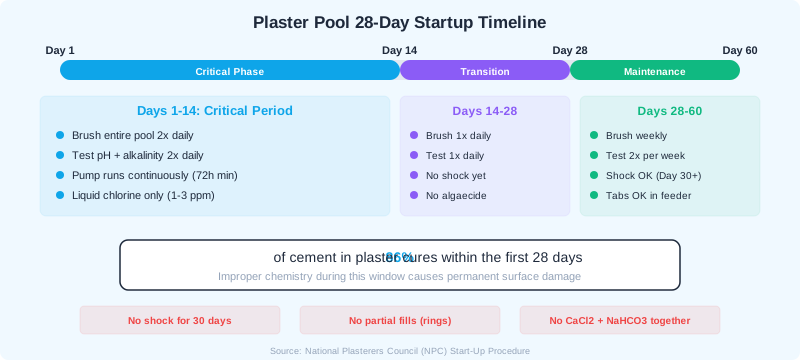
A pool startup is not just filling water and adding chlorine. The first 28 days of a plastered pool determine whether the finish cures evenly or develops mottling, discoloration, and premature etching. Fiberglass and vinyl pools are more forgiving, but imbalanced source water still causes staining, chalking, and warranty claims. According to the National Plasterers Council (NPC), 86% of the cement in plaster cures within the first 28 days, making this period the most chemically sensitive window in the life of the pool.
"I have seen brand-new plaster pools ruined in the first week because the builder filled it and walked away," says Corey Adams, Pool Founder co-founder and 15-year pool service veteran. "The homeowner called me when the surface was already streaked and pitted. That is a $10,000-$15,000 replaster that could have been avoided with proper startup chemistry. Now I treat every startup as a 28-day commitment, and I have never had a surface fail."
This guide covers the three main pool surface types: plaster (including pebble and quartz finishes), fiberglass, and vinyl liner. Each has different chemistry requirements during startup. Using the wrong procedure for the surface type is one of the most common and costly mistakes in pool service.
What Makes Pool Startup Chemistry Different from Routine Maintenance?
During a normal weekly service, you are maintaining a stable, cured pool with established water chemistry. During startup, you are dealing with an actively curing surface (plaster), a new gel coat (fiberglass), or a fresh liner (vinyl) that is chemically reactive with the fill water. The source water is unbalanced, there is no sanitizer residual, and the surface is at its most vulnerable to staining, etching, and scaling.
The Three Critical Variables in Startup
- LSI balance - The Langelier Saturation Index determines whether your water is aggressive (etching surfaces) or scaling (depositing calcium). During startup, LSI must be managed from the moment water touches the surface, not after the pool is full.
- Source water chemistry - What comes out of the hose sets your starting point. Well water, city water, and reclaimed water each bring different challenges. Test before you fill.
- Surface reactivity - New plaster actively releases calcium hydroxide into the water, raising pH and alkalinity. Fiberglass gel coats can chalk if LSI is too aggressive. Vinyl liners can absorb dyes from metals in the water. Each surface demands a tailored approach.
Never add calcium chloride and sodium bicarbonate at the same time during startup. These two chemicals react to form calcium carbonate, clouding the water and depositing scale directly on the new surface. Add one, circulate for 4 hours, then add the other.
How Do You Start Up a New Plaster Pool?
Plaster pool startup is the most demanding of the three surface types because the curing process is an active chemical reaction. Fresh plaster (including pebble finishes like PebbleTec and quartz finishes like Diamond Brite) releases calcium hydroxide into the water for the first 28 days. This raises pH and alkalinity continuously, and if not managed, creates scaling on the surface, equipment, and tile line. The NPC publishes three accepted startup methods: Traditional, Bicarb, and the Orenda Startup.
NPC Traditional Startup Method
- 1Fill the pool without stopping. Do not turn on circulation until the pool is completely full. Partial fills expose the waterline to air and cause discoloration.
- 2Once full, turn on circulation immediately. Run the pump continuously for a minimum of 72 hours.
- 3Test pH, alkalinity, and calcium hardness within the first hour of circulation. Adjust alkalinity to 80 ppm first using sodium bicarbonate if low.
- 4If alkalinity is already 80-100 ppm, lower pH to 7.2-7.6 using pre-diluted muriatic acid.
- 5Do not add calcium chloride unless calcium hardness is below 200 ppm. If it is below 200, add calcium chloride and wait 4 hours before adding any other chemical.
- 6Brush the entire pool surface from top to bottom, shallow to deep, twice daily for 14 days. This removes plaster dust (calcium hydroxide) and prevents scale from bonding to the surface.
- 7Test pH and alkalinity twice daily for the first 14 days. pH will rise continuously as the plaster cures. Add acid as needed to maintain 7.2-7.6.
- 8Do not shock the pool for the first 30 days. Use liquid chlorine only and maintain 1-3 ppm free chlorine.
- 9Do not add algaecide, phosphate remover, or clarifier during the first 28 days.
- 10After Day 28, transition to normal weekly maintenance chemistry.
NPC Bicarb Startup Method
The Bicarb method raises alkalinity to 150-300 ppm as the pool fills, creating a high-TA buffer that absorbs the pH rise from the curing plaster. Maintain pH below 8.2 for the first month. This method reduces the amount of acid needed during the 28-day period but requires more soda ash to bring alkalinity back down to normal levels afterward. It is preferred by some builders because it reduces the risk of aggressive (low LSI) water etching the fresh plaster.
"The number one plaster startup mistake is not brushing. I do not care which method you follow. If you do not brush that pool twice a day for the first two weeks, you will get calcium nodules, plaster dust buildup, and discoloration that no amount of chemistry fixes after the fact." - Corey Adams
How Do You Start Up a New Fiberglass Pool?
Fiberglass pool startup is less demanding than plaster because the gel coat is factory-applied and fully cured before installation. There is no 28-day curing window. However, fiberglass surfaces are still sensitive to aggressive water chemistry. Low LSI water (below -0.3) can etch and dull the gel coat, causing a chalky appearance that some owners mistake for fading. High metals in the source water can also stain the gel coat.
Fiberglass Startup Procedure
- 1Fill the pool completely before starting circulation. Like plaster, avoid partial fills that expose the waterline.
- 2Turn on circulation and run the pump continuously for 24-48 hours.
- 3Test pH, alkalinity, calcium hardness, and metals. Fiberglass pools need lower calcium hardness than plaster: target 175-225 ppm.
- 4Adjust pH to 7.4-7.6 and alkalinity to 80-120 ppm. Calculate LSI and target -0.3 to +0.3.
- 5If source water contains metals (well water), add a sequestering agent before adding chlorine.
- 6Add liquid chlorine to establish 1-3 ppm free chlorine. Do not use cal-hypo (calcium hypochlorite) for the initial dose, as it adds unnecessary calcium.
- 7Brush the pool once to remove any dust or debris from installation, then begin normal maintenance.
- 8Add CYA (cyanuric acid) through the skimmer to reach 30-50 ppm. Add slowly over 3 days.
Fiberglass pools are more prone to cobalt staining (blue-purple spots) than plaster pools. This comes from cobalt used in the gel coat manufacturing process. It is a cosmetic issue, not a water chemistry failure. Ascorbic acid treatment can remove cobalt stains, but they may return.
How Do You Start Up a New Vinyl Liner Pool?
Vinyl liner pools have the simplest startup chemistry because the liner is inert and does not interact with the water the way plaster and fiberglass do. The main risks during vinyl startup are metal staining from source water, wrinkling from improper water chemistry, and bleaching from excessive chlorine contact. According to liner manufacturers, maintaining calcium hardness between 175-250 ppm and pH between 7.2 and 7.6 extends liner life from the expected 7-10 years toward the upper end of that range.
Vinyl Liner Startup Procedure
- 1Fill the pool slowly to allow the liner to seat properly against the walls and floor. Do not walk on the liner until there is at least 12 inches of water.
- 2Once full, turn on circulation and run the pump for 24 hours.
- 3Test pH, alkalinity, calcium hardness, and metals. Target pH 7.2-7.6, TA 80-120 ppm, CH 175-250 ppm.
- 4If source water contains iron or copper, add a sequestering agent and circulate for 24 hours before adding chlorine.
- 5Add liquid chlorine to 1-3 ppm. Avoid granular chlorine (trichlor or dichlor) directly on the liner, as concentrated chlorine bleaches the vinyl.
- 6Add CYA to 30-50 ppm through the skimmer over 3 days.
- 7Monitor chlorine levels closely for the first week. Do not let free chlorine exceed 5 ppm, as sustained high chlorine degrades vinyl liners faster.
| Parameter | Plaster Target | Fiberglass Target | Vinyl Target |
|---|---|---|---|
| pH | 7.2-7.6 | 7.4-7.6 | 7.2-7.6 |
| Total alkalinity | 80 ppm (initial) | 80-120 ppm | 80-120 ppm |
| Calcium hardness | 200+ ppm | 175-225 ppm | 175-250 ppm |
| Free chlorine | 1-3 ppm (liquid only) | 1-3 ppm | 1-3 ppm (max 5 ppm) |
| CYA | 30-50 ppm (after Day 3) | 30-50 ppm | 30-50 ppm |
| Brushing | Twice daily x 14 days | Once at startup | Not required |
| Continuous pump run | 72 hours minimum | 24-48 hours | 24 hours |
What Are the Most Common Pool Startup Mistakes?
Startup failures cost pool builders and service companies thousands of dollars in warranty claims, replasters, and lost customers. Most of these failures trace back to the same handful of mistakes that are completely preventable with proper procedure.
- Not testing source water - Filling a pool with high-iron well water and then shocking it creates instant brown staining that can permanently discolor new plaster.
- Adding calcium chloride and sodium bicarbonate simultaneously - These chemicals react to form calcium carbonate, creating cloudiness and scale deposits on the fresh surface.
- Skipping the brushing schedule on plaster - Plaster dust (calcium hydroxide) accumulates on the surface within hours. Without regular brushing, it bonds to the finish and creates permanent discoloration and roughness.
- Shocking a new plaster pool in the first 30 days - High chlorine concentrations attack the uncured cement matrix. Use liquid chlorine at low levels only.
- Stopping the fill partway - Partial fills create a visible waterline ring on plaster as the exposed surface dries and cures differently than the submerged portion.
- Using trichlor tabs during startup - Trichlor is highly acidic (pH 2.8) and adds CYA. Concentrated acid from a tab sitting in one spot can etch plaster and bleach vinyl. Use liquid chlorine only during startup.
- Ignoring LSI - A negative LSI means aggressive water that etches surfaces. A positive LSI above +0.5 means scaling water. During startup, target LSI between -0.3 and +0.3 and check daily.
How Do You Transition from Startup to Normal Maintenance?
After the 28-day startup period (plaster) or the initial stabilization period (fiberglass and vinyl), the pool transitions to normal weekly maintenance chemistry. This transition should be gradual, not abrupt. The NPC recommends testing twice per week during the secondary cure phase (Days 28-60 for plaster) before dropping to weekly testing.
- 1Reduce brushing from twice daily to once daily (Days 14-28 for plaster), then to weekly after Day 28.
- 2Reduce testing from twice daily to daily (Days 14-28), then to twice weekly (Days 28-60), then to weekly.
- 3After Day 28 (plaster), you can begin using trichlor tabs in a chlorinator or floater. Do not place tabs directly in the skimmer basket on plaster pools.
- 4After Day 30, shocking is safe if needed. Use liquid chlorine or cal-hypo for plaster. Avoid cal-hypo on vinyl.
- 5Begin normal algaecide and phosphate remover applications if needed.
- 6Run a final LSI check and make any long-term chemistry adjustments for the customer's ongoing maintenance plan.
Document every startup with dated test results, chemical additions, and photos. If a warranty claim arises months later, your records prove that proper startup procedures were followed. This documentation has saved pool builders and service companies from five-figure replaster claims.
Ready to streamline your pool service business?
Pool Founder gives you route optimization, automated invoicing, chemical tracking, and everything else you need to run a more profitable pool business.
Frequently Asked Questions
How long does a new plaster pool take to cure?
The primary cure takes 28 days, during which 86% of the cement hydrates. The secondary cure continues for several months but is far less chemically sensitive. The first 28 days require twice-daily brushing, twice-daily testing, and continuous pump operation for at least 72 hours.
Can I swim in a new pool during the startup period?
Most pool builders recommend waiting at least 48-72 hours after the pool is filled, balanced, and sanitized before swimming. For plaster pools, some recommend waiting a full week until the surface is smooth from daily brushing. The main concern is that rough plaster dust can irritate skin and feet.
Why does the pH keep rising in my new plaster pool?
Fresh plaster releases calcium hydroxide as it cures, which is alkaline and continuously raises pH. This is normal and expected for the first 28 days. You will add more acid during startup than during normal maintenance. Test and adjust pH twice daily during this period.
Do fiberglass pools need a 28-day startup procedure?
No. Fiberglass gel coats are factory-cured and do not have an active curing period. Startup involves balancing the source water, establishing sanitizer levels, and running the pump for 24-48 hours. The main concern is maintaining LSI balance to prevent gel coat etching and managing metals in the source water.
What type of chlorine should I use during pool startup?
Use liquid chlorine (sodium hypochlorite) exclusively during startup for all surface types. It adds no calcium (unlike cal-hypo), no CYA (unlike trichlor/dichlor), and does not create concentrated acid spots (unlike trichlor tabs). Add CYA separately through the skimmer after the initial balance is established.
Sources & References
- National Plasterers Council (NPC) — Pool Start-Up Procedure Card
- NPT Pool Finishes — National Plasters Council Procedure
- AQUA Magazine — Start-Up for Plastered Pools
- Orenda Technologies — Vinyl Liner and Fiberglass Pool Startup Procedure
- Orenda Technologies — Protect Pool Plaster with LSI Balance from the Start
- PHTA — Fresh Fill Water Start-Up for Plastered Pools