Can You Run a Profitable Pool Service Business Where Pools Close for Winter?
Pool service companies in seasonal markets earn 75-80% of annual revenue in just six months, then face four to five months of near-zero recurring income while fixed costs like truck payments, insurance, and warehouse rent keep hitting. That cash flow gap kills more northern pool businesses than bad chemistry ever will. But operators in Minnesota, Ohio, and across New England have figured out models that generate steady winter revenue through hot tub service, indoor commercial pools, equipment repair, and pre-season contract sales.
This guide covers what actually works for building year-round revenue in seasonal pool markets. Not theory. The specific service lines, pricing, and operational shifts that let northern operators keep crews employed and trucks moving twelve months a year.
Data in this guide comes from the Pool & Hot Tub Alliance industry research, BLS occupational data, and operational benchmarks from seasonal pool service companies across the Midwest and Northeast.
What Does the Revenue Gap Actually Look Like in Northern Markets?
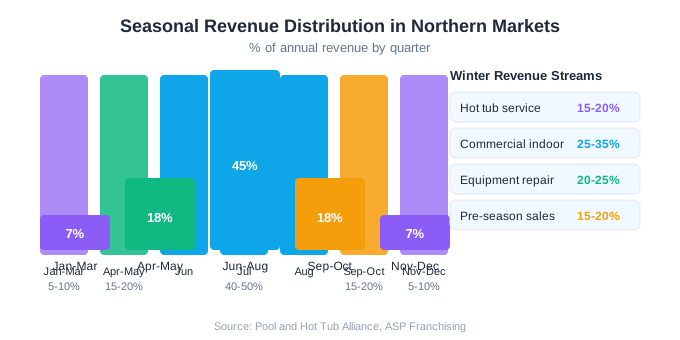
In seasonal markets, outdoor pool service demand drops 60-80% once pools close in September or October. A company running 80 weekly accounts at $175/month goes from $14,000/month in recurring revenue to almost nothing by December. Meanwhile, monthly fixed costs of $2,800-$4,500 for insurance, vehicle payments, and storage continue year-round. That means a seasonal-only operator needs to bank roughly $15,000-$22,000 during the active season just to survive winter.
| Month | Revenue Activity | % of Annual Revenue |
|---|---|---|
| January-March | Off-season: equipment repair, hot tub service, pre-season sales | 5-10% |
| April-May | Pool openings, first treatments, spring startups | 15-20% |
| June-August | Peak weekly service, chemical sales, equipment installs | 40-50% |
| September-October | Closings, winterization, cover installs | 15-20% |
| November-December | Off-season: hot tub service, indoor pools, planning | 5-10% |
The companies that thrive in these markets are not just pool companies. They are water management companies that happen to focus on pools during summer. That distinction matters because it changes how you staff, market, and price.
How Does Hot Tub Service Fill the Winter Revenue Gap?
Hot tub and spa service is the most natural winter revenue stream for pool companies. Hot tubs see peak usage from October through March, exactly when outdoor pool demand disappears. The Pool & Hot Tub Alliance reports that hot tub sales have remained strong since the post-2020 surge, and most of those owners need ongoing maintenance. A single hot tub service call generates $75-$150 in revenue, and monthly maintenance contracts run $100-$175.
$100-$175/mo
typical hot tub monthly maintenance contract in northern markets
What Hot Tub Services Should You Offer?
- Monthly water testing and chemical balancing ($100-$175/month)
- Quarterly drain, clean, and refill ($200-$350 per service)
- Cover replacement and installation ($350-$800 including the cover)
- Winterization for owners who close their spa seasonally ($150-$250)
- Spring startup and recommissioning ($125-$200)
- Heater, pump, and jet repair (parts + labor, $150-$500 average ticket)
The key to making this work is starting your hot tub marketing in August, before pool season ends. Every pool closing appointment is a chance to ask: "Do you have a hot tub we should be maintaining this winter?" You already have the chemistry knowledge, the vehicle, and the customer relationship.
What Revenue Do Commercial Indoor Pools Generate Year-Round?
Commercial indoor pools at hotels, YMCAs, apartment complexes, and fitness centers operate twelve months a year and need consistent service regardless of the weather. A single commercial indoor pool contract typically runs $500-$1,500 per month depending on the facility size and service scope. Landing three to five commercial accounts can cover your entire winter fixed-cost gap.
Commercial accounts require CPO certification in most states. If you do not already hold a Certified Pool Operator credential from the Pool & Hot Tub Alliance, budget $300-$400 for the course and exam. It is a two-day class with a five-year certification period, and it opens the door to commercial work that residential-only operators cannot touch.
Where Do You Find Commercial Indoor Pool Clients?
- Hotels and motels with indoor pools or hot tubs (call the property manager directly)
- Apartment and condo complexes with resident pools
- YMCA, community center, and municipal facilities
- Physical therapy clinics and rehab centers with therapy pools
- University and school district natatoriums
- Fitness centers and health clubs
Commercial accounts typically require proof of insurance with higher limits ($1M-$2M general liability), CPO certification, and often a formal bid process. Start building these relationships in summer when you have capacity to do site visits and proposals.
How Profitable Is Equipment Repair as a Winter Revenue Stream?
Equipment repair and replacement is a high-margin winter service that pool companies often overlook. Pumps, heaters, filters, and automation systems break year-round, and most homeowners wait until the off-season to address issues they noticed during summer. The average equipment repair ticket runs $250-$600, and full equipment replacements (pump swaps, heater installs, filter upgrades) range from $800-$3,000 with 40-50% gross margins on parts and labor.
Winter is the ideal time for equipment work because you have availability, manufacturers often run off-season promotions on equipment, and customers face no urgency to rush the job. Position equipment upgrades as "get ready for spring" projects that avoid the rush when everyone wants their pool open at the same time.
| Service | Average Ticket | Typical Margin | Winter Demand |
|---|---|---|---|
| Pump replacement | $600-$1,200 | 40-50% | Medium |
| Heater repair/replacement | $400-$3,000 | 35-45% | High (hot tub owners) |
| Filter replacement | $300-$800 | 40-50% | Medium |
| Automation/control upgrade | $1,500-$4,000 | 30-40% | Low-Medium |
| Light replacement (LED) | $250-$500 | 45-55% | Medium |
| Plumbing leak repair | $200-$600 | 50-60% | Low |
What Do Successful Operators in Minnesota and Ohio Actually Do?
Pool companies in Minnesota and Ohio face some of the most extreme seasonal swings in the country, with pool seasons running only five to six months. The operators who survive long-term have diversified into multiple winter revenue streams rather than relying on a single fallback. A typical successful model in these states combines hot tub maintenance (15-20% of winter revenue), commercial indoor pools (25-35%), equipment repair and upgrades (20-25%), and pre-season opening contracts sold in January and February (15-20%).
How Do They Handle Staffing?
Most seasonal operators in the upper Midwest run a core crew of two to three year-round employees and add seasonal workers for May through September. The year-round crew handles hot tub routes, commercial accounts, and equipment repair during winter. Seasonal workers are often recruited from landscaping companies that have the opposite slow season (winter is busy for snow removal, summer is busy for landscaping). Cross-training between pool and landscape work creates a pipeline of workers who understand service routes.
Some Ohio and Minnesota operators partner with snow removal companies. Your trucks sit idle in winter. Their equipment sits idle in summer. A shared-equipment or referral arrangement benefits both businesses without the overhead of buying plow attachments.
How Do New England Operators Approach the Seasonal Challenge?
New England pool companies deal with a shorter season than even the Midwest in some areas. Massachusetts, Connecticut, and New Hampshire pool seasons often run only late May through mid-September for weekly service. The operators who build sustainable businesses here charge premium prices during the active season and stack off-season revenue through a combination of cover sales, early-bird opening packages, and strategic partnerships.
New England operators often charge 15-25% more per weekly visit than comparable Sun Belt companies because customers understand the compressed season. A weekly service that costs $150/month in Texas might run $185-$225/month in Connecticut. That premium pricing is possible because there are fewer competitors and the seasonal urgency creates willingness to pay for reliability.
What Off-Season Revenue Strategies Work Best in New England?
- Safety cover sales and installation in October-November ($1,200-$4,000 per cover installed)
- Early-bird opening packages sold in January-February with 10% discount for prepayment
- Hot tub winterization and maintenance routes
- Equipment showroom or warehouse sales events in February-March
- Partnerships with real estate agents for pool inspections on home sales (year-round)
- Water feature and fountain maintenance for commercial properties
How Should You Price Services to Smooth Seasonal Revenue?
The most effective pricing strategy for seasonal operators is annualized billing. Instead of charging $200/month only during the six-month pool season ($1,200 total), charge $100/month for all twelve months ($1,200 total). The customer pays the same amount overall, but you get consistent cash flow year-round. This model works especially well when bundled with a spring opening and fall closing included in the annual price.
Not every customer will accept annualized billing, and that is fine. Aim to convert 30-40% of your residential accounts to annual billing plans. Combined with hot tub routes and commercial accounts, that creates enough winter cash flow to cover fixed costs and keep your best employees on payroll.
| Pricing Model | Monthly Revenue Pattern | Cash Flow Impact |
|---|---|---|
| Seasonal only (6 months) | $200/mo for 6 months, $0 for 6 months | Severe winter gap |
| Annualized billing | $100/mo for 12 months | Steady year-round |
| Seasonal + winter services | $200/mo summer, $50-$100/mo winter | Moderate smoothing |
| Annual prepaid (discounted) | $1,100 upfront (8% discount) | Large spring cash injection |
When presenting annualized billing to customers, frame it as a benefit to them: "Your pool opening and closing are included, you never get a surprise bill, and your spot on the spring schedule is guaranteed." The convenience angle sells better than asking them to subsidize your winter overhead.
What Is the Year-Round Business Model Roadmap?
Building a year-round pool service business in a seasonal market takes two to three years of deliberate effort. You are not going to add hot tubs, commercial accounts, and equipment repair all at once. Start with the lowest-hanging fruit and add revenue streams one per off-season.
Year One: Foundation
- Get CPO certified if you are not already ($300-$400, opens commercial work)
- Add hot tub maintenance to every existing customer conversation
- Launch an annualized billing option for 20-30% of current accounts
- Build an equipment repair capability (invest in diagnostic tools and supplier accounts)
Year Two: Expansion
- Pursue 3-5 commercial indoor pool accounts with formal proposals
- Expand hot tub route to 15-25 monthly maintenance accounts
- Offer safety cover sales and installation as a fall revenue stream
- Hire or retain one year-round technician dedicated to winter work
Year Three: Optimization
- Target 40-50% of residential accounts on annualized billing
- Add water feature and fountain maintenance for commercial clients
- Develop early-bird marketing campaigns for January-February pre-season sales
- Evaluate partnerships (snow removal companies, landscapers, real estate agents)
Free starter kit
Start a pool service business with the numbers already run.
A short email series from an owner who started with $1,200 and a used truck. No software pitch, just the four things that decide whether year one works.
- Startup cost breakdownEvery line item from $2K bootstrap to fully equipped
- Pricing calculatorThe minimum you can charge per visit and still profit
- First-10-customers playbookDoor hangers, referrals, and the phone script that closes
- Licensing & insurance checklistWhat your state requires and which insurers pay claims
Already running routes? Try Pool Founder free
Frequently Asked Questions
Can you run a pool service business profitably in Minnesota or Wisconsin?
Yes, but only if you diversify beyond summer-only pool service. Successful operators in Minnesota and Wisconsin combine hot tub maintenance, commercial indoor pools, equipment repair, and annualized billing to generate winter revenue. Expect 75-80% of pool-specific revenue in six months, with diversified services covering the remaining months.
How many hot tub accounts do you need to cover winter overhead?
At $125-$175 per monthly maintenance contract, you need 20-35 hot tub accounts to cover typical winter fixed costs of $2,800-$4,500/month. Most operators build to this level over two winter seasons by marketing to their existing pool customer base first.
Is CPO certification required for residential pool service in northern states?
CPO certification is not typically required for residential-only pool service, but it is required for commercial pool work in most states. Since commercial indoor pools provide the best year-round revenue, getting CPO certified is a strategic investment even if your state does not mandate it for residential work.
What is annualized billing and do customers accept it?
Annualized billing spreads seasonal service costs evenly across twelve months. Instead of paying $200/month for six months, the customer pays $100/month year-round for the same total. Expect 30-40% of customers to accept this model, especially when you include pool opening and closing in the package.
Should I offer snow removal as a winter service?
Most pool service operators partner with snow removal companies rather than offering it directly. Snow removal requires different equipment, insurance, and expertise. A better approach is a referral partnership where you recommend each other and potentially share vehicle or storage resources.
How do I find commercial indoor pool clients?
Start with hotels, apartment complexes, and fitness centers in your service area. Call property managers directly, introduce your CPO certification, and offer a free facility assessment. Municipal facilities like YMCAs and community centers often post RFPs on their websites or local government bid boards.