Why Is Florida the Largest Pool Service Market in the United States?
Florida has approximately 1.59 million residential swimming pools, making it the number one state for pool count in the United States. Through Q2 2025, Florida recorded 14,487 new pool permits, a 5% year-over-year increase according to HBWeekly construction data. Pool Corp expects Florida to soon become the largest U.S. market by total installed base, overtaking California. For pool service operators, that means the biggest addressable market in the country with year-round demand.
But Florida also has the most complex licensing requirements of any state, region-specific pricing dynamics, a rainy season that throws off chemistry weekly from June through October, and hurricane seasons that can reshape your entire business in a single storm. This guide covers what you need to know to operate a pool service business in Florida, whether you are starting fresh, relocating, or growing an existing operation.
How Big Is the Florida Pool Service Market?
Florida dominates the U.S. pool market by every measure. With 1.59 million residential pools and steady new construction, the state has more pools than any other. The year-round swimming season means there is no off-season revenue gap like northern markets face. Pool service is a twelve-month business in Florida, with demand increasing during summer rather than disappearing.
1.59 Million
residential swimming pools in Florida, the most of any U.S. state
Source: PoolDial / RubyHome 2026 Pool Statistics
| Region | Key Markets | Market Character |
|---|---|---|
| South Florida | Miami, Fort Lauderdale, West Palm Beach | Highest density, most competitive, premium pricing for luxury homes |
| Central Florida | Orlando, Tampa, Lakeland | Fastest growing, strong new construction, mid-range pricing |
| Southwest Florida | Naples, Fort Myers, Sarasota | Affluent retiree market, high service expectations, premium pricing |
| Northeast Florida | Jacksonville, St. Augustine | Semi-seasonal (mild winters), growing suburban market |
| Panhandle | Pensacola, Tallahassee | Most seasonal Florida market, some winter slowdown |
Nearly 1,880 new pool permits were filed in April 2025 alone. That steady pipeline of new pool construction means new customers entering the service market every month, even in areas where existing competition is strong.
What Licenses Do You Need for Pool Service in Florida?
Florida has the most structured pool contractor licensing system in the country. The Construction Industry Licensing Board (CILB) under the Department of Business and Professional Regulation (DBPR) issues three categories of pool contractor licenses: Commercial, Residential, and Service. Each has different requirements and scopes of work.
What Are the Three License Categories?
| License Type | Scope of Work | Experience Required |
|---|---|---|
| Service Contractor | Maintenance, repair, chemical service | 4 years (1 year as supervisor) |
| Residential Contractor | Build and renovate residential pools | 4 years (1 year as supervisor) |
| Commercial Contractor | Build and service commercial pools | 4 years (1 year as supervisor) |
All applicants must be at least 18 years old, pass state certification exams (trade knowledge and business/finance), and submit a credit report with a FICO score. If your FICO score is below 660, you must post a bond or irrevocable letter of credit. College credits or military experience can offset up to three years of the four-year experience requirement.
The Florida Swimming Pool Association (FSPA) offers a Swimming Pool and Spa Service Certification Course that counts as three years of experience credit toward your license application. This is the fastest path for new operators who lack the four years of documented field experience.
For basic pool cleaning and chemical-only service, some operators start as an employee of a licensed contractor to build the required four years of experience while learning the Florida market. Others pursue the FSPA certification course to accelerate the timeline.
What Does Pool Service Cost in Florida by Region?
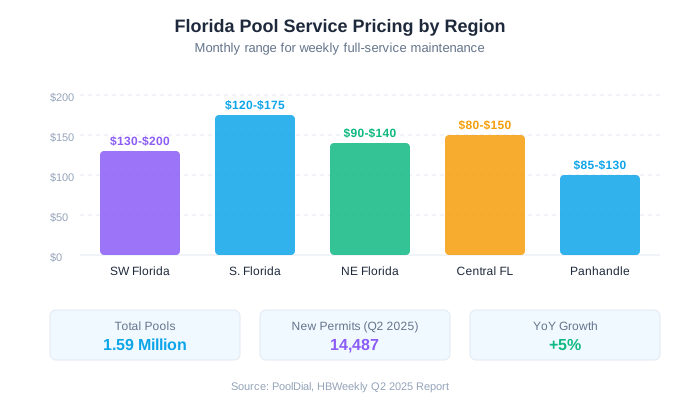
Florida pool service pricing varies by region, service level, and pool type. Weekly full-service maintenance runs $80-$150 per month for a standard residential pool. Chemical-only service (testing and treatment without brushing, skimming, or filter work) starts around $50-$60/month. South Florida and Southwest Florida command the highest rates, while Central Florida and the Panhandle tend to be more price-competitive.
| Region | Weekly Full Service | Chemical-Only | Pool Opening (one-time) |
|---|---|---|---|
| South Florida (Miami, FTL) | $120-$175/mo | $65-$90/mo | N/A (year-round) |
| Central Florida (Orlando, Tampa) | $80-$150/mo | $50-$75/mo | N/A (year-round) |
| Southwest Florida (Naples, Sarasota) | $130-$200/mo | $70-$95/mo | N/A (year-round) |
| Northeast Florida (Jacksonville) | $90-$140/mo | $55-$80/mo | $150-$250 |
| Panhandle (Pensacola) | $85-$130/mo | $50-$70/mo | $125-$225 |
Most Florida pools are screened (enclosed in a pool cage), which reduces debris significantly compared to open-air pools in other states. Screened pools typically command slightly lower pricing because they require less skimming and leaf removal per visit. Pools without screens, especially those surrounded by palm trees, justify higher pricing due to the extra cleaning time.
How Does Rainy Season Affect Pool Chemistry in Florida?
Florida rainy season runs from June through October, bringing daily afternoon thunderstorms that dump large volumes of rainwater into pools. Every heavy downpour dilutes chlorine levels, lowers alkalinity and pH, introduces phosphates and organic matter from runoff, and creates ideal conditions for algae blooms. When free chlorine drops below 1 ppm after a storm, algae can bloom within 24-48 hours in Florida heat.
What Chemistry Adjustments Does Rainy Season Require?
- Increase chlorine dose by 25-50% during rainy season to compensate for dilution
- Test and adjust alkalinity more frequently (rain is acidic, typically pH 5.0-5.5)
- Run pumps longer (10-12 hours/day vs. 8 hours) to maintain circulation after storms
- Add phosphate remover monthly to counteract nutrient loading from storm runoff
- Keep algaecide maintenance doses active throughout rainy season as a preventive layer
- Check CYA levels monthly since dilution from rain reduces stabilizer concentration
For pool service operators, rainy season means higher chemical costs per pool and more frequent chemistry adjustments. Your per-pool chemical expense may increase 30-40% from June through October. Account for this in your pricing or you will lose margin during the exact months when you should be most profitable.
Many experienced Florida operators build rainy season chemical costs into their annual pricing rather than charging a summer surcharge. A flat monthly rate that averages the higher summer chemical cost across twelve months is easier for customers to accept.
How Does Hurricane Season Impact Pool Service Operations?
Hurricane season officially runs June 1 through November 30, overlapping entirely with rainy season. While major hurricanes do not hit every year, when they do the impact on pool service businesses is massive. Storm debris overwhelms pools and filtration systems. Floodwaters can contaminate pools with oils, fertilizers, bacteria, and sewage. Power outages stop pumps, allowing stagnant water to go green within days. And the post-storm cleanup demand creates a temporary surge that can overwhelm your capacity.
What Should Your Hurricane Preparedness Plan Include?
- Pre-storm: Remove loose pool furniture, lower water level 1-2 feet, superchlorinate, turn off electrical equipment
- Do NOT drain the pool. An empty pool can pop out of the ground from hydrostatic pressure.
- Post-storm: Remove debris before starting the pump (prevents clogging and motor damage)
- After debris removal, shock to 10+ ppm and run pump continuously for 24-48 hours
- Test for contamination if floodwater entered the pool (bacteria, fuel, sewage)
- Document damage thoroughly for insurance claims, both yours and the homeowner's
The post-hurricane surge is a significant revenue opportunity. Storm cleanup visits typically bill at $200-$500+ depending on severity, compared to a normal weekly service visit. Having a hurricane cleanup protocol ready means you can respond quickly, help your customers when they need it most, and generate substantial revenue during a period when normal service is disrupted.
What Should Out-of-State Operators Know About Florida?
Florida attracts pool service entrepreneurs from across the country because of the year-round season and huge market. But operators who move from northern or western states need to adjust their expectations and operations for Florida-specific conditions.
| Factor | What to Expect in Florida |
|---|---|
| Licensing | 4 years experience required for a service contractor license, or FSPA certification course for 3-year credit |
| Competition | High in established markets. South Florida is the most competitive pool service market in the country. |
| Insurance | Higher premiums due to hurricane exposure. Budget $3,000-$6,000/year for GL + commercial auto. |
| Screen enclosures | Most Florida pools have screen cages. Learn to work in and around them without damaging screens. |
| Pest/wildlife | Frogs, lizards, and insects are constant filter clogging issues. Alligators are an occasional reality in certain areas. |
| Water chemistry | Higher chemical usage year-round due to heat. Rainy season chemistry requires different approach than dry season. |
| Customer expectations | Year-round service, no seasonal contracts. Customers expect 52 visits per year. |
Florida pool customers are generally more educated about pool service than customers in northern states because they use their pools year-round. They notice when chemistry is off, they check filter pressure, and they will call if their pool looks different. Consistent quality matters more here than in seasonal markets.
Where Are the Best Opportunities in Florida Right Now?
The fastest-growing Florida pool markets track population growth corridors. Central Florida around the I-4 corridor from Tampa to Orlando continues to add residents and new pool construction at a rapid pace. The Villages in Sumter County is one of the fastest-growing communities in the country with high pool density. Cape Coral and Fort Myers in Southwest Florida are rebuilding aggressively after Hurricane Ian, creating both new construction and restoration service demand.
- I-4 corridor (Tampa to Orlando): Strong new construction, growing suburbs, moderate competition
- Cape Coral / Fort Myers: Post-hurricane rebuilding, new pool construction, high demand for reliable operators
- Jacksonville suburbs (St. Johns County): Fastest-growing county in Florida, new developments with high pool attachment rates
- The Villages and surrounding areas: Retiree community with high willingness to pay for quality service
- Space Coast (Brevard County): Growing tech and aerospace employment driving home construction
Avoid trying to break into established South Florida markets (Miami, Fort Lauderdale) without an existing customer base or acquisition. The competition is fierce, and customer acquisition costs are the highest in the state. If you are starting fresh, Central Florida and the growth corridors offer a much better risk-to-reward ratio.
Free starter kit
Start a pool service business with the numbers already run.
A short email series from an owner who started with $1,200 and a used truck. No software pitch, just the four things that decide whether year one works.
- Startup cost breakdownEvery line item from $2K bootstrap to fully equipped
- Pricing calculatorThe minimum you can charge per visit and still profit
- First-10-customers playbookDoor hangers, referrals, and the phone script that closes
- Licensing & insurance checklistWhat your state requires and which insurers pay claims
Already running routes? Try Pool Founder free
Frequently Asked Questions
Do you need a license to clean pools in Florida?
Yes. Florida requires a service contractor license from the DBPR for pool maintenance and repair work. This requires four years of experience (one year as a supervisor), passing trade and business exams, and a credit check. The FSPA certification course can offset three years of the experience requirement.
How much does pool service cost per month in Florida?
Weekly full-service pool maintenance in Florida ranges from $80-$200/month depending on the region. Central Florida averages $80-$150/month, South Florida runs $120-$175/month, and Southwest Florida commands $130-$200/month for luxury properties. Chemical-only service starts at $50-$90/month.
Is pool service year-round in Florida?
In most of Florida, pool service is year-round (52 weeks). The Panhandle and Northeast Florida may see slight winter slowdowns, but pools rarely close completely. South Florida, Central Florida, and Southwest Florida operate at full capacity every month of the year.
How does rainy season affect pool service in Florida?
Daily afternoon thunderstorms from June through October dilute chlorine, lower pH and alkalinity, introduce phosphates, and create conditions for algae blooms. Pool operators need to increase chlorine dosing by 25-50%, test chemistry more frequently, and budget for 30-40% higher chemical costs during these months.
Should you drain a pool before a hurricane?
Never drain a pool before a hurricane. An empty pool can pop out of the ground due to hydrostatic pressure from saturated soil and rising water tables. Instead, lower the water level 1-2 feet, superchlorinate, remove loose furniture, and turn off electrical equipment.
What is the hardest part of running a pool business in Florida?
The licensing requirements are the biggest barrier to entry. Four years of experience plus exams and credit checks create a significant hurdle for new operators. Beyond that, the combination of intense competition in established markets, high insurance costs due to hurricane exposure, and elevated chemical costs from year-round heat make margin management critical.
Sources & References
- PoolDial - How Many Pools Are in the United States: State-by-State Data
- HBWeekly - Florida Swimming Pool Construction Trends: Q2 2025 Report
- FSPA - Licensing Information
- DBPR - Construction Industry Licensing Board
- JTS Pool Services - How Florida Weather Affects Your Pool
- University of Florida - Swimming Pools and Hurricanes