Maintenance Pays the Bills. Repairs Build the Business.
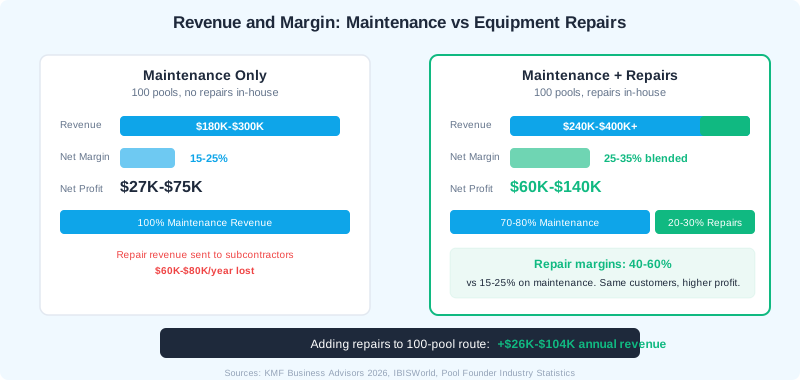
Most pool service companies earn 70-80% of their revenue from recurring maintenance at 15-25% net margins. The other 20-30% comes from repairs and equipment installs, but those jobs carry 40-60% margins because parts are marked up and billable labor rates are higher. According to KMF Business Advisors' 2026 analysis, the mean revenue per pool service company is approximately $562,000, with repair and equipment work accounting for $112,000-$169,000 of that total. Scaling repair revenue is the fastest way to increase profitability without adding more route stops.
"For the first three years of my business, I subbed out every repair to a separate equipment company," says Corey Adams, Pool Founder co-founder and 15-year pool service veteran. "I was handing away $60,000-$80,000 a year in work I could have done myself. Once I invested in the right tools and learned the common repairs, that revenue came back in-house and my margins jumped overnight. You do not need to be an electrician or plumber. You need to master 8-10 common repairs that cover 80% of what you see in the field."
How Much Revenue Can Equipment Repairs Add?
The revenue opportunity depends on your customer count and how much repair work you currently handle versus subcontract. A company servicing 100 pools will encounter an average of 2-4 repair opportunities per week across the route. At an average ticket of $250-$500 per repair (parts + labor), that translates to $26,000-$104,000 in annual repair revenue from your existing customer base alone.
40-60%
profit margin on equipment repairs vs 15-25% on maintenance
Source: KMF Business Advisors 2026
| Pool Count | Repair Opportunities/Week | Avg Ticket | Annual Repair Revenue |
|---|---|---|---|
| 50 pools | 1-2 | $250-$500 | $13,000-$52,000 |
| 100 pools | 2-4 | $250-$500 | $26,000-$104,000 |
| 150 pools | 3-6 | $250-$500 | $39,000-$156,000 |
| 200 pools | 4-8 | $250-$500 | $52,000-$208,000 |
These numbers assume you capture the repair work from your own route customers. The opportunity grows further when you accept repair-only calls from non-route customers, which also serves as a lead generation channel for new maintenance accounts.
Which Repairs Should You Take On First?
Not every repair is worth learning or investing in. The goal is to identify the repairs that happen most frequently, have the highest margin, and require minimal specialized tools. Start with the 8-10 most common residential repairs and expand from there as your confidence and tool inventory grow.
Tier 1: Start Here (Low Complexity, High Frequency)
| Repair | Parts Cost | Total Charge (Parts + Labor) | Margin | Time on Site |
|---|---|---|---|---|
| Pump shaft seal replacement | $15-$30 | $125-$200 | 75-85% | 30-45 min |
| Pump lid O-ring replacement | $10-$25 | $75-$125 | 75-85% | 15-20 min |
| Impeller cleaning (clogged) | $0 | $75-$125 | 100% | 15-30 min |
| Salt cell cleaning/replacement | $0-$900 | $150-$1,100 | 40-50% | 30-60 min |
| Valve actuator replacement | $200-$400 | $350-$600 | 40-50% | 30-60 min |
| Timer/clock replacement | $30-$100 | $150-$250 | 55-65% | 30-45 min |
| Pool light bulb/LED replacement | $30-$150 | $200-$400 | 50-60% | 45-90 min |
Tier 2: Intermediate (Moderate Complexity, Good Margin)
| Repair | Parts Cost | Total Charge (Parts + Labor) | Margin | Time on Site |
|---|---|---|---|---|
| Pump motor replacement | $200-$500 | $400-$750 | 45-55% | 60-90 min |
| Full pump replacement | $400-$1,500 | $700-$2,500 | 40-50% | 60-120 min |
| Filter multiport valve replacement | $150-$400 | $300-$650 | 45-55% | 60-90 min |
| Heater pressure switch/flow switch | $30-$80 | $150-$250 | 60-70% | 30-60 min |
| Salt cell replacement | $300-$900 | $500-$1,200 | 40-45% | 30-45 min |
| Cartridge filter element replacement | $50-$200 | $150-$350 | 50-60% | 30-45 min |
Tier 3: Advanced (Refer or Grow Into)
- Gas heater heat exchanger replacement ($800-$1,500 parts): High margin but requires gas line knowledge. Consider this after you are comfortable with Tier 1 and 2 repairs.
- Pool light niche and conduit repair: Requires working in the pool and pulling cable. Good margin but time-intensive.
- Automation system installation (Pentair IntelliCenter, Hayward OmniLogic): $1,500-$3,500 in parts, $500-$1,000 in labor. Requires wiring knowledge and programming.
- Replumbing and leak repair: Requires PVC and plumbing skills. High margin but time-consuming for underground leaks.
- Electrical panel and wiring: In most states, this requires a licensed electrician. Sub this out unless you hold the appropriate license.
What Tools Do You Need for Equipment Repairs?
Building a repair tool kit does not require a massive upfront investment. Most Tier 1 repairs can be handled with tools that cost under $500 total. As you move into Tier 2 work, you will add specialized tools incrementally. The key is to have the right tools on your truck so you can complete repairs on the first visit instead of scheduling a return trip.
| Tool | Cost | Used For |
|---|---|---|
| Digital multimeter | $30-$80 | Electrical diagnosis: voltage, continuity, capacitor testing |
| Socket set (1/4", 3/8", 1/2" drives) | $50-$100 | Pump housing bolts, clamp bands, valve screws |
| Channel lock pliers (2 sizes) | $20-$40 | Unions, fittings, stubborn connections |
| Strap wrench | $15-$25 | Pump union connections without scratching |
| Silicone O-ring lubricant | $5-$10 | Every O-ring service |
| O-ring kit (universal + brand-specific) | $20-$50 | Pump lids, unions, valve stems |
| PVC cement + primer | $10-$15 | Plumbing connections, leak repair |
| Impeller wrench (brand-specific) | $15-$25 each | Removing impellers from motor shafts (Pentair, Hayward) |
| Shaft seal tool / puller | $20-$30 | Removing old shaft seals without damaging the seal plate |
| Pipe cutter and deburring tool | $25-$40 | Clean PVC cuts for replumbing |
| Headlamp | $15-$25 | Working inside equipment pads, under covers, in dark areas |
| Torque wrench (for clamp bands) | $30-$50 | Proper tightening on Pentair and Hayward clamp bands |
$300-$500
total tool investment to handle Tier 1 repairs
Source: Industry survey of pool service operators
Keep a small parts inventory on your truck: pump lid O-rings for the 3-4 most common models you service (Pentair SuperFlo, Hayward Super Pump, Jandy FloPro), a universal shaft seal kit, valve O-ring rebuild kits, and Teflon tape. These $50-$100 in parts let you close 30% of repairs on the first visit without a parts run.
How Should You Price Equipment Repairs?
Equipment repair pricing uses a combination of parts markup and labor rate. The industry standard for pool service is a 30-50% markup on parts and a labor rate of $85-$150 per hour depending on market. Flat-rate pricing (a fixed price per repair type) is becoming more common because it simplifies quoting, sets clear expectations, and often results in higher effective hourly rates for experienced technicians who complete work faster.
Pricing Models
- Time and materials: Parts cost + markup (30-50%) + labor rate x hours. Transparent but unpredictable for the customer. Works well for diagnostic calls where the scope is unclear.
- Flat rate: A fixed price for each repair type regardless of time spent. Rewards efficiency. Customers prefer this because they know the total cost upfront. Build your flat rates using average time + parts + desired margin.
- Diagnostic fee + repair quote: Charge a flat diagnostic fee ($75-$125) to show up and diagnose. If the customer approves the repair, waive the diagnostic fee or apply it toward the repair total. This protects your time on calls that do not convert.
| Pricing Component | Range | Notes |
|---|---|---|
| Diagnostic/trip fee | $75-$125 | Covers your time to show up and diagnose. Often waived if repair is approved. |
| Hourly labor rate | $85-$150/hour | Varies by market. Higher in coastal and urban markets. |
| Parts markup | 30-50% | Standard industry practice. Covers procurement, inventory risk, and warranty. |
| Minimum service charge | $125-$175 | No repair job should bill below your minimum to cover drive time and overhead. |
| Emergency/after-hours surcharge | 1.5x-2x labor rate | For weekend, evening, or urgent calls outside normal hours. |
"I switched to flat-rate pricing two years ago and my repair revenue went up 20% with no extra work. Customers stopped hesitating because they knew the exact cost. And because I know how long each repair takes me, I built in enough margin that my effective hourly rate is higher than time-and-materials ever was." - Corey Adams
How Do You Find More Repair Opportunities on Your Route?
The repair opportunities are already on your route. Most pool service technicians walk past $500-$1,000 in repair work every week because they are focused on getting through the route quickly. A 2-minute equipment inspection at every stop identifies aging equipment, early failure signs, and upgrade opportunities that you can quote proactively instead of waiting for the emergency call.
2-Minute Equipment Pad Inspection
- 1Listen to the pump. New noises (grinding, screeching, humming) signal bearing wear, impeller clogs, or capacitor issues.
- 2Check for leaks. Look at the pump seal plate, filter housing, heater connections, and all unions. A wet equipment pad means something is leaking.
- 3Read the filter pressure. If it is consistently high (above 25 PSI) after cleaning, the filter media needs replacement or the filter is undersized.
- 4Check the heater. Look for error codes on the display, rust on the cabinet, and listen for ignition. A heater that does not fire or short-cycles is a repair opportunity.
- 5Inspect the salt cell. Pull the cell and look for scale buildup. If the cell is scaled, clean it and quote a preventive maintenance plan.
- 6Look at equipment age. Note manufacturer dates on equipment labels. Pumps over 10 years, heaters over 7 years, and salt cells over 4 years are approaching replacement windows.
- 7Document and quote. Take a photo, note the finding in your service report, and send the customer a quote within 24 hours.
Pool Founder tracks equipment age and condition for every customer. When a pump hits 10 years or a heater crosses 7, the system flags it for proactive replacement quoting. This turns reactive repairs into planned upgrades that are easier for customers to approve.
Which Repairs Should You Always Subcontract?
Not every repair makes sense to handle in-house. Some jobs require specialized licenses, carry significant liability risk, or happen so rarely that the tool investment is not justified. Knowing what to refer out is just as important as knowing what to take on.
- Electrical panel work: In most states, adding circuits, upgrading panels, or running new electrical to the equipment pad requires a licensed electrician. The liability for unpermitted electrical work is not worth the revenue.
- Gas line installation or modification: Running or modifying natural gas or propane lines requires a licensed plumber or gas fitter in all states. Gas leaks are a safety and liability issue.
- Underground leak detection and repair: Pressure testing and locating underground pipe leaks requires specialized equipment (electronic listening devices, helium detection) that costs $5,000-$15,000. Most pool companies sub this to a leak detection specialist.
- Pool resurfacing (replaster): This is a specialized trade with crews, shotcrete/plaster equipment, and a 28-day startup commitment. Sub to a plastering company.
- Structural repairs (deck, coping, tile): Concrete and tile work requires different skills and tools than pool equipment repair. Sub to a mason or tile contractor.
Build relationships with 2-3 trusted subcontractors for each category. When you refer work to them, negotiate a referral fee or reciprocal referral arrangement. Even on work you sub out, you maintain the customer relationship and get credit for solving the problem.
Ready to streamline your pool service business?
Pool Founder gives you route optimization, automated invoicing, chemical tracking, and everything else you need to run a more profitable pool business.
Frequently Asked Questions
How much can equipment repairs add to pool service revenue?
A company servicing 100 pools can expect $26,000-$104,000 in annual repair revenue from their existing customer base. Repairs carry 40-60% profit margins compared to 15-25% on maintenance. This makes repair work the highest-margin activity in pool service and the fastest path to increased profitability.
Do I need a contractor license to do pool equipment repairs?
Requirements vary by state. Many states allow pool service companies to perform equipment replacement and repair without a contractor license, as long as they do not modify electrical or gas connections. Florida, California, Arizona, and Texas each have specific regulations. Check your state licensing board for current requirements. Electrical and gas work almost always requires the appropriate trade license.
How much should I charge for a pool pump replacement?
A full pump replacement typically runs $700-$2,500 installed (parts + labor), depending on pump type. A standard variable-speed pump costs $400-$1,500 for the part. Add $200-$500 for labor (1-2 hours) and a 30-50% parts markup. This produces a 40-50% margin on the job.
Should I stock parts on my truck or order as needed?
Stock the most common consumables and fast-moving items: O-rings for popular pump models, shaft seal kits, valve rebuild kits, Teflon tape, and silicone lubricant. For larger parts (pumps, motors, salt cells, heaters), order as needed from your distributor. Most pool supply distributors offer same-day or next-day pickup for common equipment.
What is a fair markup on pool equipment parts?
The industry standard is 30-50% markup on parts. This covers your procurement time, inventory carrying cost, warranty risk, and delivery. Some companies charge less on high-ticket items (heaters, automation systems) and more on small parts (O-rings, seals) to keep the total price competitive while maintaining margin.
How do I handle warranty claims on equipment I install?
Register every piece of equipment you install with the manufacturer using the customer's information. Keep copies of receipts and serial numbers. If a warranty claim arises, you facilitate the claim with the manufacturer, handle the labor for removal and reinstallation, and charge the customer for labor only (parts covered under warranty). Most manufacturers cover parts for 1-3 years; labor warranties vary.
Sources & References
- KMF Business Advisors — Pool Service Business Profitability (2026)
- IBISWorld — Pool Service Industry Revenue Data
- Angi — Pool Repair Costs: A Complete Price Guide (2026)
- ConsumerAffairs — Cost to Repair a Pool (2026)
- Pool Founder — Pool Service Industry Statistics (2026)
- DealStream — Pool Service Business Rules of Thumb Guide