Low Flow Does Not Always Mean a Bad Pump. Check the Impeller First.
A clogged pump impeller is one of the most common causes of low flow in residential pool systems, and one of the most overlooked. The impeller sits behind the pump basket inside the volute housing. Debris that passes through the basket, things like pine needles, flower stamens, small pebbles, and plaster chips, gets caught in the impeller vanes and restricts water flow. Filter pressure drops to half of normal, return jets weaken, and the pool stops circulating properly.
"A clogged impeller is the easiest $100 service call you will ever run," says Corey Adams, Pool Founder co-founder and 15-year pool service veteran. "It takes 10-15 minutes to clean, costs nothing in parts, and the customer thinks you just saved their pump. I teach every new tech to check the impeller before they ever diagnose a pump problem as mechanical failure."
Always turn off the pump at the circuit breaker before reaching into the pump housing or touching the impeller. Pool pumps run on 115V or 230V, and the impeller can start spinning without warning if the timer or automation kicks in.
How Do You Know If the Impeller Is Clogged?
A clogged impeller produces a specific set of symptoms that, once you learn the pattern, are unmistakable. The key is that the pump motor is running fine, the motor sounds normal (no grinding or screeching), but the water flow is significantly reduced. The pump is doing its job mechanically, but the impeller cannot move water because its vanes are blocked.
Symptoms of a Clogged Impeller
- Filter pressure drops to half of normal or lower. If the clean pressure is normally 12 PSI and you are reading 5-6 PSI, the pump is not pushing enough water to pressurize the filter.
- Weak return jets. Put your hand in front of a return jet. If the flow is noticeably weaker than normal but the pump is running, something is restricting flow before the filter.
- Pump strainer basket does not fill completely with water. Look through the pump lid while the pump is running. A healthy pump fills the basket fully. A clogged impeller leaves the basket partially empty with visible air.
- Low, grinding noise from the pump. Debris scraping against the impeller vanes creates a distinctive grinding or rattling sound that is different from bearing noise (which is a high-pitched screech).
- Pump runs but pool water is not circulating. The skimmer pull is weak, dead spots form in the pool, and chemical distribution suffers.
The critical diagnostic distinction: if the motor sounds normal but flow is low, check the impeller. If the motor screeches, grinds loudly, or runs hot, the problem is bearings, windings, or the capacitor, not the impeller.
What Causes an Impeller to Clog?
The impeller is designed to move water, not filter it. Anything small enough to pass through the pump basket but too large to pass through the impeller vanes gets stuck. The basket has openings of roughly 1/4 inch, while impeller vanes have gaps of 1/8 to 3/16 inch. Debris in that size range is the primary culprit.
- Pine needles - The number one impeller clogger in residential pools. Pine needles are thin enough to pass through the basket but rigid enough to wedge in impeller vanes.
- Flower and tree stamens - Spring pollen season drops millions of small, sticky stamens that clump together inside the impeller.
- Small pebbles and sand - Common in pools with rock waterfalls, decomposed granite landscaping, or sandy yards.
- Plaster chips - Pools with deteriorating plaster shed small chips that settle in the main drain and get pulled into the pump.
- Hair and string - Long hair and string wrap around the impeller shaft, gradually restricting rotation.
- Broken pump basket - A cracked or missing basket lets large debris reach the impeller directly. Always replace damaged baskets immediately.
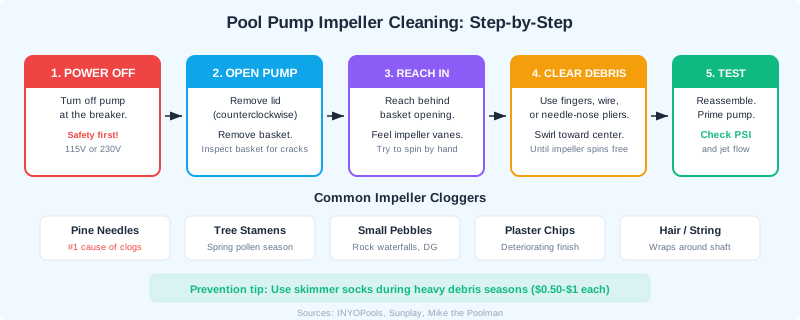
How Do You Clean a Pool Pump Impeller (Quick Method)?
The quick method works for minor clogs where debris is accessible through the basket opening without disassembling the pump. This handles about 70% of impeller clogs and takes 5-10 minutes. Save the full disassembly method for severe clogs where the quick method does not restore normal flow.
Quick Cleaning Procedure
- 1Turn off the pump at the circuit breaker. Confirm the pump is completely off.
- 2Remove the pump lid by turning it counterclockwise (or releasing the clamp band on older models).
- 3Remove the pump basket and set it aside.
- 4Reach into the opening behind the basket with your fingers. You will feel the impeller, a round disc with curved vanes.
- 5Try to spin the impeller by hand. If it does not spin freely, debris is blocking it.
- 6Use your fingers, a small screwdriver, or needle-nose pliers to pull debris out of the vanes. Work in a swirling motion toward the center opening.
- 7Continue until the impeller spins freely by hand with no resistance.
- 8Replace the basket (inspect it for cracks first), replace the pump lid, and tighten.
- 9Turn the breaker back on and prime the pump. Confirm normal flow by checking filter pressure and return jet strength.
Keep a 6-inch piece of stiff wire (like a bent coat hanger) on your truck for impeller cleaning. It reaches deeper into the vanes than your fingers and hooks debris that is wedged tightly. Needle-nose pliers work too, but wire is faster for pine needles.
How Do You Clean the Impeller by Disassembling the Pump?
When the quick method does not clear the clog, or when debris is packed deep in the vanes, you need to separate the pump housing to access the impeller directly. This takes 15-30 minutes and requires basic hand tools. The procedure varies slightly by pump brand, but the general approach is the same for Pentair, Hayward, and Jandy pumps.
Full Disassembly Procedure
- 1Turn off the pump at the breaker. Confirm power is off.
- 2Close the suction and return valves (if equipped) to prevent water from draining out of the plumbing.
- 3Remove the pump lid and basket.
- 4Locate the clamp band or bolts that hold the seal plate (motor side) to the volute (plumbing side). Most residential pumps use either a clamp band with a single bolt or 6-8 bolts around the seal plate.
- 5Remove the clamp band or bolts. For clamp bands: loosen the nut, pry the band open, and remove. For bolts: remove all bolts evenly.
- 6Pull the motor straight back to separate it from the volute. The impeller stays attached to the motor shaft.
- 7With the impeller now exposed, clean all vanes thoroughly. Remove all debris, calcium buildup, and any foreign objects.
- 8Inspect the impeller for cracks or damage. A cracked impeller cannot be repaired and must be replaced ($25-$75 for the part).
- 9Inspect the diffuser plate (the stationary ring behind the impeller). Clear any debris caught in the diffuser.
- 10Inspect the shaft seal while the pump is apart. If the seal is leaking, replace it now ($15-$30).
- 11Reassemble by pushing the motor back into the volute. Align the seal plate evenly, replace the clamp band or bolts, and tighten.
- 12Replace the basket and lid, open valves, prime the pump, and test for normal flow and no leaks.
Brand-Specific Notes
| Pump Brand/Model | Housing Type | Key Detail |
|---|---|---|
| Pentair IntelliFlo / SuperFlo | Clamp band | Single bolt on clamp. Use a 9/16" socket. Do not overtighten on reassembly. |
| Pentair WhisperFlo | Clamp band | Same clamp as IntelliFlo. Diffuser is retained by a screw; remove to fully clean. |
| Hayward Super Pump / MaxFlo | 6 bolts on seal plate | Use a 9/16" socket. Bolts corrode; apply anti-seize on reassembly. |
| Hayward TriStar / EcoStar | Clamp band | Large clamp band with a 5/8" bolt. Check the motor shaft seal during cleaning. |
| Jandy FloPro / Stealth | Clamp band | Standard clamp. The diffuser snaps in; pry gently when removing. |
| Sta-Rite Max-E-Pro | Clamp band | Similar to Pentair. Inspect the wear ring behind the impeller for scoring. |
How Do You Prevent Impeller Clogs?
Preventing impeller clogs is mostly about managing what gets past the pump basket. A few simple habits dramatically reduce clog frequency and keep flow rates consistent between service visits.
- Use skimmer socks during heavy debris seasons. A fine-mesh skimmer sock ($0.50-$1 each) catches pine needles, stamens, and small debris before it reaches the pump basket. Change them at every service visit during spring and fall.
- Replace cracked or warped pump baskets immediately. A basket with a crack or a warped rim lets debris bypass directly to the impeller. Baskets cost $10-$25 and take 30 seconds to swap.
- Trim landscaping near the pool. Pine trees, oleander, bougainvillea, and palm trees are the worst offenders. Recommend that customers trim branches that overhang the pool.
- Clean the pump basket at every service visit. A packed basket eventually lets debris overflow into the impeller housing.
- Check impeller flow at every visit. It takes 10 seconds: look at the filter pressure and feel a return jet. If pressure is low or flow is weak, check the impeller before moving on.
- For variable-speed pumps, run at higher RPM for 1-2 hours daily. Low RPM runs reduce water velocity through the impeller, which allows debris to settle and accumulate in the vanes instead of passing through.
"I check the impeller on every service visit during pine needle season. It takes 30 seconds to peek through the basket opening and spin the impeller. If it catches, I clean it right there. That 30 seconds saves me a callback every single time." - Corey Adams
When Should You Replace the Impeller Instead of Cleaning It?
Cleaning fixes debris clogs, but it cannot fix physical damage. An impeller that is cracked, warped, worn down, or corroded cannot move water efficiently regardless of how clean it is. Replacement impellers cost $25-$75 depending on the pump model and are available at pool supply distributors.
- Replace if the impeller is cracked or has missing vanes. Cracks cause vibration and reduced flow. Missing vane sections create imbalance that damages bearings over time.
- Replace if the vanes are worn smooth or thin. After years of sand and debris abrasion, impeller vanes lose their profile and move less water. Compare the vane thickness to a new impeller.
- Replace if the impeller bore is worn or sloppy on the shaft. A loose impeller wobbles, reduces efficiency, and accelerates shaft seal wear.
- Replace if the pump still has low flow after a thorough cleaning. If the impeller is clean, spins freely, and is in good physical condition but flow is still low, the problem is elsewhere (clogged pipe, failing motor, closed valve).
Run a pool route?
The business side of what you just read.
Pricing, chemical costs, and the tools owners use to keep the numbers straight.
- Commercial pool service pricing2026 rate tables and the cost-plus formula
- Chemical cost per poolWhat chemicals actually cost per stop
- Chemical tracking softwareLog readings and dosing from the pool deck
- Pool service softwareRoutes, invoicing, and service reports in one app
- Free profit & rate calculatorsProfit per pool, minimum rate, break-even
Frequently Asked Questions
How often should I clean a pool pump impeller?
Check the impeller at every service visit by looking at filter pressure and feeling a return jet. If flow is reduced, clean the impeller. In areas with heavy tree debris (pine needles, oak pollen), you may need to clean the impeller every 2-4 weeks during spring and fall. In clean environments, cleaning may only be needed a few times per year.
Can a clogged impeller damage the pump motor?
Yes. A severely clogged impeller forces the motor to work harder against increased resistance, which generates excess heat. Over time, this overheating can damage motor windings and bearings. Keeping the impeller clean extends motor life and reduces energy consumption.
Why does my pump lose prime after I clean the impeller?
If the pump loses prime after impeller cleaning, the most likely cause is the pump lid O-ring was not reseated properly, or the O-ring is dry and needs lubrication. Remove the lid, clean the O-ring and the groove, apply silicone-based O-ring lubricant, and reseat. Never use petroleum jelly on pump O-rings.
How do I know if the problem is the impeller or the motor?
Listen to the pump. A clogged impeller produces a low grinding sound, but the motor itself runs at normal speed. A bad motor produces a high-pitched screech (bearings), a loud humming without spinning (bad capacitor), or trips the breaker (bad windings). If the motor sounds normal but flow is low, check the impeller first.
Can I use a pressure washer to clean the impeller?
No. A pressure washer can damage the impeller vanes and diffuser plate. Use your fingers, a small screwdriver, needle-nose pliers, or stiff wire to manually remove debris. For calcium buildup on the impeller, soak in diluted muriatic acid (1:10 ratio) for 10-15 minutes, then scrub with a nylon brush.
Sources & References
- INYOPools — How to Clean Out a Pool Pump Impeller
- Sunplay — How to Fix a Clogged Pump Impeller
- Aloha Desert Pools — How to Unclog a Pump Impeller
- Mike the Poolman — Clogged Pool Pump Impeller
- In The Swim — Clogged Pool Pump Impeller Diagnosis and Repair
- Pool Knowledge — How to Fix Low Flow on Your Pool Pump (2025)