Every Filter Problem Follows a Pattern. Here Is How to Find It.
Pool filter troubleshooting starts with one question: what type of filter is it? Sand, cartridge, and DE filters fail in completely different ways, and the fix for one type can damage another. A sand filter returning sand to the pool means broken laterals. A cartridge filter with high pressure means torn or collapsed elements. A DE filter sending powder back to the pool points to torn grids or a cracked manifold. Each problem has a systematic diagnosis path.
"Filter calls are either a 10-minute fix or a 2-hour teardown. The key is knowing which one you are walking into before you open the filter," says Corey Adams, Pool Founder co-founder and 15-year pool service veteran. "Read the pressure gauge first, check the sight glass or returns second, and you will know what you are dealing with before you pull a single clamp." This guide covers the most common filter problems organized by filter type, with exact diagnostic steps and solutions.
8-10 PSI
Pressure increase above clean baseline that signals a filter needs cleaning or service
What Should You Check Before Diagnosing Any Pool Filter?
Before opening any filter, check the pressure gauge. Every filter has a clean starting pressure, typically 8-15 PSI depending on the system. When pressure rises 8-10 PSI above that clean baseline, the filter needs cleaning. If pressure is abnormally low, the pump may not be priming or there is a suction-side issue. If pressure is abnormally high, the filter media is dirty, the return side is restricted, or internal components have failed.
- 1Record the current filter pressure. Compare it to the clean starting pressure if known.
- 2Check the pump strainer basket and skimmer basket for debris.
- 3Inspect the return jets. Are they pushing water with normal force?
- 4Look at the water clarity. Cloudy water or filter media returning to the pool indicates an internal filter problem.
- 5Check for leaks around the filter housing, clamp band, valves, and plumbing.
If the pressure gauge reads zero when the pump is running, the gauge is likely broken. Replace it before troubleshooting anything else. A faulty gauge makes every other diagnosis unreliable. Pressure gauges cost $5-10 and should be replaced annually.
Why Is My Sand Filter Returning Sand to the Pool?
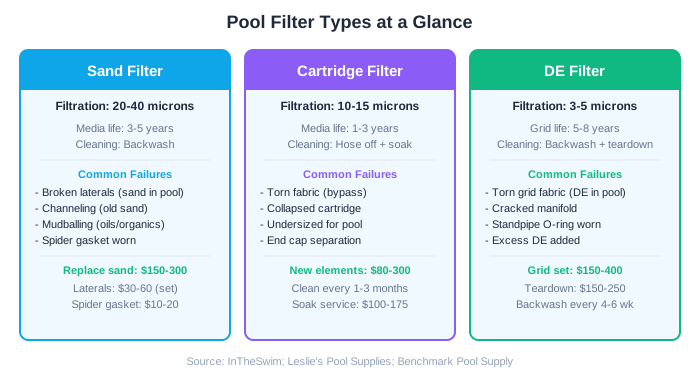
Sand in the pool is the signature failure mode of a sand filter. It almost always means a broken lateral, a cracked standpipe, or a damaged hub at the bottom of the filter tank. The laterals are the slotted pipes at the bottom of the filter that allow clean water to pass through while retaining the sand. When a lateral cracks, sand escapes through the gap and gets pushed back into the pool through the return lines.
How Do You Diagnose Broken Laterals?
- 1Turn off the pump and set the multiport valve to "Closed" or "Winterize."
- 2Remove the multiport valve or top dome from the filter tank.
- 3Carefully scoop or vacuum out the sand using a shop vac. Do not use a garden hose, as the force can break more laterals.
- 4Once the sand is removed, inspect each lateral for cracks, especially at the connection point to the hub.
- 5Check the standpipe for cracks along its length. A cracked standpipe lets sand bypass the laterals entirely.
- 6Replace any cracked laterals. Most techs replace the full set since they are inexpensive and other laterals may fail soon.
Other Common Sand Filter Problems
- Channeling. Water carves channels through the sand bed, bypassing filtration. Caused by old sand (5+ years), low flow rates, or calcium-hardened sand. Fix by replacing the sand media.
- Mudballing. Sand clumps together from oils, lotions, and organic buildup. The filter pressure rises faster than normal. Fix with a sand filter cleaner or full sand replacement.
- Multiport valve leaking to waste. Water bypasses the sand bed through a worn spider gasket inside the multiport valve. Replace the spider gasket.
- High pressure that does not drop after backwashing. The sand bed may be calcified. Try a sand filter acid wash or replace the sand entirely. Sand media should be replaced every 3-5 years.
How Do You Troubleshoot Cartridge Filter Problems?
Cartridge filters trap debris in pleated polyester fabric. They offer finer filtration than sand (10-15 microns vs. 20-40 microns) and do not require backwashing. The trade-off is that cartridge elements wear out and must be cleaned regularly and replaced every 1-3 years depending on pool load. Most cartridge filter problems show up as either high pressure, low flow, or dirty water returning to the pool.
High Pressure or Low Flow Through the Filter
- Dirty cartridge elements. The most common cause. Remove, hose off, and soak in a cartridge cleaning solution. If pressure does not return to baseline after cleaning, the cartridges are worn out and need replacement.
- Undersized filter for pool volume. The cartridge surface area is too small for the flow rate. This causes rapid pressure buildup and short cleaning cycles. The solution is a larger filter housing with more square footage of cartridge media.
- Collapsed or crushed cartridge. Caused by excessive pressure from a closed return valve (deadheading) or a pump that is too powerful for the filter. Inspect the cartridge for deformation and replace if damaged.
Dirty Water Passing Through the Filter
- Torn cartridge fabric. Even a small tear allows debris to bypass the filter. Hold the cartridge up to light and look for holes, splits along the pleats, or separation at the end caps.
- Cartridge not seated properly. The cartridge must sit flush in the filter housing. Check that the top manifold or retaining rod is securing the cartridge in place.
- Cracked filter housing. Rare but possible on older filters. Inspect the tank for hairline cracks, especially near the clamp band groove.
Replace cartridge elements when cleaning no longer returns the filter pressure to within 2-3 PSI of the original clean baseline. Trying to extend cartridge life beyond this point reduces water quality and increases pump energy consumption.
What Causes DE Filter Grids to Fail?
Diatomaceous earth filters provide the finest filtration at 3-5 microns. DE powder coats fabric-covered grids inside the filter housing, and water passes through this DE "cake" to capture even microscopic particles. When DE returns to the pool through the return jets (you will see a white powder cloud when the pump starts), something inside the filter is allowing DE to bypass the grids.
Common Causes of DE in the Pool
- Torn grid fabric. The most common cause. Even a pinhole tear lets DE through. Remove grids and inspect each one carefully. Replace torn grids individually or as a set.
- Cracked manifold. The top manifold holds all the grids together. A crack allows DE to bypass the grids and return to the pool. Inspect for hairline cracks and replace if damaged.
- Missing or damaged standpipe O-ring. The O-ring at the bottom of the standpipe seals the internal assembly to the filter housing. A worn O-ring lets DE escape.
- Broken air bleeder screen. The small screen inside the air bleeder assembly prevents DE from escaping when you bleed air from the filter. Replace if missing or damaged.
DE Filter High Pressure Causes
- Excess DE added. More is not better. Too much DE bridges across the grids and restricts flow. Follow the manufacturer specification for your filter size.
- Calcified DE. Hard water causes calcium deposits on the DE cake and grids. A muriatic acid soak during the annual teardown removes calcium buildup.
- Oil and lotion contamination. Body oils coat the DE and reduce its porosity. Use a DE filter cleaner during the annual service.
- Grids not fully cleaned during recharge. Old DE left on the grids reduces effective surface area. Hose grids thoroughly before adding fresh DE.
How Do You Diagnose a Multiport Valve Problem?
Sand and some DE filters use a multiport valve (MPV) to direct water flow through the filter in different modes: filter, backwash, rinse, waste, recirculate, and closed. A failing multiport valve causes water to leak between modes, reducing filter efficiency and sometimes sending dirty water back to the pool.
Signs of a Bad Multiport Valve
- Water coming out the waste line during filter mode. The spider gasket is worn and allowing water to cross over between ports.
- Filter pressure does not drop after backwashing. Water is not fully flowing through the backwash port. Check the gasket and handle spring.
- Handle is hard to turn or will not lock into position. Internal spring or diverter is broken. Disassemble and inspect.
- Water leaking from the valve body. The key seal or cover gasket is worn. Replace the gasket kit.
To replace a spider gasket, remove the valve cover (usually 6-8 screws), pull out the old gasket from the grooves in the valve body, and press in the new one. Use silicone lubricant on the new gasket. This is a 30-minute repair that solves most multiport valve issues.
When Should You Replace a Pool Filter vs. Repair It?
Not every filter problem justifies a repair. Sometimes the most profitable move for your business and the best recommendation for your customer is a full filter replacement. Here is how to make that call.
- Filter tank is cracked or corroded. Replace. Fiberglass tanks develop stress cracks after 15-20 years. Corroded steel bands on older filters cannot be trusted.
- Internal parts cost more than 50% of a new filter. Replace. A full DE grid set plus manifold plus standpipe O-ring can approach the cost of a new filter housing.
- Filter is undersized for the pool or pump. Replace with a properly sized unit. No amount of repair fixes an undersized filter.
- Filter type does not match the customer need. Some customers benefit from upgrading from sand to cartridge for finer filtration and easier maintenance.
- Single broken lateral or spider gasket. Repair. These are inexpensive, quick fixes.
- One torn cartridge element out of four. Replace the element. If all four are worn, replace the full set.
Always photograph the filter nameplate, model number, and current condition before recommending a replacement. This documentation supports your quote, helps you order the correct replacement, and protects you if the customer questions the recommendation.
Run a pool route?
The business side of what you just read.
Pricing, chemical costs, and the tools owners use to keep the numbers straight.
- Commercial pool service pricing2026 rate tables and the cost-plus formula
- Chemical cost per poolWhat chemicals actually cost per stop
- Chemical tracking softwareLog readings and dosing from the pool deck
- Pool service softwareRoutes, invoicing, and service reports in one app
- Free profit & rate calculatorsProfit per pool, minimum rate, break-even
Frequently Asked Questions
How often should pool filter sand be replaced?
Pool filter sand should be replaced every 3-5 years. Over time, the sharp edges of the sand grains wear smooth, reducing filtration effectiveness. If you notice the pool water stays cloudy even with good chemistry and a clean filter, the sand is likely worn out.
What PSI reading means a pool filter needs cleaning?
Clean the filter when the pressure gauge reads 8-10 PSI above the clean starting pressure. For example, if your clean baseline is 12 PSI, clean when the gauge reaches 20-22 PSI. Never let the pressure exceed 30 PSI, as this can damage internal components.
Can you use pool filter sand in a DE filter or vice versa?
No. Sand and DE filters use completely different media and internal structures. Sand sits in a bed with laterals at the bottom. DE coats fabric grids. Using the wrong media damages the filter and will not filter the water properly.
Why does my cartridge filter get dirty so fast?
The most common reasons are an undersized filter (not enough square footage of cartridge for the pool volume and pump flow rate), heavy organic load from trees or landscaping, high bather load, or algae that is clogging the pleats. Increasing the filter size is the permanent fix for an undersized filter.
How much DE powder should you add after backwashing?
Follow the manufacturer specification on the filter nameplate. A typical 48 sq ft DE filter requires about 6 pounds of DE. A 60 sq ft filter needs about 7.5 pounds. Use a 1-pound coffee can as a rough scoop. Overfilling causes high pressure and poor filtration.
What causes a pool filter to leak at the clamp band?
The most common cause is a worn or misaligned belly band O-ring. Remove the clamp, clean the O-ring groove, inspect the O-ring for flat spots or cracks, lubricate with silicone lube, and reassemble. If the tank halves are warped or cracked, the filter needs replacement.