How Do You Find a Pool Leak Without Tearing Everything Apart?
Pool leak detection is one of the most requested services in the pool industry, and one of the most frustrating. Customers notice water loss, panic, and want answers immediately. The problem is that pool plumbing leaks can originate from dozens of locations: underground return lines, suction pipes, fittings behind the pool wall, skimmer bodies, main drain lines, or equipment pad plumbing. Finding the source without excavation requires a systematic approach that eliminates possibilities one at a time.
Corey Adams, Pool Founder co-founder and 15-year pool service veteran, has handled hundreds of leak calls. "The biggest mistake techs make is skipping the basics. Half the time it is not even a leak. It is evaporation, a stuck fill valve, or a backwash valve that is not seating. Start with the bucket test. If it confirms a real leak, then systematically work from easy to hard: equipment pad, visible plumbing, fittings, then pressure test the underground lines. Only call a specialist when you have exhausted what you can do."
A pool losing 1/4 inch of water per day could be normal evaporation in hot, dry climates. A pool losing 1 inch or more per day almost certainly has a leak. The bucket test is the first step in every leak investigation.
How Do You Perform the Bucket Test?
The bucket test is the foundation of every leak investigation. It isolates whether the pool is losing water beyond what normal evaporation would account for. This is the first test you perform on any leak call, before you touch a pressure gauge or call a specialist. If the bucket test shows no excess water loss, you just saved the customer hundreds of dollars and yourself hours of work.
Bucket Test Step-by-Step
- 1Place a plastic bucket on the second step of the pool, weighted with a rock or brick to keep it stable.
- 2Fill the bucket with pool water to match the pool water level on the outside of the bucket. Mark both levels with tape or a marker.
- 3Turn off the auto-fill if the pool has one. Turn off any water features.
- 4Wait 24 hours. Do not use the pool during this period.
- 5After 24 hours, compare the two water levels. If the pool level dropped more than the bucket level, you have a leak. If both dropped roughly the same amount, it is evaporation.
Bucket Test Variations
Run the test twice: once with the pump off for 24 hours, then once with the pump running for 24 hours. If the pool loses more water with the pump running than with it off, the leak is on the pressure (return) side of the plumbing. If it loses more with the pump off, the leak is on the suction side. If water loss is the same in both conditions, the leak is likely in the shell, fittings, or a static component.
Normal evaporation rates range from 1/8 to 1/4 inch per day depending on temperature, humidity, and wind. In hot, dry climates like Arizona or Nevada, evaporation can reach 1/2 inch per day during summer. Know your local baseline before diagnosing a leak.
How Do You Use Dye Testing to Find Structural Leaks?
Dye testing pinpoints exact leak locations in the pool shell, around fittings, at tile line cracks, and at skimmer bodies. It works because water flowing through a crack or gap pulls the dye toward it, creating a visible trail that points directly to the leak source. This is the most precise non-invasive leak detection method available to a field technician.
Dye Testing Procedure
- 1Turn off the pump. The pool water must be still. Any circulation will disperse the dye and make the test useless.
- 2Wait 5-10 minutes for all water movement to stop completely.
- 3Using a syringe or squeeze bottle, apply 3-4 drops of dark leak detection dye (red or dark blue works best) near the suspected area. Hold the applicator within 1-2 inches of the surface.
- 4Watch the dye for 30-60 seconds. If the dye is drawn toward a specific spot, that is an active leak. The dye will visibly flow into the crack or gap.
- 5If the dye disperses evenly in all directions, there is no leak at that location. Move to the next suspect area.
Where to Dye Test First
- Skimmer body: Where the skimmer throat meets the pool wall. Cracks here are common, especially on older gunite pools.
- Return fittings: Around the return eyeball fitting where it meets the pool wall. Check all returns.
- Main drain: Around the drain cover and frame. Requires underwater inspection with mask and snorkel or dive gear.
- Light niche: Around the light fixture housing. Light conduit runs are a common hidden leak path.
- Tile line cracks: Any visible crack in tile, coping, or the bond beam area.
- Expansion joints: Where the deck meets the coping. Settlement cracks here can extend into the pool shell.
Use professional leak detection dye, not food coloring. Leak detection dye is formulated to be visible in pool water without dispersing too quickly. It is available from pool supply distributors for $10-$25 per bottle and lasts for dozens of tests.
How Does Pressure Testing Work for Underground Leaks?
Pressure testing isolates individual plumbing lines and pressurizes them to detect leaks that are underground and invisible. This is the most reliable method for confirming whether an underground pipe is leaking and narrowing down which specific line has the problem. A service technician with a basic pressure test kit can perform this test without specialized leak detection equipment.
Pressure Test Equipment Needed
- Pressure test rig: A plug or fitting that connects to each plumbing line at the equipment pad, with a valve, pressure gauge, and air inlet. Available for $100-$300.
- Compressor or hand pump: To pressurize the lines. A small portable compressor or even a bicycle pump with an adapter works.
- Expansion plugs: To seal each line at the pool end (return fittings, skimmer, main drain). Standard sizes cover most residential pools.
- Pressure gauge: 0-30 PSI range, accurate to 0.1 PSI. Digital gauges are more precise.
Pressure Test Procedure
- 1Isolate each plumbing line by plugging it at the pool end and disconnecting it at the equipment pad.
- 2Connect the pressure test rig to the line at the equipment pad.
- 3Pressurize the line to 15-20 PSI with air. Do not exceed the pipe rating.
- 4Close the valve and monitor the pressure gauge for 15-30 minutes.
- 5A line that holds pressure has no leak. A line that loses pressure has a leak somewhere along its run. Monitor the rate of pressure drop. A fast drop (5+ PSI in 15 minutes) indicates a significant leak. A slow drop (0.5-1 PSI in 15 minutes) may indicate a small crack or a fitting leak.
Test each line individually: skimmer suction, main drain suction, each return line, spa returns, water features, and any dedicated cleaner lines. This isolates the leaking line. Once you know which line is leaking, a specialist with electronic detection equipment can pinpoint the exact location.
What Can a Service Technician Do vs. What Requires a Specialist?
Knowing your limits on leak detection is critical. Spending three hours chasing a leak you cannot find costs you more than the specialist fee. The goal is to do everything within your capability first, narrow the problem as far as possible, and then hand off to a specialist with clear information about what you have already tested.
| Task | Service Tech | Leak Specialist | Cost to Customer |
|---|---|---|---|
| Bucket test | Yes | Not needed | Included in service call |
| Equipment pad leak repair | Yes | Not needed | $75-$250 |
| Dye testing around fittings | Yes | Can also do | $75-$150 (your time) |
| Pressure testing plumbing lines | Yes (with equipment) | Yes | $100-$200 |
| Electronic/sonic leak detection | No (requires specialized equipment) | Yes | $250-$600 |
| Underground pipe location | No | Yes | $300-$600 |
| Slab leak detection | No | Yes | $400-$800 |
| Pipe repair (underground) | Some (accessible runs) | Plumber/specialist | $500-$2,500+ |
Build a relationship with one or two reliable leak detection specialists in your market. When you refer work to them, they should refer repair work back to you. A good referral relationship keeps the customer in your ecosystem and generates repair revenue you would otherwise lose.
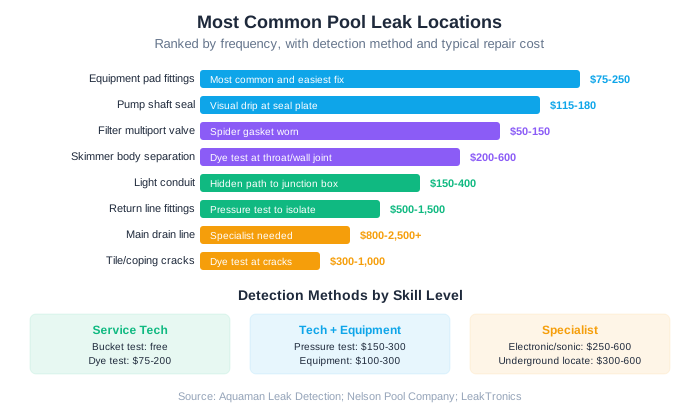
What Are the Most Common Pool Leak Locations?
After years of handling leak calls, patterns emerge. Certain areas fail more often than others, and knowing these common locations lets you check the most likely culprits first before moving to more complex testing.
Top 10 Pool Leak Locations (Ranked by Frequency)
- 1Equipment pad plumbing unions and fittings. O-rings degrade, PVC cement joints crack, and unions loosen over time. Check every connection on the equipment pad first. This is the most common and easiest to fix.
- 2Pump shaft seal. A dripping pump is obvious but sometimes overlooked as "normal." Any visible water at the seal plate is a leak.
- 3Filter multiport valve. Internal gaskets and spider gaskets wear out, causing water to divert to waste during normal filtration.
- 4Skimmer body separation. The joint between the skimmer throat and pool wall cracks due to deck settling, freeze damage, or age.
- 5Light conduit. Water travels through the conduit from the light niche back to the junction box. Improperly sealed conduits are a common hidden leak path.
- 6Return line underground fittings. 90-degree elbows underground are stress points that crack over time from ground movement.
- 7Main drain line. The longest, deepest, and hardest to access plumbing run. Leaks here often require a specialist to locate.
- 8Tile line and coping. Cracks in the bond beam area can extend into the pool shell and create slow, persistent leaks.
- 9Spa spillover plumbing. The dam wall and spillway on pool/spa combos contain plumbing joints that are prone to leaking.
- 10Backwash line. Often overlooked because it runs to a drain or landscape area where water loss is not noticed.
How Should You Price Leak Detection Services?
Leak detection is a high-value service that requires specialized knowledge and equipment. Price it accordingly. Too many pool service companies undercharge for leak work because they think of it as a diagnostic step rather than a standalone service.
| Service | Recommended Price | What It Includes |
|---|---|---|
| Basic leak assessment | $75-$150 | Bucket test, equipment pad inspection, visual inspection of fittings and shell |
| Dye testing | $100-$200 | Systematic dye testing of all fittings, skimmer, returns, drains, and visible cracks |
| Pressure testing | $150-$300 | Individual pressure testing of all plumbing lines with written results |
| Comprehensive leak investigation | $250-$400 | All of the above combined into a single visit with a written report |
Separate leak detection fees from repair fees. Charge for the diagnosis regardless of whether the customer hires you for the repair. Your time and expertise have value whether the fix is a $15 o-ring or a $3,000 underground pipe repair.
If you identify a leak and the customer authorizes the repair on the same visit, many techs waive or credit the detection fee toward the repair. This incentivizes immediate action and keeps the customer from shopping the repair to a competitor after you did the detective work.
Run a pool route?
The business side of what you just read.
Pricing, chemical costs, and the tools owners use to keep the numbers straight.
- Commercial pool service pricing2026 rate tables and the cost-plus formula
- Chemical cost per poolWhat chemicals actually cost per stop
- Chemical tracking softwareLog readings and dosing from the pool deck
- Pool service softwareRoutes, invoicing, and service reports in one app
- Free profit & rate calculatorsProfit per pool, minimum rate, break-even
Frequently Asked Questions
How much water loss is normal for a swimming pool?
Normal evaporation causes 1/8 to 1/4 inch of water loss per day in most climates. In hot, dry areas like Arizona or Nevada, evaporation can reach 1/2 inch per day during summer. Water loss exceeding 1/2 inch per day in moderate climates or 1 inch per day in hot climates almost certainly indicates a leak. The bucket test is the definitive way to separate evaporation from actual water loss.
How much does pool leak detection cost?
Basic leak assessment by a pool service technician runs $75-$150. Comprehensive pressure testing costs $150-$300. Specialist electronic leak detection, which uses sonic listening equipment and other advanced methods, costs $250-$600. Underground pipe location services run $300-$600. Most service techs can narrow the problem significantly before referring to a specialist.
Can I find a pool leak without draining the pool?
Yes. Most pool leak detection methods work with the pool full. The bucket test, dye testing, and pressure testing of plumbing lines are all performed with water in the pool. Only certain structural repairs require lowering the water level. Electronic detection methods used by specialists also work with the pool full.
What is the most common cause of pool leaks?
Equipment pad plumbing connections are the most common leak source. O-rings, unions, PVC cement joints, and pump shaft seals account for the majority of pool leaks. These are also the easiest and cheapest to fix, typically $15-$250 in parts plus labor. Underground plumbing leaks are less common but more expensive to locate and repair.
How does a pool leak detection specialist find underground leaks?
Specialists use electronic listening equipment (hydrophones and geophones) that detect the sound of water escaping from pressurized pipes underground. Some also use helium tracer gas, thermal imaging cameras that detect temperature differences in soil above leaking pipes, and ground-penetrating radar. These tools cost $2,000-$10,000+, which is why most service techs refer this work to specialists.
Should pool service companies offer leak detection?
Yes, up to the level your equipment and expertise support. Every pool tech should be able to perform bucket tests, dye tests, and equipment pad inspections. Pressure testing is a valuable add-on that requires $100-$300 in equipment. Electronic detection should be left to specialists. Offering basic leak investigation generates $150-$400 per call and positions you as the first contact for leak problems.
Sources & References
- Aquaman Leak Detection: Bucket Test and Dye Test Guide
- Swimmer Living: 5 Pool Leak Detection Techniques
- Nelson Pool Company: Cost of Pool Leak Detection
- LeakTronics: Swimming Pool Leak Detection Equipment
- BlueBot: Pool Leak Detection Costs and Smart Monitoring
- True Blue Leak Detection: Dye Testing for Swimming Pool Leaks