The Pool Surface Determines Half Your Chemistry Battle
Every pool tech knows how to test and balance water. Fewer understand how the interior surface finish changes what those numbers mean in practice. White marcite plaster, quartz aggregate, pebble finish, and tile each interact differently with pool water chemistry. They stain differently, etch differently, scale differently, and tolerate different LSI ranges. A service protocol that works perfectly on a pebble pool can damage a fresh marcite surface within months.
The finish also affects your service time and cleaning approach. Pebble surfaces trap debris in their textured profile. Tile demands visual inspection for cracking and calcium deposits. Quartz resists algae better than marcite but costs more to replaster when it fails. Knowing what you are servicing, and adjusting your protocol accordingly, separates a professional technician from someone who just dumps chlorine.
This guide covers the four main pool interior finishes, their chemistry implications, how they affect your service protocol, and what to tell customers when they ask about replastering options.
What Are the Four Main Pool Interior Finishes?
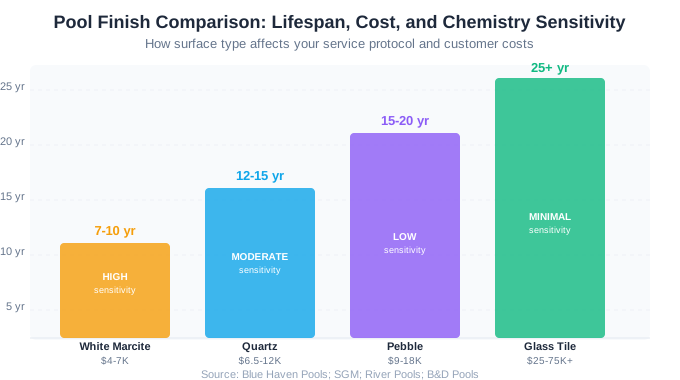
Pool interior finishes fall into four categories, each with a different composition, lifespan, cost, and chemistry interaction. The finish your customer has determines your calcium hardness targets, LSI management approach, stain risk profile, and cleaning method for every visit.
| Finish Type | Composition | Lifespan | Cost (Replaster) | Surface Texture |
|---|---|---|---|---|
| White marcite | White Portland cement + marble dust | 7-10 years | $4,000-7,000 | Smooth when new, roughens with age |
| Quartz aggregate | Portland cement + colored quartz crystals | 12-15 years | $6,500-12,000 | Slightly textured, sparkle effect |
| Pebble aggregate | Portland cement + natural river pebbles | 15-20+ years | $9,000-18,000 | Textured, slip-resistant |
| Glass tile | Individual glass or ceramic tiles | 25+ years | $25,000-75,000+ | Smooth, non-porous |
7-20+ years
Lifespan range across pool finish types
Source: Blue Haven Pools, River Pools, SGM
According to Blue Haven Pools and River Pools, white marcite remains the most common finish on existing pools due to its lower cost, but quartz and pebble finishes have dominated new construction and replaster jobs for the past decade. As a service tech, you will encounter all four, and your route likely has a mix.
How Does White Marcite Plaster Affect Service?
White marcite is the baseline pool finish, used on the majority of residential pools built before 2015. It is a mix of white Portland cement and marble dust (calcium carbonate) applied in a 3/8 to 1/2 inch layer over the gunite or shotcrete shell. When new, it is smooth and bright white. Within two to three years, the surface begins to roughen as the cement matrix slowly dissolves, exposing the marble dust aggregate underneath.
Chemistry Considerations for Marcite
Marcite is the most chemistry-sensitive finish. The calcium carbonate in the surface reacts directly with low-pH, low-calcium water. If the Langelier Saturation Index (LSI) drops below -0.3, the water becomes aggressive and dissolves calcium directly from the plaster surface. This process, called etching, roughens the surface, creates visible pitting, and accelerates algae attachment. Conversely, water with an LSI above +0.5 deposits calcium scale on the surface, creating white nodules and rough patches.
| Parameter | Marcite Target | Why |
|---|---|---|
| Calcium hardness | 250-350 ppm | Below 200 = aggressive water etches surface |
| pH | 7.4-7.6 | Low pH accelerates cement dissolution |
| Total alkalinity | 80-120 ppm | Buffers pH, protects plaster |
| LSI | -0.3 to +0.3 | Narrowest safe range of any finish |
| CYA | 30-50 ppm | Standard range |
New marcite plaster (under 30 days) requires a specific startup protocol. The plaster is curing, and improper chemistry during this period causes permanent discoloration and scaling. If a customer gets a replaster, coordinate with the plasterer on the startup chemistry.
Common Marcite Problems on Service Routes
- Etching from low calcium or low pH water, visible as rough patches and pitting
- Gray or brown discoloration from metal staining (iron and manganese in fill water)
- Algae embedding in the roughened surface, requiring extra brush time
- Calcium nodules from high LSI water, especially around return jets and water features
- Spalling (surface flaking) on older plaster approaching end of life
What Makes Quartz Aggregate Different to Service?
Quartz aggregate finishes embed colored quartz crystals into the cement matrix. Brands like Diamond Brite (NPP), Hydrazzo, and QuartzScapes dominate this category. The quartz particles are harder than marble dust and create a more durable, stain-resistant surface that lasts 12 to 15 years according to SGM and B&D Pools. The quartz is also nonporous, which means algae has a harder time anchoring compared to marcite.
Chemistry and Service Differences for Quartz
Quartz finishes are more forgiving than marcite but less forgiving than pebble. The cement matrix is still Portland cement, so LSI management matters. However, the quartz crystals provide a harder wearing surface that resists etching longer. Your primary concern shifts from etching to staining and blotching, which occurs when the cement component between the quartz crystals deteriorates unevenly.
| Parameter | Quartz Target | Difference from Marcite |
|---|---|---|
| Calcium hardness | 200-350 ppm | Slightly wider tolerance |
| pH | 7.2-7.6 | Same range |
| LSI | -0.3 to +0.5 | Slightly wider positive tolerance |
| Brush frequency | Weekly | Less critical than marcite but still needed |
| Algae resistance | Moderate | Better than marcite, worse than pebble |
The practical service advantage of quartz is reduced brush time. The smoother, harder surface releases algae more easily under brushing and does not embed debris the way aged marcite does. Plan for 15 to 20% less brush time on quartz pools compared to marcite pools of the same size, which adds up across a full route day.
How Does Pebble Finish Change Your Service Approach?
Pebble aggregate finishes (PebbleTec, PebbleSheen, StoneScapes) use natural river pebbles embedded in the cement matrix. The pebbles are significantly harder than quartz or marble dust, creating the most durable pool surface short of tile. A well-maintained pebble finish lasts 15 to 20 years or longer. The pebbles also create a naturally textured, slip-resistant surface that many homeowners prefer for aesthetic and safety reasons.
The Pebble Texture Trade-Off
The same texture that makes pebble finishes durable and attractive also traps debris. Leaves, sand, hair, and fine algae settle into the spaces between pebbles and are harder to remove with standard brushing. You need a stiffer brush (stainless steel is safe on pebble but not on marcite or quartz) and may need to spend more time vacuuming. The net effect is roughly 10 to 15% more cleaning time on pebble pools compared to smooth-surface pools.
| Parameter | Pebble Target | Service Impact |
|---|---|---|
| Calcium hardness | 200-400 ppm | Widest tolerance of cement finishes |
| pH | 7.2-7.6 | Standard range |
| LSI | -0.5 to +0.5 | Most forgiving cement finish |
| Brush type | Stainless steel OK | Harder brush = more effective cleaning |
| Vacuum time | +10-15% | Texture traps fine debris |
| Algae resistance | High | Pebble surface resists algae anchoring |
Pebble pools are the easiest to keep chemically balanced and the hardest to keep visually clean. Budget extra vacuum time on your route for pebble accounts, especially in fall when leaf drop peaks.
What Do You Need to Know About Tile Pools?
Full tile interiors represent the premium end of pool finishes, with costs starting at $25,000 and reaching $75,000 or more for custom glass tile installations according to River Pools and Fixr. Tile is non-porous, chemically inert, and lasts 25 years or longer when properly maintained. You will encounter tile primarily on high-end residential pools, commercial facilities, and competition pools.
Service Considerations for Tile Pools
- Tile is non-porous and does not react with pool water chemistry, making LSI less critical for surface protection (but still matters for equipment and grout)
- Grout lines between tiles are the weak point. Grout is porous and can stain, erode, or harbor algae if chemistry is neglected
- Calcium deposits form on tile surfaces at the waterline, requiring periodic cleaning with pumice stone or glass bead blasting
- Cracked or loose tiles need immediate attention to prevent water intrusion behind the tile that leads to delamination
- Chemical cleaning products that are safe for plaster may damage tile glazing. Use tile-specific cleaners only
From a service perspective, tile pools take roughly the same time as smooth plaster pools for routine chemistry and cleaning but require a more careful visual inspection. Check the waterline tile for calcium buildup, inspect grout lines for erosion or discoloration, and note any cracked or missing tiles in your service report. These observations create upsell opportunities for tile cleaning services and repair referrals.
How Should You Adjust Your Service Protocol by Surface Type?
Corey Adams, Pool Founder co-founder and 15-year pool service veteran, adjusts his protocol based on surface type. "I keep notes on every pool's surface in the app. When my techs pull up to a job, they know whether it is marcite, quartz, or pebble before they touch the water. That determines the brush they use, the LSI range they target, and how much time they budget for cleaning versus chemistry."
| Action | Marcite | Quartz | Pebble | Tile |
|---|---|---|---|---|
| Brush type | Nylon only | Nylon preferred | Stainless OK | Nylon only |
| LSI target | -0.3 to +0.3 | -0.3 to +0.5 | -0.5 to +0.5 | N/A (grout matters) |
| Min. calcium hardness | 250 ppm | 200 ppm | 200 ppm | 200 ppm (for grout) |
| Algae attachment risk | High | Moderate | Low | Very low |
| Staining risk | High | Moderate | Low | Low (grout stains) |
| Extra cleaning time | Baseline | -15-20% | +10-15% | Baseline |
| Replaster interval | 7-10 years | 12-15 years | 15-20 years | 25+ years |
The practical takeaway is that marcite pools need the tightest chemistry control and most frequent brushing, quartz pools are the most efficient to service, pebble pools need the most cleaning time but the least chemistry worry, and tile pools need the most careful visual inspection. Tracking the surface type for every pool on your route lets you plan your day more accurately and set customer expectations correctly.
Run a pool route?
The business side of what you just read.
Pricing, chemical costs, and the tools owners use to keep the numbers straight.
- Commercial pool service pricing2026 rate tables and the cost-plus formula
- Chemical cost per poolWhat chemicals actually cost per stop
- Chemical tracking softwareLog readings and dosing from the pool deck
- Pool service softwareRoutes, invoicing, and service reports in one app
- Free profit & rate calculatorsProfit per pool, minimum rate, break-even
Frequently Asked Questions
Which pool plaster type lasts the longest?
Glass tile lasts 25 years or more. Among cement-based finishes, pebble aggregate (PebbleTec, StoneScapes) lasts 15 to 20 years, quartz aggregate (Diamond Brite, QuartzScapes) lasts 12 to 15 years, and white marcite plaster lasts 7 to 10 years. Proper water chemistry maintenance, particularly maintaining the correct LSI range, is the biggest factor in achieving maximum lifespan for any finish.
Does pool surface type affect chemical costs?
Indirectly, yes. Marcite plaster requires tighter calcium hardness control (250-350 ppm), which means you may need to add calcium chloride more frequently. Pebble finishes tolerate a wider calcium range and a wider LSI window, reducing the frequency and volume of corrective chemical additions. Tile pools have no surface chemistry interaction, so chemical costs are determined purely by water volume and usage.
Can you use a stainless steel brush on all pool surfaces?
No. Stainless steel brushes are safe on pebble aggregate finishes and bare gunite/shotcrete. They will scratch and damage white marcite plaster, quartz aggregate finishes, and tile. Use nylon bristle brushes on marcite, quartz, and tile surfaces. Always verify the surface type before brushing, especially on service calls to unfamiliar pools.
Why does my white plaster pool keep getting rough patches?
Rough patches on white marcite plaster are caused by etching, which occurs when the water is chemically aggressive (negative LSI). Low calcium hardness, low pH, or low alkalinity dissolves the calcium carbonate in the plaster surface, creating pits and rough areas. Check your LSI calculation. If it falls below -0.3 consistently, raise calcium hardness to 300 ppm and maintain pH at 7.4 to 7.6 to protect the surface.
How much does it cost to replaster a pool?
White marcite replastering costs $4,000 to $7,000 for a standard residential pool. Quartz aggregate runs $6,500 to $12,000. Pebble aggregate costs $9,000 to $18,000. Full tile installations range from $25,000 to $75,000 or more. These figures cover material and labor for a typical 300 to 400 square foot pool interior. Prices vary by region, pool size, and whether the old surface needs removal.