Why Does Plaster Pool Chemistry Require Extra Precision?
Plaster pools (gunite or shotcrete with a plaster, pebble, or quartz finish) are the most common pool type in the Sun Belt and make up the majority of inground pools in states like Florida, Texas, Arizona, and California. The plaster surface is what makes these pools both rewarding and demanding to service. Unlike vinyl or fiberglass, plaster is a reactive surface. The water is constantly interacting with the calcium in the plaster. Get the balance right, and the surface lasts 10 to 15 years. Get it wrong, and you accelerate etching, scaling, or staining that costs thousands to repair.
The Langelier Saturation Index (LSI) is the tool that governs plaster pool chemistry. Every parameter you measure (pH, temperature, calcium hardness, total alkalinity, CYA) feeds into the LSI calculation, which tells you whether the water is dissolving the plaster (aggressive/etching) or depositing calcium on it (scaling). Corey Adams spent 15 years managing plaster pool chemistry before co-founding Pool Founder: "LSI is not just a number. It is the difference between a plaster surface that looks great at year 10 and one that needs resurfacing at year 5. Every chemistry decision on a plaster pool should pass through the LSI filter."
This guide covers LSI management for plaster pools, how to identify and differentiate etching from scaling, acid washing procedures, calcium stain treatment, and the effect of CYA on plaster chemistry. For a deeper dive on LSI calculations, see our dedicated LSI guide.
What LSI Targets Should You Maintain for Plaster Pools?
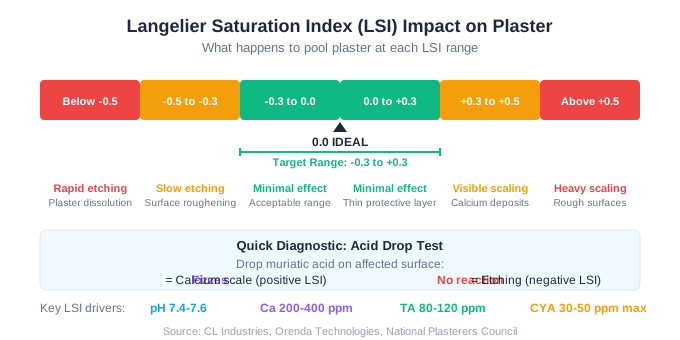
The Langelier Saturation Index measures whether your pool water is in equilibrium with calcium carbonate. A negative LSI means the water is undersaturated and will dissolve calcium from the plaster to satisfy its demand. A positive LSI means the water is oversaturated and will deposit calcium on surfaces. Both extremes damage the plaster. The target range for plaster pools is -0.3 to +0.3, with 0.0 (perfectly balanced) being ideal.
| LSI Range | Water Condition | Effect on Plaster |
|---|---|---|
| Below -0.5 | Highly aggressive | Rapid etching and plaster dissolution |
| -0.5 to -0.3 | Moderately aggressive | Slow etching over time, surface roughening |
| -0.3 to 0.0 | Slightly aggressive (acceptable) | Minimal effect, slight preference toward scaling prevention |
| 0.0 | Balanced | Ideal. No etching or scaling tendency |
| 0.0 to +0.3 | Slightly scaling (acceptable) | Minimal effect, thin protective calcium layer may form |
| +0.3 to +0.5 | Moderately scaling | Visible calcium deposits, cloudy water risk |
| Above +0.5 | Highly scaling | Heavy calcium deposits, rough surfaces, cloudy water |
LSI Input Parameters
The LSI calculation uses five measured parameters: pH, water temperature, calcium hardness, total alkalinity (adjusted for CYA contribution), and TDS. For practical service work, pH and temperature have the largest impact on daily LSI shifts because they change the most. Calcium hardness and alkalinity change slowly over weeks or months. This means your most important daily LSI management tool is pH control.
Ideal Chemistry Ranges for Plaster
| Parameter | Target Range | Notes |
|---|---|---|
| pH | 7.4-7.6 | Primary daily LSI driver. Keep stable. |
| Calcium hardness | 200-400 ppm | Plaster needs adequate calcium to prevent dissolution |
| Total alkalinity | 80-120 ppm | Adjust for CYA contribution (subtract 1/3 of CYA from TA reading) |
| CYA | 30-50 ppm | 50 ppm max recommended for plaster pools |
| Temperature | Varies by climate | Higher temps push LSI positive (more scaling) |
| TDS | Below 2,000 ppm | High TDS shifts LSI and reduces water quality |
In warm climates (Arizona, Florida), summer water temperatures of 85 to 95°F push LSI significantly positive. You may need to lower alkalinity to 70-80 ppm during summer to keep LSI in range, then raise it back during cooler months. Seasonal chemistry adjustment is essential for plaster pools in hot climates.
How Do You Identify Etching vs Scaling?
Etching and scaling are opposite problems caused by opposite chemistry conditions, but they can look similar to an untrained eye. Correctly identifying which one you are dealing with determines the treatment approach. Treating etching with the same chemistry adjustments as scaling makes the problem worse, and vice versa.
Etching: What It Looks Like
Etching occurs when aggressive, undersaturated water (negative LSI) dissolves calcium from the plaster surface. The plaster becomes rough, pitted, and may develop a mottled or uneven appearance. Run your hand along the pool wall: etched plaster feels like fine sandpaper. In severe cases, the aggregate (pebble or quartz) becomes exposed as the plaster matrix dissolves around it. Etching is irreversible. You cannot add plaster back. You can only stop it from progressing by correcting the water balance.
Scaling: What It Looks Like
Scaling occurs when oversaturated water (positive LSI) deposits calcium carbonate on surfaces. Scaling appears as white, rough deposits on the plaster, tile line, and inside equipment. It can form a uniform haze over the entire surface or concentrate at the waterline and around return fittings where water movement is highest. Scaling makes the surface rough and can trap dirt and algae, making the pool harder to clean. Unlike etching, scaling is partially reversible. Mild scale can be removed through chemistry adjustment and brushing. Heavy scale requires acid treatment.
Diagnostic Comparison
| Characteristic | Etching | Scaling |
|---|---|---|
| Surface feel | Rough like sandpaper | Rough with raised deposits |
| Visual appearance | Mottled, pitted, aggregate exposure | White deposits, hazy surface |
| Location pattern | Uniform across submerged surfaces | Concentrated at waterline and fittings |
| LSI condition | Negative (below -0.3) | Positive (above +0.3) |
| Reversibility | Irreversible (damage is permanent) | Partially reversible with treatment |
| Acid test | Acid on surface causes no fizzing (nothing to dissolve) | Acid on surface causes fizzing (dissolving calcium deposits) |
A simple field test: place a few drops of muriatic acid on the affected surface. If it fizzes, you are looking at calcium scale (the acid is dissolving the deposit). If there is no reaction, the surface is etched (the calcium has already been dissolved from the plaster). This takes 10 seconds and gives you a definitive answer.
How and When Should You Acid Wash a Plaster Pool?
Acid washing removes a thin layer of the plaster surface to reveal fresh, clean material underneath. It is an effective treatment for surface staining, mineral deposits, and algae-stained plaster. But it is also a destructive process that permanently removes plaster material, so it should be performed sparingly and with clear customer expectations.
When Acid Washing Is Appropriate
- Heavy staining from metals (iron, copper, manganese) that does not respond to chemical treatment
- Calcium scale buildup that cannot be removed through water chemistry adjustment
- Algae staining embedded in the plaster surface after a severe green pool recovery
- General discoloration and surface grime accumulated over years of service
- Pre-sale cosmetic improvement to maximize property value
When to Avoid Acid Washing
- The plaster is already thin from previous acid washes (check with the customer)
- The plaster is heavily etched (acid washing will make it worse)
- The staining is from organic sources (leaves, tannins) that respond to chlorine treatment
- The pool has been acid washed within the last five years
- The plaster is cracked or delaminating (acid washing will accelerate failure)
Acid Wash Procedure
- 1Drain the pool completely. Ensure the hydrostatic relief plugs are accessible in case of groundwater pressure.
- 2Remove all debris from the empty pool. Rinse the surface with a pressure washer to remove loose material.
- 3Mix muriatic acid with water at a 1:1 ratio in a watering can. Always add acid to water, never water to acid.
- 4Wet a 10-foot section of the wall with a garden hose.
- 5Apply the acid solution evenly to the wet surface from top to bottom.
- 6Allow the acid to work for 30 to 60 seconds. You will see bubbling as it dissolves the surface layer.
- 7Rinse thoroughly with the hose, directing the acid wash water to the deep end.
- 8Move to the next section and repeat. Work in sections to prevent the acid from sitting too long in any area.
- 9After the entire pool is washed, neutralize the acid water in the deep end with soda ash before pumping it out.
- 10Refill the pool and perform startup chemistry balance per NPC (National Plasterers Council) guidelines.
Acid washing should be performed no more than once every five to seven years. Each wash removes approximately 1/16 inch of plaster material. A standard plaster finish is approximately 3/8 to 1/2 inch thick, which means a pool can handle five to eight acid washes over its lifetime before the plaster becomes too thin and needs resurfacing. Always discuss this finite resource with the customer before proceeding.
5-7 years
Minimum recommended interval between acid washes
Source: National Plasterers Council guidelines
How Do You Treat Calcium Stains and Deposits?
Calcium deposits on plaster pools range from light waterline scale to heavy surface encrustation. The treatment approach depends on severity. Light deposits respond to chemistry adjustment and brushing. Moderate deposits require chemical treatment. Heavy deposits may need physical removal or acid washing.
Light Calcium Scale (Waterline and Surface Haze)
Lower the pH to 7.2 and reduce total alkalinity to 70 to 80 ppm. Add a phosphonic acid-based scale inhibitor (chelating agent) per the product dosing instructions. Brush the affected areas vigorously with a stainless steel pool brush. The combination of slightly aggressive water chemistry and physical agitation will dissolve light calcium deposits over one to two weeks. Monitor LSI during this treatment period to ensure you do not push the water into etching territory.
Moderate Calcium Deposits
For deposits that do not respond to chemistry adjustment, use a calcium-specific descaling product. These are typically acid-based solutions that you apply directly to the deposits at the waterline or on submerged surfaces. For waterline scale, apply the product with a scrub pad while the water level is lowered 2 to 3 inches below the scale line. For submerged deposits, products designed to disperse in the water and dissolve calcium over several treatment cycles are available. Follow the manufacturer instructions for dosing and reapplication.
Metal Stains (Iron, Copper, Manganese)
Metal stains on plaster are commonly mistaken for calcium issues but require different treatment. Iron stains appear rust-brown or red. Copper stains appear blue-green or teal. Manganese stains appear purple or black. The diagnostic test: apply a small amount of ascorbic acid (vitamin C) directly to the stain. If the stain lightens or disappears, it is a metal stain, not calcium. Treat metal stains by adding a sequestering agent to bind the metals in solution, then filter them out. For severe metal staining, a full ascorbic acid treatment (lowering chlorine to zero, adding 1 pound of ascorbic acid per 10,000 gallons, then sequestering) can remove stains from the entire pool surface.
Never acid wash to remove metal stains. Acid washing dissolves plaster surface material but does not remove metals embedded in the plaster. The stains will return within weeks as the metals in the source water re-deposit on the fresh surface. Treat the source (sequester the metals and address the cause) rather than the symptom.
How Does CYA Affect Plaster Pool Chemistry?
Cyanuric acid (CYA) has two significant effects on plaster pool chemistry that most service technicians underestimate. First, it binds with chlorine, reducing the active hypochlorous acid available for sanitation. Second, it affects the LSI calculation by contributing to total alkalinity, which can mask the true water balance condition.
CYA and Chlorine Effectiveness
CYA protects chlorine from UV degradation, which is valuable in outdoor pools. But it also reduces chlorine killing power by binding with free chlorine to form chloroisocyanurates, which are less effective sanitizers. At 30 ppm CYA, approximately 97% of the free chlorine is bound as chloroisocyanurate. At 80 ppm CYA, over 99% is bound. This means the minimum effective free chlorine level increases as CYA increases. The general rule is to maintain free chlorine at approximately 5% of the CYA level. At 50 ppm CYA, that means 2.5 ppm free chlorine minimum. At 80 ppm CYA, you need 4 ppm free chlorine to achieve the same sanitizing effectiveness.
CYA and the LSI Calculation
CYA contributes to what is called cyanurate alkalinity. Approximately one-third of the CYA concentration acts as alkalinity in the water. This means your total alkalinity test reading includes this CYA contribution, which overstates the carbonate alkalinity that actually drives LSI. To get an accurate LSI calculation, subtract one-third of your CYA level from the total alkalinity reading before plugging it into the LSI formula. Example: if your total alkalinity reads 100 ppm and CYA is 60 ppm, your adjusted alkalinity for LSI purposes is 100 minus 20 (one-third of 60) = 80 ppm.
Why This Matters for Plaster
If you calculate LSI using unadjusted total alkalinity in a pool with high CYA, you will overestimate the LSI value. The water may appear balanced or slightly scaling based on your calculation, when in reality the carbonate alkalinity is lower than you think and the water is actually closer to etching. This is how pools with "good" test numbers develop etching over time. The CYA-adjusted alkalinity tells the true story. For plaster pools, keep CYA at 30 to 50 ppm maximum and always adjust alkalinity for CYA when calculating LSI.
| CYA Level | Cyanurate Alkalinity | If TA Reads 100 ppm | Adjusted TA for LSI |
|---|---|---|---|
| 30 ppm | 10 ppm | 100 ppm | 90 ppm |
| 50 ppm | 17 ppm | 100 ppm | 83 ppm |
| 80 ppm | 27 ppm | 100 ppm | 73 ppm |
| 100 ppm | 33 ppm | 100 ppm | 67 ppm |
High CYA is one of the most common hidden causes of plaster damage. A pool with 100 ppm CYA and 100 ppm total alkalinity has an effective carbonate alkalinity of only 67 ppm, which combined with moderate calcium and normal pH may push the LSI into etching territory. If you see plaster etching on a pool where the basic numbers look fine, check CYA and recalculate LSI with adjusted alkalinity.
What Is the Best Maintenance Protocol for Plaster Longevity?
Plaster surfaces last 10 to 15 years on average, but chemistry-conscious service can extend that to 15 to 20 years. The protocol is not complicated, but it requires consistent attention to LSI and proactive management of the factors that cause etching and scaling.
Weekly Protocol
- Test and adjust pH to 7.4-7.6 at every visit (this is the highest-impact LSI action)
- Test free chlorine and maintain at 5% of CYA level minimum
- Brush walls and floor with a stainless steel brush to prevent calcium buildup and algae attachment
- Inspect the plaster surface for new staining, roughness, or discoloration
- Check and clean skimmer and pump baskets, backwash filter as needed
Monthly Protocol
- Full chemistry panel: pH, free chlorine, combined chlorine, total alkalinity, calcium hardness, CYA, temperature
- Calculate LSI using CYA-adjusted alkalinity and verify it falls between -0.3 and +0.3
- Adjust alkalinity and calcium hardness if LSI is trending out of range
- Inspect tile line for scaling and treat with appropriate cleaner if needed
- Check equipment for calcium buildup (heat exchanger, salt cell, flow sensors)
Seasonal Adjustments
In warm climates, summer water temperatures push LSI positive. Lower total alkalinity by 10 to 20 ppm during peak summer to compensate. In fall and winter, as temperatures drop, LSI shifts negative. Raise alkalinity back to the standard range and consider a slight calcium hardness increase if it has drifted low. These seasonal adjustments are the mark of a professional service provider and the primary reason plaster lasts longer under professional care than DIY maintenance.
Run a pool route?
The business side of what you just read.
Pricing, chemical costs, and the tools owners use to keep the numbers straight.
- Commercial pool service pricing2026 rate tables and the cost-plus formula
- Chemical cost per poolWhat chemicals actually cost per stop
- Chemical tracking softwareLog readings and dosing from the pool deck
- Pool service softwareRoutes, invoicing, and service reports in one app
- Free profit & rate calculatorsProfit per pool, minimum rate, break-even
Frequently Asked Questions
What LSI range should a plaster pool maintain?
The target LSI range for plaster pools is -0.3 to +0.3, with 0.0 (perfectly balanced) being ideal. LSI below -0.3 indicates aggressive water that will dissolve calcium from the plaster surface, causing irreversible etching. LSI above +0.3 indicates oversaturated water that will deposit calcium on surfaces, causing scaling. pH is the most impactful daily variable, while temperature, calcium hardness, and total alkalinity (adjusted for CYA) determine the baseline LSI.
How do you tell the difference between etching and scaling?
The quickest field test is to apply a few drops of muriatic acid to the affected surface. If it fizzes, you are looking at calcium scale (the acid is dissolving the calcium deposit). If there is no reaction, the surface is etched (calcium has already been dissolved from the plaster). Visually, etching creates a rough, sandpaper-like surface that is mottled or pitted, while scaling creates raised white deposits that are rough to the touch. Etching occurs under negative LSI conditions and is irreversible. Scaling occurs under positive LSI conditions and is partially treatable.
How often can you acid wash a plaster pool?
Acid washing should be performed no more than once every five to seven years. Each wash removes approximately 1/16 inch of plaster material, and a standard plaster finish is 3/8 to 1/2 inch thick. A pool can handle five to eight acid washes over its lifetime before the plaster becomes too thin for safe service and needs resurfacing. Always discuss the cumulative effect with the customer before proceeding, and document the number of previous acid washes in your service records.
How does CYA affect the LSI calculation?
CYA contributes approximately one-third of its concentration as cyanurate alkalinity, which is included in your total alkalinity test reading but does not contribute to carbonate alkalinity (the type that drives LSI). To get an accurate LSI calculation, subtract one-third of the CYA level from your total alkalinity reading. For example, with 100 ppm total alkalinity and 60 ppm CYA, the adjusted alkalinity for LSI is 80 ppm (100 minus 20). Using unadjusted alkalinity overstates the LSI, potentially masking an etching condition.
What causes brown or rust-colored stains on plaster?
Brown or rust-colored stains are typically caused by iron in the water, which can come from the source water, corroding metal components (heater heat exchanger, ladder bolts, rebar exposure), or well water used for filling. Diagnose by applying ascorbic acid (vitamin C) directly to the stain. If it lightens, it is iron. Treatment involves adding a sequestering agent to bind the iron in solution and filtering it out. For severe staining, a full ascorbic acid treatment can remove stains pool-wide. Address the iron source to prevent recurrence.