Foam on the Surface Means Something Is Wrong Below It.
A layer of white foam on the pool surface is one of those problems that customers notice immediately and assume is dangerous. Most of the time it is not a health hazard, but it does indicate a chemistry imbalance, a contamination source, or a mechanical issue that needs attention. Pool foam contains water, air, and surfactants. Any substance that reduces water's surface tension, from body lotions to cheap algaecides to low calcium levels, can cause persistent bubbling that will not dissipate on its own.
"Foam calls are easy money if you know what to look for," says Corey Adams, Pool Founder co-founder and 15-year pool service veteran. "Nine times out of ten, it is either low calcium hardness or someone dumped in a foaming algaecide. The fix takes 15 minutes. But if you do not diagnose it correctly, you end up chasing the wrong problem and the foam comes right back."
What Causes Pool Foam?
Pool foam forms when surfactants (surface-active agents) reduce the surface tension of the water, allowing air bubbles to form and persist instead of popping immediately. The air can come from return jets, waterfalls, spillovers, or an air leak in the suction plumbing. The surfactants come from one of four main sources: low calcium hardness, chemical products, body products, or contamination.
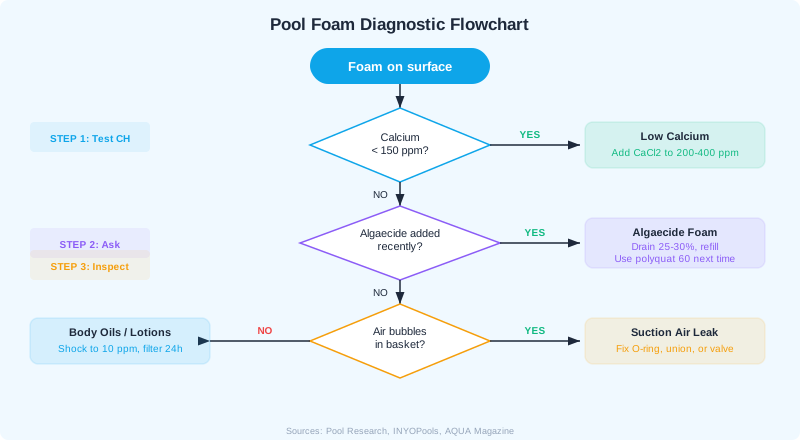
1. Low Calcium Hardness
When calcium hardness drops below 150 ppm, water becomes "soft" and foamy. Soft water has lower surface tension, which means air bubbles from jets and water features persist instead of breaking apart. This is the most common cause of pool foam in areas with soft source water or after a drain-and-refill. The fix is straightforward: add calcium chloride to bring hardness to 200-400 ppm.
2. Algaecide Overuse (Foaming Algaecides)
Cheap quaternary ammonium (quat) algaecides are surfactants by nature. When added in excess, or when a customer doubles the dose thinking more is better, they create thick, persistent foam. Polyquat algaecides (60% concentration) are labeled "non-foaming," but even these can foam if significantly overdosed. The fix is dilution: partially drain and refill to reduce the algaecide concentration.
3. Body Oils, Lotions, and Cosmetics
Sunscreen, body lotion, hair products, and deodorant are all surfactants. A pool party with 10-15 swimmers can introduce enough body products to create visible foam, especially in smaller pools or spas. This is the most common cause of hot tub foam because of the high ratio of bathers to water volume. Shocking the pool or spa breaks down the organics and eliminates the foam within 24 hours.
4. Air Leak in Suction Plumbing
An air leak on the suction side of the pump introduces air into the plumbing, which then blows out through the return jets as bubbles. In pools with waterfalls or spillovers, this air creates foam on the surface that looks like a chemistry problem but is actually mechanical. Check the pump strainer basket: if you see air bubbles swirling in the basket while the pump is running, you have a suction-side air leak, not a chemistry issue.
How Do You Diagnose the Cause of Pool Foam?
Diagnosing pool foam takes about five minutes using a process of elimination. Start with the simplest tests and work toward the less common causes.
- 1Test calcium hardness. If CH is below 150 ppm, that is your answer. Add calcium chloride to raise it to 200-400 ppm and the foam will stop.
- 2Ask if any chemicals were recently added. If the customer or another service company added algaecide in the last 48 hours, algaecide overuse is the likely cause.
- 3Check for a recent pool party or heavy bather load. If 5+ people swam in the last 24-48 hours, body products are the probable source.
- 4Look at the pump strainer basket. If air bubbles are visible in the basket with the pump running, you have a suction-side air leak blowing air through the returns.
- 5Check for biguanide sanitizer. Pools using biguanide (Baquacil, SoftSwim) are more prone to foaming, especially when aeration features are running.
If the foam smells like soap or lotion, it is body products. If it has no smell and the calcium is low, it is a hardness issue. If the customer says they added "extra algaecide to prevent algae," it is almost certainly algaecide foam.
How Do You Fix Pool Foam for Each Cause?
| Cause | Fix | Time to Clear | Cost |
|---|---|---|---|
| Low calcium hardness | Add calcium chloride to raise CH to 200-400 ppm | 1-4 hours | $5-15 in calcium chloride |
| Algaecide overuse | Partially drain and refill (25-30% of volume) to dilute | 4-8 hours with dilution | Water cost only |
| Body oils and cosmetics | Shock with liquid chlorine to 10 ppm, run pump 24 hours | 12-24 hours | $5-10 in liquid chlorine |
| Air leak in plumbing | Find and fix suction-side air leak (O-ring, union, valve stem) | Immediate once sealed | $5-50 depending on part |
| Biguanide system | Reduce aeration, skim surface foam, add enzyme product | 24-48 hours | $15-25 for enzyme product |
Can You Use Anti-Foam Products?
Anti-foam or defoamer products (typically silicone-based emulsions) work as a temporary fix. They break the surface tension of existing foam within minutes. However, they do not address the underlying cause. If you use a defoamer without fixing the root problem, the foam returns as soon as the defoamer dissipates, usually within 24-48 hours. Use defoamers only as a bridge while you fix the actual cause, or in hot tubs where immediate results matter to the customer experience.
How Do You Prevent Pool Foam from Coming Back?
Prevention is about maintaining the conditions that keep surfactants from accumulating and air from entering the system. Most recurring foam problems trace back to one of three patterns: calcium hardness slowly dropping between services, a customer repeatedly over-dosing algaecide, or a gradual air leak that worsens over time.
- Maintain calcium hardness at 200-400 ppm. Test monthly at minimum. In areas with soft source water, calcium drops steadily with dilution from rain, splash-out, and backwashing.
- Use non-foaming (polyquat 60%) algaecide only. Never use cheap quat algaecides on weekly maintenance pools. The cost difference is minimal and the foam problems from quat products waste more time than they save.
- Educate customers about shower-before-swimming. A quick rinse before entering the pool removes the majority of lotions, sunscreen, and hair products that cause foam.
- Add enzyme products weekly. Enzyme-based water treatments break down body oils and organic contaminants before they accumulate to foam-producing levels.
- Inspect suction-side plumbing quarterly. O-rings dry out, unions loosen from vibration, and valve stems wear. A 5-minute visual inspection prevents air-leak foam.
- For hot tubs and spas, drain and refill quarterly. The small water volume means surfactants accumulate much faster than in a pool. Regular water changes are the most effective foam prevention for spas.
"I keep a bag of calcium chloride and a bottle of polyquat 60 algaecide on my truck at all times. Those two products solve 80% of foam calls on the first visit. The other 20% is air leaks, and I carry O-ring lube and a spare pump lid O-ring for that." - Corey Adams
Is Pool Foam a Health Concern?
In most cases, pool foam is a cosmetic and water chemistry issue, not a health hazard. However, there are two situations where foam indicates a problem that could affect swimmer health. First, foam caused by body product accumulation can also indicate high combined chlorine (chloramines) in the water, which causes eye and skin irritation. Second, foam in a pool with low or no sanitizer residual may indicate organic contamination that supports bacterial growth.
The practical rule is: if the pool has foam AND low free chlorine (below 1 ppm), treat it as a sanitation issue first. Shock the pool, establish proper chlorine residual, and then address the foam cause separately. If free chlorine is in normal range (1-3 ppm), the foam is a chemistry or mechanical issue and is not a health risk.
Run a pool route?
The business side of what you just read.
Pricing, chemical costs, and the tools owners use to keep the numbers straight.
- Commercial pool service pricing2026 rate tables and the cost-plus formula
- Chemical cost per poolWhat chemicals actually cost per stop
- Chemical tracking softwareLog readings and dosing from the pool deck
- Pool service softwareRoutes, invoicing, and service reports in one app
- Free profit & rate calculatorsProfit per pool, minimum rate, break-even
Frequently Asked Questions
Why does my pool foam up when I turn on the waterfall?
Waterfalls introduce air into the water, which creates foam when surfactants are present. The two most common surfactant sources are low calcium hardness (below 150 ppm) and body product residue. Test calcium first. If it is in range, shock the pool to break down organic surfactants.
Will pool foam go away on its own?
Foam from body products will diminish within 24-48 hours as the sanitizer breaks down the organics, especially if you shock the pool. Foam from low calcium hardness or an air leak will not resolve on its own because the underlying condition persists. You must fix the root cause.
Can too much chlorine cause pool foam?
High chlorine alone does not cause foam. However, if you shock a pool that has high levels of organic contaminants (body oils, algaecide), the oxidation process can temporarily increase foam before breaking it down. This usually clears within a few hours.
Why does my hot tub foam every time I use it?
Hot tubs foam more easily than pools because of the small water volume relative to bather load. One person introduces enough body oils and lotions to create foam in 300-500 gallons. Use a pre-swim rinse, add enzyme products weekly, and drain and refill the spa every 3-4 months to prevent persistent foam.
What is the difference between foaming and non-foaming algaecide?
Foaming algaecides use quaternary ammonium compounds (quats) at 10-30% concentration. These are surfactants that create foam by nature. Non-foaming algaecides use polyquat compounds at 60% concentration. Polyquat 60 does not reduce surface tension and will not create foam at recommended doses. Always use polyquat 60 for maintenance pools.
How do I know if pool foam is from an air leak?
Look at the pump strainer basket while the pump is running. If you see air bubbles swirling in the basket, air is entering the suction side of the plumbing. The foam will be concentrated near the return jets. Fix the air leak (common sources: pump lid O-ring, valve stems, loose unions) and the foam stops immediately.
Sources & References
- Pool Research — Pool Foam: Causes and How to Get Rid Of It
- INYOPools — Clogged Pool Pump Impeller and Air Leak Diagnosis
- Pool Marvel — Foam in Pool: How to Get Rid Of Foam in Pool Water
- Pool Research — Biguanide Pool Treatments: Baquacil Pool Chemistry
- AQUA Magazine — Pool Chemistry Troubleshooting Reference