Filter Cleaning Is Routine Work That Pays Well. Here Is How to Do It Right Every Time.
Filter cleaning is one of the most consistent revenue generators in pool service. Every pool needs it, most customers cannot do it themselves, and it is a billable service separate from the weekly route. According to HomeWyse, the average cost to clean a pool filter runs $107-129 per filter in 2026, with regional variation from $73 nationally to $150+ in California. Knowing the correct procedure for each filter type, when media needs replacement, and how to price the service keeps this work profitable.
"Filter cleans are my bread-and-butter upsell," says Corey Adams, Pool Founder co-founder and 15-year pool service veteran. "I check filter pressure on every service visit. When it is time, I let the customer know and schedule the clean for the same week. It takes 30-60 minutes, and the customer immediately sees better water clarity." This guide covers the step-by-step procedure for each filter type, how to identify when media replacement is needed, and how to price the service.
How Do You Clean a Cartridge Pool Filter?
Cartridge filter cleaning is the most common filter service in residential pools. The process involves removing the cartridge elements, hosing off loose debris, soaking in a cleaning solution to dissolve oils and scale, rinsing again, and reinstalling. A thorough cartridge clean takes 30-45 minutes on site plus 12-24 hours of soak time if you take the cartridges back to the shop.
Step-by-Step Cartridge Cleaning
- 1Turn off the pump. Open the air bleed valve on the filter to release pressure.
- 2Remove the clamp band or lock ring and lift off the filter lid. On some models, you may need to remove a top manifold.
- 3Lift out each cartridge element. Note the orientation and order if there are multiple cartridges.
- 4Rinse each cartridge with a garden hose at a 45-degree angle, working from top to bottom. Rotate the cartridge and rinse between every pleat.
- 5Inspect for tears, fraying, crushed pleats, or separation at the end caps. Mark any damaged cartridges for replacement.
- 6Soak in a cartridge cleaning solution (commercial filter cleaner or a TSP solution) for 12-24 hours to dissolve oils and organic buildup. For a field-expedient clean, use a spray-on filter cleaner and let it sit for 15 minutes before rinsing.
- 7After soaking, rinse thoroughly again until the water runs clear.
- 8Reinstall cartridges, replace the lid and clamp band, close the air bleed valve, prime the pump, and turn on the system.
- 9Bleed air from the filter by opening the air bleed valve until a steady stream of water comes out.
- 10Record the clean starting pressure. This is the baseline for the next cleaning cycle.
Keep a spare set of cartridges on your truck or at the shop. When a customer needs a filter clean, swap in the clean set immediately and take the dirty cartridges back for overnight soaking. The customer gets instant results and you get paid for a 15-minute swap.
How Do You Clean a DE Pool Filter?
DE filter cleaning involves two levels: a backwash (every 4-6 weeks) and a full teardown (1-2 times per year). The backwash removes the used DE and some debris but does not clean the grids. The full teardown involves removing the grid assembly, hosing down each grid, inspecting for damage, and recharging with fresh DE.
DE Backwash Procedure
- 1Turn off the pump.
- 2Set the multiport valve to "Backwash" (or open the backwash valve on a push-pull system).
- 3Turn on the pump and run for 2-3 minutes until the sight glass runs clear.
- 4Turn off the pump. Set the valve to "Rinse" and run for 30 seconds to settle the DE bed.
- 5Return the valve to "Filter" mode and turn on the pump.
- 6Add fresh DE through the skimmer with the pump running. Add the amount specified on the filter nameplate (typically 1 lb per 10 sq ft of filter area).
DE Full Teardown Procedure
- 1Turn off the pump. Open the air bleed and drain plug to relieve pressure and drain the tank.
- 2Remove the clamp band and lift off the filter lid.
- 3Lift out the grid assembly. It will be heavy with wet DE.
- 4Hose down each grid individually, working from the inside out to flush debris from the fabric.
- 5Inspect each grid for tears, holes, or damaged fabric. Check the manifold for cracks. Check the standpipe O-ring.
- 6Clean the inside of the filter tank to remove old DE sludge.
- 7Reassemble the grid assembly, ensuring the manifold seats properly on the standpipe.
- 8Replace the lid and clamp band. Fill the tank with water through the top before starting the pump.
- 9Prime the pump and add fresh DE through the skimmer per the nameplate specification.
For a deep clean, soak DE grids in a TSP or filter cleaner solution overnight after hosing. Then follow with a muriatic acid rinse (1 part acid to 10 parts water) for 5 minutes to dissolve calcium scale. Rinse thoroughly before reinstalling.
How Do You Clean a Sand Pool Filter?
Sand filter cleaning is primarily done through backwashing, which reverses the water flow through the sand bed to flush out trapped debris. A standard backwash takes 5-10 minutes. For deeper cleaning, a sand filter cleaner product is added through the skimmer, allowed to soak for 12-24 hours, and then backwashed out.
Sand Filter Backwash Procedure
- 1Turn off the pump. Never move the multiport valve handle while the pump is running.
- 2Set the multiport valve to "Backwash."
- 3Confirm the backwash hose or drain line is directed to the appropriate discharge point.
- 4Turn on the pump. Run until the sight glass runs clear, typically 2-3 minutes.
- 5Turn off the pump. Set the valve to "Rinse." Run for 30-45 seconds.
- 6Turn off the pump. Set the valve back to "Filter."
- 7Turn on the pump and record the new clean starting pressure.
Deep Clean with Sand Filter Cleaner
When backwashing does not bring the pressure down to the clean baseline, the sand bed may be contaminated with oils, scale, or organic buildup. Pour a sand filter cleaner product through the skimmer with the pump running, then turn off the pump and let it soak for 12-24 hours. After soaking, perform a full backwash cycle. If pressure still does not return to baseline, the sand needs replacement (every 3-5 years).
How Do You Know When Filter Media Needs Replacement?
Cleaning only extends the life of filter media. Eventually, every filter needs new media. Knowing when to recommend replacement vs. another cleaning cycle is an important service skill that builds customer trust.
Replacement Indicators by Filter Type
| Filter Type | Media Lifespan | Replace When... |
|---|---|---|
| Cartridge | 1-3 years | Cleaning no longer returns pressure to within 2-3 PSI of baseline. Fabric is thinning, torn, or discolored brown/gray. |
| Sand | 3-5 years | Water stays cloudy even with good chemistry. Sand passes into the pool through returns. Channeling visible when sand is exposed. |
| DE grids | 5-8 years for fabric, indefinite for grid frame | Grid fabric is torn, thinning, or separating from the frame. DE passes into pool through returns. |
For cartridge filters, keep a simple log of clean pressure after each cleaning. When the post-clean pressure starts creeping up visit after visit, the cartridge is losing effectiveness. A new cartridge element set costs $80-300 depending on the filter model. Sand replacement costs $150-300 for the media plus labor. DE grid sets range from $150-400.
How Often Should Each Filter Type Be Cleaned?
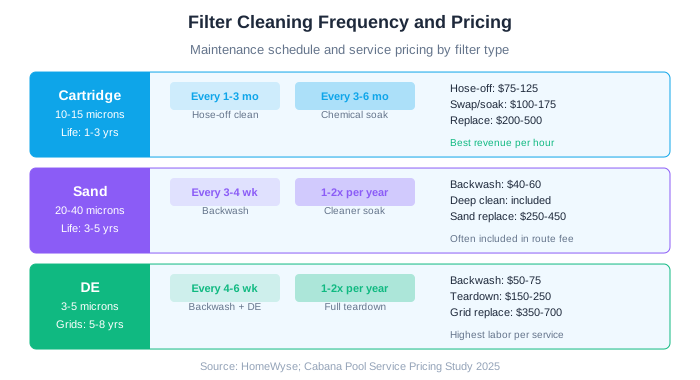
Cleaning frequency depends on pool load, environment, and filter size relative to the pool. Here are general guidelines for typical residential pools. Increase frequency for pools with heavy tree cover, high bather loads, or undersized filters.
| Filter Type | Routine Cleaning | Deep Clean / Teardown |
|---|---|---|
| Cartridge | Every 1-3 months (hose off) | Every 3-6 months (chemical soak) |
| Sand | Backwash every 3-4 weeks | Sand cleaner soak 1-2x per year |
| DE | Backwash every 4-6 weeks | Full teardown 1-2x per year |
The best indicator for cleaning timing is the pressure gauge, not the calendar. Clean when pressure rises 8-10 PSI above the clean baseline. Some pools hit that mark in 3 weeks. Others go 3 months. Use the pressure gauge as your guide and track it in your service software.
Schedule filter cleans proactively during your weekly route visits. Note the filter pressure each week. When you see it climbing toward the 8-10 PSI mark, tell the customer it is time. Do not wait for them to complain about cloudy water.
How Should You Price Filter Cleaning Services?
Filter cleaning is a standalone billable service separate from the weekly route fee. Pricing varies by region, filter type, and whether it is a simple hose-off or a full teardown with media replacement. Here are typical pricing structures used by professional service companies in 2026.
| Service | Typical Price Range | Time on Site |
|---|---|---|
| Cartridge hose-off (field clean) | $75-125 | 20-30 min |
| Cartridge chemical soak (swap service) | $100-175 | 15 min (swap) + shop time |
| DE backwash | $50-75 | 10-15 min |
| DE full teardown and recharge | $150-250 | 45-75 min |
| Sand filter backwash | $40-60 | 10-15 min |
| Sand filter media replacement | $250-450 | 1.5-3 hours |
| Cartridge element replacement (parts + labor) | $200-500 | 30-45 min |
| DE grid set replacement (parts + labor) | $350-700 | 1.5-2.5 hours |
Backwash services are often included in the weekly route fee or charged as a small add-on. Full cleanings and media replacements are always separate billable events. The swap service model (bring clean cartridges, install them, take the dirty ones to soak) is the most efficient approach for cartridge filters because it minimizes on-site time and the customer gets immediate results.
"I charge $125 for a cartridge swap and $200 for a DE teardown. That is $125-200 for 15-45 minutes of work. Filter cleans are some of the highest hourly-rate work in pool service. Do not undercharge for them." - Corey Adams
Run a pool route?
The business side of what you just read.
Pricing, chemical costs, and the tools owners use to keep the numbers straight.
- Commercial pool service pricing2026 rate tables and the cost-plus formula
- Chemical cost per poolWhat chemicals actually cost per stop
- Chemical tracking softwareLog readings and dosing from the pool deck
- Pool service softwareRoutes, invoicing, and service reports in one app
- Free profit & rate calculatorsProfit per pool, minimum rate, break-even
Frequently Asked Questions
How often should a pool filter be cleaned?
Clean the filter when pressure rises 8-10 PSI above the clean starting baseline. For most residential pools, this means cartridge filters every 1-3 months, sand filters backwashed every 3-4 weeks, and DE filters backwashed every 4-6 weeks with a full teardown 1-2 times per year.
Can you use muriatic acid to clean a pool filter cartridge?
Muriatic acid removes calcium scale but does not remove oils and organic buildup. Use a commercial cartridge cleaning solution or TSP first to remove oils, then follow with a dilute acid rinse (1 part acid to 20 parts water) if calcium scale is present. Never use acid as the sole cleaning method.
How much should you charge for a pool filter cleaning?
Typical pricing ranges from $75-125 for a cartridge hose-off, $100-175 for a cartridge swap service with chemical soak, and $150-250 for a DE full teardown. Media replacement adds parts cost on top of labor. Regional pricing varies from $73 nationally to $150+ in premium markets like California.
How do you know when pool filter sand needs to be replaced?
Replace sand when backwashing no longer returns pressure to the clean baseline, the pool water stays cloudy despite good chemistry, or you see sand returning to the pool through the return jets. Most sand filters need new media every 3-5 years.
What is the best way to clean DE filter grids?
Hose each grid individually from the inside out to flush debris from the fabric. For a deeper clean, soak grids overnight in a TSP or commercial filter cleaning solution, then rinse with a dilute muriatic acid bath (1:10 acid to water) for 5 minutes to dissolve calcium. Rinse thoroughly before reinstalling.
Should you clean or replace pool filter cartridges?
Clean cartridges until the post-clean pressure no longer returns to within 2-3 PSI of the original baseline, the fabric is thinning or torn, or the pleats are permanently discolored. Most cartridges last 1-3 years with regular cleaning before replacement is needed.