The Color of the Water Tells You What Is Wrong. Here Is How to Read It.
When a customer calls and says "my pool is green," your first instinct is algae. But green is not always algae. Copper from a corroding heater heat exchanger or a copper-based algaecide turns water green. Brown water could be iron from well water or tannins from organic debris. Black water might be manganese, silver, or severe algae. The wrong diagnosis leads to the wrong treatment, which makes the problem worse and costs you a callback.
"Color diagnosis is one of those skills that separates a good tech from a great one," says Corey Adams, Pool Founder co-founder and 15-year pool service veteran. "I teach every new tech the white bucket test on their first day. Fill a white bucket from the pool, add chlorine, and wait 30 seconds. If it clears up, it is algae. If it gets darker, it is metals. That single test tells you which direction to go."
Adding chlorine to a metal-contaminated pool makes the problem worse, not better. Chlorine oxidizes dissolved metals, converting them from invisible to visible and causing staining. Always diagnose before you treat.
How Does the White Bucket Test Work?
The white bucket test is the fastest field diagnostic for colored pool water. It distinguishes between biological causes (algae, tannins) and metallic causes (iron, copper, manganese) in under 60 seconds. Every pool technician should carry a white 5-gallon bucket on their truck for exactly this purpose.
- 1Fill a white 5-gallon bucket halfway with pool water.
- 2Add 2-3 ounces of liquid chlorine (sodium hypochlorite) to the bucket.
- 3Stir gently and wait 30 seconds.
- 4If the water clears: The discoloration is biological. Algae, tannins, or organic debris are the cause. Treat with chlorine (shock).
- 5If the water gets darker or changes color: The discoloration is metallic. Iron, copper, manganese, or other metals are the cause. Do NOT add more chlorine to the pool. Treat with a metal sequestering agent.
Orenda Technologies popularized this diagnostic method and it is now widely taught in CPO courses. The test works because chlorine is an oxidizer. It kills algae (clearing the water) but also oxidizes metals (making them more visible). The 30-second reaction time separates the two causes clearly.
What Causes Green Pool Water?
Green is the most common pool water color problem, and it has two distinct causes that require opposite treatments. Algae blooms and dissolved copper both turn pool water green, but shocking an algae bloom fixes it while shocking a copper-contaminated pool makes it worse by oxidizing the copper and potentially staining the surface.
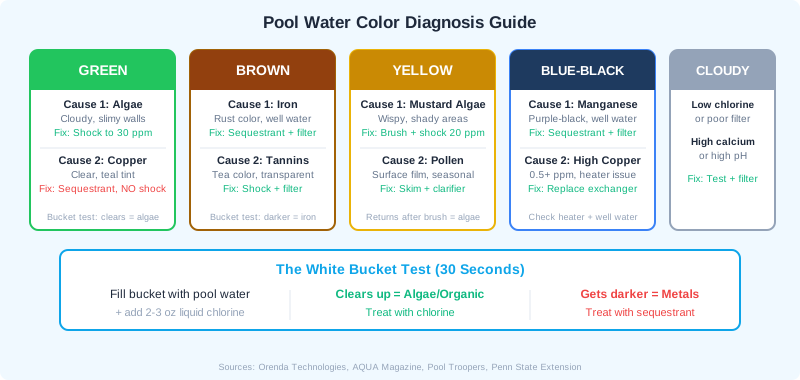
Green from Algae
Algae turns water green because the organisms contain chlorophyll. The intensity of the green correlates with the severity: light green is an early bloom, dark green is established, and green-black is a severe bloom with possible black algae. Algae blooms happen when free chlorine drops below 1 ppm for 24-48 hours, especially in warm water above 80 degrees. Treatment is straightforward: brush, shock to 30 ppm (SLAM method), and run the filter continuously until the water clears.
Green from Copper
Dissolved copper above 0.2 ppm turns pool water green or teal. Common sources include copper-based algaecides, corroding copper heat exchanger elements in gas heaters, ionizer systems, and copper plumbing. Unlike algae, copper-green water is usually clear, not cloudy. The white bucket test confirms metals: adding chlorine darkens the color. Treatment: add a metal sequestering agent, lower pH to 7.2 to slow further oxidation, and run the filter continuously. Do not shock.
| Characteristic | Algae Green | Copper Green |
|---|---|---|
| Water clarity | Cloudy to opaque | Usually clear |
| White bucket test | Clears with chlorine | Darkens with chlorine |
| Surface feel | Walls and floor feel slimy | Walls feel normal |
| Free chlorine level | Low or zero | Can be normal |
| Treatment | Shock to 30 ppm, brush, filter | Sequestering agent, NO shock |
What Causes Brown Pool Water?
Brown pool water is almost always caused by oxidized iron. Iron enters pools through well water fills (the most common source), corroding galvanized fittings, and some municipal water sources. Dissolved iron is invisible. When chlorine oxidizes it, the iron converts from ferrous (Fe2+) to ferric (Fe3+) form, which is rust-colored and visible. According to Penn State Extension, iron above 0.3 ppm creates visible discoloration.
Brown from Iron
- Light brown/amber: Moderate iron oxidation, typically 0.3-1.0 ppm iron. Water may still be somewhat transparent.
- Dark brown/rust: Heavy iron oxidation, typically 1.0+ ppm. Water is opaque. This is common after shocking a well water fill without pre-treating for metals.
- Reddish-brown staining on surfaces: Oxidized iron has deposited on plaster, vinyl, or fiberglass. Requires ascorbic acid treatment to remove stains.
How to Treat Brown (Iron) Water
- 1Do not add more chlorine. Chlorine oxidizes iron further and worsens the discoloration.
- 2Add a metal sequestering agent at the label dose. The sequestrant bonds to iron and prevents further oxidation.
- 3Lower pH to 7.0-7.2 to slow iron oxidation while the sequestrant works.
- 4Run the filter continuously for 48-72 hours. Clean or backwash the filter every 12 hours, as it will load up with filtered iron.
- 5After the water clears, raise pH back to 7.4-7.6 and re-establish normal chlorine levels slowly.
- 6For iron stains on surfaces, apply ascorbic acid (vitamin C) directly to the stain. It dissolves iron oxide on contact.
Brown from Tannins
Less commonly, brown or tea-colored water comes from tannins: organic acids leached from leaves, bark, and decaying plant material. Tannin-stained water is transparent (you can see the bottom) but has a brown or amber tint. The white bucket test is key here: tannin water clears with chlorine (because it is organic), while iron water darkens. Treatment for tannins is superchlorination followed by filtration.
What Causes Black or Blue-Black Pool Water?
Black or blue-black water is the least common color problem but the most alarming to customers. It has two primary causes: manganese oxidation and high copper concentrations. In rare cases, silver from ionizer systems creates a blue-black tint.
Black from Manganese
Manganese above 0.05 ppm creates purple-black discoloration when oxidized by chlorine. Well water is the primary source. Manganese stains are darker and harder to remove than iron stains. Treatment follows the same protocol as iron: sequestering agent, low pH, continuous filtration. For manganese surface stains, ascorbic acid works but may require multiple applications.
Blue-Black from High Copper
When copper concentrations exceed 0.5 ppm and are heavily oxidized, the color shifts from green/teal to a darker blue-black. This happens most often with failing copper heat exchanger elements in gas heaters that have been running in low-pH water for months. The corroding element releases copper continuously, and each chlorine addition oxidizes more of it. Replace the heat exchanger and treat the water with a sequestering agent.
If a pool consistently shows elevated copper and the customer has a gas heater, inspect the heat exchanger for corrosion before treating the water. Fixing the water without fixing the copper source means the problem returns on the next service visit.
What Causes Yellow Pool Water?
Yellow or mustard-colored pool water has two causes: mustard algae (also called yellow algae) and pollen. Both look similar at first glance, but the treatment is completely different. Mustard algae requires aggressive chlorination and brushing, while pollen is resolved by filtration alone.
Yellow from Mustard Algae
Mustard algae (Phaeophyta) grows in shady areas of the pool, typically on walls and steps that receive less direct sunlight. It has a wispy, dusty yellow appearance and brushes off easily but returns within 24-48 hours if not properly treated. Unlike green algae, mustard algae is chlorine-resistant and requires brushing the affected areas followed by shocking to a minimum of 20 ppm. All pool equipment that contacts the water (brushes, nets, vacuum heads, toys) must be sanitized simultaneously to prevent reintroduction.
Yellow from Pollen
During spring, pine, oak, and other trees release massive amounts of pollen that settles on the water surface and creates a yellow-green film. Unlike algae, pollen does not grow or spread. It sits on the surface, clings to the waterline tile, and clogs skimmer baskets. Pollen passes through sand filters (20-40 microns) but is caught by DE filters (2-5 microns). For sand filter pools, add a clarifier or use a skimmer sock to capture pollen. Chlorine does not affect pollen because it is not biological.
| Characteristic | Mustard Algae | Pollen |
|---|---|---|
| Location | Walls and steps (shady areas) | Surface only and waterline |
| Texture | Wispy, dusty, clings to surface | Powdery, floats on surface |
| Returns after brushing? | Yes, within 24-48 hours | No, stays removed |
| Responds to chlorine? | Yes, at high dose (20+ ppm) | No effect (not biological) |
| Best treatment | Brush + shock to 20 ppm + sanitize equipment | Skim + filter + clarifier |
How Do You Prevent Water Color Problems?
Most water color problems are preventable with consistent water chemistry and awareness of your local water source. The vast majority of color issues happen after a fill, a lapsed service period, or a chemical mistake.
- Maintain free chlorine above 1 ppm at all times. Algae blooms start within 24-48 hours of losing sanitizer residual in warm water.
- Test source water for metals before every fill. Pre-treat with a sequestering agent if iron, copper, or manganese are detected.
- Add a metal sequestering agent monthly in pools with well water or copper heat exchangers. Sequestrants degrade over time and need regular replenishment.
- Monitor pH weekly and keep it at 7.4-7.6. Low pH corrodes copper elements and accelerates metal release. High pH promotes algae growth.
- Inspect gas heater heat exchangers annually. Corroding copper elements are the most common source of copper contamination in pools with heaters.
- Use non-copper algaecides. Polyquat 60 algaecide prevents algae without introducing metals into the water.
Ready to streamline your pool service business?
Pool Founder gives you route optimization, automated invoicing, chemical tracking, and everything else you need to run a more profitable pool business.
Frequently Asked Questions
Why did my pool turn green overnight?
If the water was clear yesterday and green today, it is almost certainly an algae bloom triggered by a chlorine drop. Warm water (above 80 degrees) with zero free chlorine can develop a visible algae bloom in 12-24 hours. Less commonly, a copper source (corroding heater element, copper algaecide) can also cause sudden green color. Use the white bucket test to confirm which cause you are dealing with.
Can I shock a pool that has metal-colored water?
No. Shocking a metal-contaminated pool worsens the discoloration and can cause permanent staining. Chlorine oxidizes dissolved metals, making them more visible and more likely to deposit on surfaces. Treat with a metal sequestering agent first, filter for 48-72 hours, and only add chlorine once the water is clear.
How do I remove metal stains from pool plaster?
Apply ascorbic acid (vitamin C) directly to the stain. For small areas, crush a vitamin C tablet and hold it against the stain for 30 seconds. If the stain lightens, it is a metal stain. For large areas, add 1 pound of ascorbic acid per 10,000 gallons, lower pH to 7.0, and circulate for 24 hours. Follow with a sequestering agent to prevent the metals from re-depositing.
Why is my pool water clear but has a green tint?
Clear water with a green tint is almost always dissolved copper. The water has not been chlorinated enough to fully oxidize the copper (which would make it opaque), or a sequestering agent is partially holding it in solution. Test for copper using a metal test kit. If copper is above 0.2 ppm, add a sequestering agent and investigate the source (heater, algaecide, plumbing).
What does brown water after shocking mean?
Brown water immediately after shocking means the chlorine oxidized iron in the water. This is common with well water fills or pools that have not been shocked in a long time. The iron was dissolved and invisible, and the chlorine converted it to visible rust-colored iron oxide. Do not add more chlorine. Add a sequestering agent and filter continuously until clear.
Sources & References
- Orenda Technologies — The White Bucket Test: How to Identify Green Pool Water
- Orenda Technologies — Heavy Metal Oxidation and Staining
- AQUA Magazine — Tech Notes: Metals and Metal Staining
- Penn State Extension — Iron and Manganese in Private Water Systems
- Pool Troopers — Your Pool's Water Color Can Tell You Its Health
- Swim Pool Society — Mineral Stains and Dissolved Solids