What Makes Hotel Pool Maintenance Different from Other Commercial Pools?
Hotel pools occupy a unique position in commercial pool maintenance. Unlike HOA community pools or fitness center pools where the same group of residents or members swim regularly, hotel pools serve a constantly rotating population of guests who expect a pristine, resort-quality experience every single day. A cloudy pool or a failed health inspection does not just result in a fine. It results in negative online reviews, brand reputation damage, and potentially lost group bookings worth tens of thousands of dollars. For pool service companies, this combination of high standards and high stakes makes hotel accounts both demanding and exceptionally profitable.
Hotel pools also face more intense regulatory scrutiny than most other commercial pools. Health departments conduct annual inspections with random spot checks throughout the year, and hotels in most jurisdictions must maintain detailed chemical testing logs on-site for one to three years. The Virginia Graeme Baker Pool and Spa Safety Act imposes federal drain cover requirements, and state and local codes layer additional rules on top of that. Service companies that understand these requirements and can demonstrate compliance expertise have a significant competitive advantage when bidding on hotel contracts.
$400-$2,000+/mo
Typical monthly service cost for hotel pool maintenance, varying by pool size, features, and service frequency
Source: Pool Troopers, Industry Surveys
This guide covers every aspect of hotel pool maintenance that service companies need to understand: compliance requirements, daily and weekly maintenance schedules, pricing strategies, and how to win and retain hotel accounts. Whether you are a residential pool service company looking to break into commercial work or an established commercial operator adding hotel clients to your portfolio, this article provides the regulatory knowledge and operational framework you need to service hotel pools profitably and safely.
This article is part of our Commercial Pool Service series. For broader commercial pool guidance, see our Commercial Pool Maintenance Guide. For compliance checklists and HOA-specific contracts, see the related articles linked at the bottom of this page.
What Makes Hotel Pool Maintenance Different from Other Commercial Pools?
The fundamental difference between hotel pool maintenance and other commercial pool work comes down to three factors: guest expectations, usage patterns, and liability exposure. Understanding these differences is critical for service companies that want to price hotel accounts correctly and deliver the level of service that hotel management demands.
Higher Guest Expectations and Brand Reputation Risk
Hotel guests evaluate the pool area as part of their overall stay experience, and a poorly maintained pool directly impacts guest satisfaction scores and online reviews. A single photo of a green-tinged pool posted to TripAdvisor or Google Reviews can cost a hotel thousands of dollars in lost bookings. Hotel general managers understand this, which is why they are willing to pay premium rates for reliable pool service companies that maintain consistently high water quality and clean, well-maintained pool decks and furniture. This is fundamentally different from an HOA pool where residents may tolerate minor issues or a fitness center pool where members focus primarily on lap swimming conditions.
Daily Usage by a Rotating Population
Unlike community pools where the same residents swim regularly, hotel pools serve different guests every day. This constant rotation of bathers introduces unpredictable contamination loads. Sunscreen, body oils, cosmetics, and other contaminants vary wildly from day to day based on occupancy levels and guest demographics. A hotel at 30% occupancy on a Tuesday has very different chemical demands than the same hotel at 95% occupancy during a holiday weekend. Service companies must build maintenance plans that account for these fluctuations, which is why hotel pools require more frequent chemical testing than most other commercial pools.
Elevated Liability Exposure
Hotels face significant liability exposure from pool-related incidents. Guests who are unfamiliar with the pool, including children, elderly guests, and individuals who may have been drinking, use hotel pools in ways that increase the risk of accidents. Slip-and-fall injuries on wet pool decks, diving injuries in shallow areas, and drain entrapment incidents all represent potential lawsuits that can reach into the millions of dollars. Pool service companies working with hotels must carry higher insurance limits and maintain meticulous documentation of every service visit, chemical reading, and equipment inspection.
Intense Health Department Scrutiny
Health departments prioritize hotel pools for inspection because of the transient population and the higher risk profile. Annual inspections are standard, but many jurisdictions also conduct random spot checks throughout the year, particularly during peak summer months. A failed health department inspection can result in mandatory pool closure until violations are corrected, which directly impacts hotel revenue and guest satisfaction. Service companies that maintain hotel pools must be prepared for unannounced inspections at any time and keep all required documentation current and accessible on-site.
- Guest expectations are tied to brand reputation and online reviews, making water clarity and deck cleanliness non-negotiable
- Rotating guest populations create unpredictable bather loads that demand more frequent chemical testing and adjustment
- Liability exposure is higher due to unfamiliar users, alcohol consumption near pools, and diverse guest demographics
- Health department inspections occur annually with random spot checks, requiring constant compliance readiness
- Hotel management expects detailed service reports and rapid emergency response, typically within 2 to 4 hours
What Are the Compliance Requirements for Hotel Pools?
Hotel pool compliance involves federal, state, and local regulations that pool service companies must understand thoroughly. Failing to meet these requirements does not just risk fines. It can result in mandatory pool closures, lawsuits, and the loss of the hotel account. This section covers the major compliance areas that apply to hotel pools across the United States, though service companies should always verify specific requirements with their local health department since regulations vary by jurisdiction.
Chemical Testing Frequency
Hotel pools require chemical testing at least twice daily, once at opening and once at midday, at a minimum. During high-bather-load periods such as holiday weekends, conference events, or peak summer occupancy, testing frequency should increase to every two hours. Each test must measure free chlorine, combined chlorine, pH, and water temperature at a minimum. Many health departments also require regular testing of total alkalinity, calcium hardness, and cyanuric acid levels. All test results must be recorded in a dated log that is retained on-site for one to three years depending on the jurisdiction.
| Parameter | Target Range | Testing Frequency |
|---|---|---|
| Free chlorine | 1.0-10.0 ppm (varies by jurisdiction) | Twice daily minimum, every 2 hours during peak |
| pH | 7.2-7.8 | Twice daily minimum |
| Combined chlorine | Below 0.4 ppm | Twice daily minimum |
| Total alkalinity | 80-120 ppm | Weekly |
| Calcium hardness | 200-400 ppm | Weekly |
| Cyanuric acid (outdoor pools) | 30-50 ppm | Weekly |
| Water temperature | Below 104F for spas | Twice daily minimum |
All test results must be recorded in a dated log and retained on-site for 1 to 3 years depending on your jurisdiction. Health inspectors will ask to see this log during both scheduled and unannounced inspections. Digital logging systems are accepted in most jurisdictions but should be backed up with printed copies on-site.
VGB Act Drain Cover Requirements
The Virginia Graeme Baker Pool and Spa Safety Act is a federal law that requires all public pool and spa drain covers to meet the ANSI/ASME A112.19.8 standard for anti-entrapment protection. This applies to every hotel pool and spa in the United States regardless of state or local regulations. Drain covers must be inspected regularly for damage, secure attachment, and compliance with the rated flow specifications. According to manufacturer specifications, drain covers must be recertified or replaced every 5 to 10 years. Service companies should track drain cover installation dates and proactively recommend replacement before the certification period expires.
Fencing, Barriers, and Access Control
Hotel pools must be enclosed by a minimum 4-foot fence or barrier with self-closing, self-latching gates. The gate latch must be positioned on the pool side of the gate or at a height that prevents young children from reaching it. Many hotels use key card access systems to restrict pool entry to registered guests, which satisfies the self-latching requirement in most jurisdictions as long as the door closes and locks automatically. Service companies should inspect fencing and gate hardware during every visit and document any deficiencies in their service reports.
Safety Signage Requirements
Hotels must post specific safety signage in and around the pool area. Required signs typically include depth markers at the waterline and on the pool deck at regular intervals, no diving signs in shallow areas, emergency contact information including the local emergency number, pool rules covering capacity limits and hours of operation, and the location of the nearest emergency equipment. Many states require bilingual signage, and ADA-compliant signage may be required for depth markers and rule postings. Service companies should verify signage compliance as part of their regular maintenance visits.
Lifeguard and CPO Requirements
Pools that charge a direct fee for use, such as day-use pool passes or pool club memberships at resort hotels, are generally required to have trained lifeguards on duty during operating hours. Hotels that include pool access as part of the room rate may not be required to staff lifeguards, but they must still have a Certified Pool Operator responsible for water quality and safety compliance. The CPO certification, issued by the Pool and Hot Tub Alliance, requires passing a course and exam covering pool chemistry, filtration, health codes, and safety procedures. Service companies should either hold CPO certification in-house or ensure that the hotel has a designated CPO on staff.
- CPO certification is required for the operator responsible for the pool, either the hotel staff member or the service company technician
- Health department operating permits must be current and posted in a visible location near the pool
- All chemical storage must comply with local fire code requirements for separation and ventilation
- Emergency equipment including a ring buoy, reaching pole, and first aid kit must be accessible at the pool deck
- Pools charging direct access fees require trained lifeguards during operating hours
What Does a Hotel Pool Maintenance Schedule Look Like?
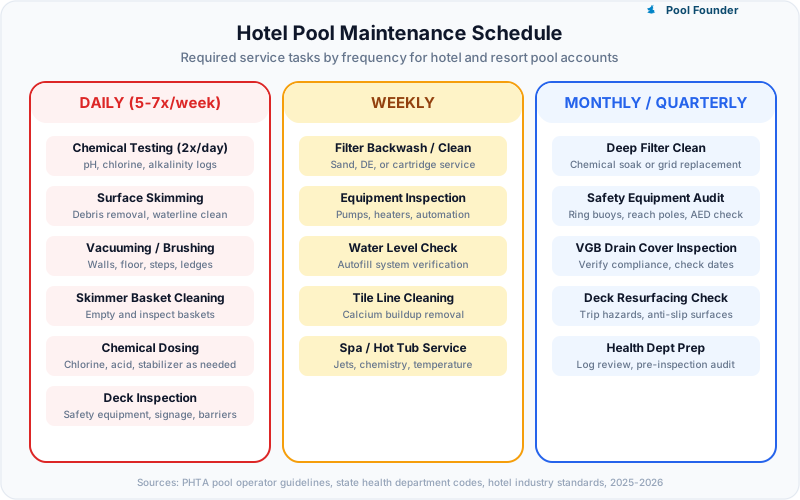
Hotel pool maintenance follows a layered schedule with daily, weekly, monthly, and annual tasks. The daily tasks are the most time-intensive and are typically performed by either on-site hotel staff under the guidance of the service company or by the service company technician directly. Weekly and monthly tasks are usually performed by the service company during scheduled visits. The key to maintaining a hotel pool successfully is establishing a clear division of responsibilities between hotel staff and the service company, documented in the service contract.
Daily Maintenance Tasks
Daily maintenance is the backbone of hotel pool service. These tasks must be performed every day the pool is open, which for most hotels means 365 days a year. The morning routine should be completed before the pool opens to guests, and a midday check ensures conditions remain optimal during peak usage.
- 1Test water chemistry at pool opening: free chlorine, combined chlorine, pH, and water temperature
- 2Skim the water surface to remove debris, leaves, and insects
- 3Check and empty skimmer baskets and pump strainer baskets
- 4Inspect the pool bottom for debris and vacuum if necessary
- 5Verify chemical feeder operation and adjust dosing as needed
- 6Inspect the pool deck for safety hazards including loose tiles, standing water, and broken furniture
- 7Confirm all safety equipment is in place and in good condition
- 8Perform midday water chemistry test and adjust chemicals as needed
- 9During high-bather-load periods, test water chemistry every 2 hours
- 10Record all test results in the on-site chemical log
Weekly Maintenance Tasks
Weekly tasks focus on the cleaning and inspection work that keeps the pool in top condition over time. These tasks are typically performed during a scheduled service visit by the pool company technician and require more time and expertise than daily maintenance.
- Scrub walls, tiles, and steps to remove algae, biofilm, and mineral buildup
- Backwash or clean the filtration system as needed based on pressure gauge readings
- Test total alkalinity, calcium hardness, and cyanuric acid levels
- Inspect and clean the pool lighting system
- Check water level and add water as needed
- Inspect drain covers for secure attachment and any signs of damage or wear
- Clean and organize the chemical storage area
- Review the weekly chemical log entries for trends or anomalies
Monthly Maintenance Tasks
- Complete equipment inspection: pumps, motors, heaters, chemical feeders, and automation systems
- Lubricate O-rings, gaskets, and moving parts as needed
- Inspect and test safety equipment including alarms, emergency shutoffs, and anti-entrapment systems
- Deep clean the pool deck, coping, and surrounding hardscape
- Test and calibrate water chemistry testing equipment
- Review and replenish chemical inventory
- Provide a written monthly service report to hotel management summarizing conditions, work performed, and any recommended repairs or upgrades
Annual Maintenance Tasks
- Prepare for the annual health department inspection by conducting a pre-inspection audit of all compliance requirements
- Verify drain cover certification dates and schedule replacement if approaching the 5 to 10 year manufacturer-specified recertification window
- Evaluate whether full water replacement is needed, typically recommended every 3 to 5 years based on total dissolved solids levels
- Inspect and service the pool heater, including descaling heat exchangers and checking gas connections
- Assess the condition of the pool surface, coping, deck, and fencing for needed repairs
- Review and update the service contract terms, pricing, and scope of work with hotel management
- Verify that the hotel CPO certification is current and advise on renewal if expiring within 6 months
Establish a clear division of responsibilities in your hotel pool service contract. Daily tasks like skimming, testing, and chemical adjustment are often handled by trained hotel staff, while the service company performs the more technical weekly, monthly, and annual maintenance. Document who is responsible for each task to avoid gaps in coverage.
How to Price Hotel Pool Maintenance Services
Pricing hotel pool maintenance requires a different approach than residential or even other commercial pool work. Hotel pools demand higher service frequency, faster emergency response, more detailed reporting, and greater compliance expertise. All of these factors should be reflected in your pricing. The typical range for hotel pool maintenance is $400 to $2,000 or more per month, with the wide range reflecting differences in pool size, features, geographic location, and the scope of services included in the contract.
~$600/mo
Average monthly rate charged by a Florida commercial pool specialist per hotel client
Source: Pool Troopers, Industry Data
Key Pricing Factors
| Factor | Impact on Price | Typical Adjustment |
|---|---|---|
| Pool size (gallons) | Larger pools require more chemicals and longer service times | +$100-$400/mo for pools over 50,000 gallons |
| Indoor vs. outdoor | Indoor pools require ventilation monitoring and have different chemical demands | +$100-$200/mo for indoor pools |
| Hot tub/spa included | Spas require separate chemical management and more frequent attention | +$150-$400/mo per spa |
| Service frequency | Daily on-site service vs. 2-3 visits per week with hotel staff handling daily tasks | 2x-3x cost for daily service vs. 3x/week |
| Emergency response | 2-4 hour emergency response commitment | Built into base rate or billed separately at $150-$300/call |
| Chemical supply included | Some contracts include chemicals, others bill separately | +$200-$600/mo if chemicals included |
| Reporting and documentation | Detailed monthly reports, digital logging, compliance documentation | Included in premium contracts |
Structuring the Hotel Pool Service Contract
Hotel pool contracts should be structured as annual agreements with clear terms covering the scope of service, visit frequency, emergency response commitments, chemical supply arrangements, and reporting requirements. Unlike residential contracts that might be month-to-month, hotels prefer the stability of annual contracts and are willing to commit to longer terms in exchange for rate certainty and guaranteed service priority. Include a clause for annual rate adjustments tied to chemical cost increases to protect your margins.
- Define the exact scope of work including which tasks are the service company responsibility versus hotel staff
- Specify the number of scheduled visits per week and the approximate duration of each visit
- Include emergency response time commitments, typically 2 to 4 hours during business hours
- Detail what is included in the monthly rate versus what is billed separately, such as parts, major repairs, and after-hours calls
- Include chemical supply terms: whether chemicals are included in the base rate or billed at cost plus markup
- Require 30 to 60 day written notice for contract termination by either party
- Include a liability limitation clause and require the hotel to maintain their own pool liability insurance
- Specify reporting deliverables including weekly chemical logs, monthly service reports, and annual compliance summaries
Do not underprice hotel pool maintenance to win accounts. Hotels that choose the cheapest bidder often cycle through service companies quickly because low-price operators cannot sustain the service level required. Position yourself on compliance expertise, emergency response reliability, and reporting quality rather than competing on price alone.
How to Win and Keep Hotel Pool Accounts
Winning hotel pool accounts requires a different sales approach than residential or HOA work. Hotel general managers and facilities directors evaluate pool service companies based on compliance expertise, reliability, communication quality, and the ability to protect the hotel from liability and negative guest experiences. Price matters, but it is rarely the primary decision factor for hotel management. Here is how to approach the hotel market effectively.
Approaching Hotel Management
The decision maker for hotel pool service is typically the general manager at smaller properties or the facilities director or chief engineer at larger hotels and resorts. Start by identifying hotels in your service area that are not part of large national chains with corporate maintenance contracts. Independent hotels, boutique properties, and smaller regional chains are the most accessible accounts for local pool service companies. Approach them with a professional proposal that emphasizes your compliance knowledge, CPO certification, and the specific problems you solve rather than leading with your pricing.
Demonstrating Compliance Expertise
The fastest way to differentiate your company in the hotel market is to demonstrate deep knowledge of the regulations that keep hotel managers up at night. Bring a compliance checklist to your initial meeting that covers VGB Act drain cover requirements, health department inspection criteria, chemical testing and record-keeping obligations, and safety equipment standards. Walk through the checklist with the hotel manager and offer to conduct a free pool compliance audit. This positions you as an expert rather than a vendor and gives you a natural opportunity to identify issues that need to be addressed, creating urgency for your services.
Emergency Response Commitment
Hotels need pool service companies that can respond quickly when problems arise. A pool that turns green on a Saturday morning during a sold-out weekend cannot wait until Monday for service. Hotels typically expect emergency response times of 2 to 4 hours during business hours and same-day response for after-hours emergencies. Build this commitment into your service contract and make sure you have the staffing capacity to deliver on it. Having a dedicated emergency phone line and a clear escalation process gives hotel managers confidence that problems will be resolved before they impact guests.
Reporting and Communication
Hotel managers value detailed, consistent communication from their pool service company. Provide a written report after every service visit that documents water chemistry readings, work performed, any issues identified, and recommended follow-up actions. Send a monthly summary report that tracks trends in water chemistry, summarizes all maintenance performed, and flags upcoming maintenance needs like drain cover recertification or equipment replacement. This level of reporting protects both you and the hotel by creating a documented record of proper maintenance and compliance.
- Target independent hotels, boutique properties, and regional chains rather than large national chains with corporate contracts
- Lead with compliance expertise and CPO certification rather than pricing in initial conversations
- Offer a free pool compliance audit to create urgency and demonstrate your knowledge
- Commit to 2 to 4 hour emergency response times and build the staffing capacity to deliver consistently
- Provide detailed visit reports and monthly summary reports that document compliance and maintenance history
- Build relationships with hotel engineering and housekeeping staff who interact with the pool daily
- Attend hospitality industry events and join hotel and lodging associations to build referral networks
- Request testimonials and case studies from satisfied hotel clients to use in proposals for new accounts
The most effective way to win hotel accounts is through referrals from other hotel managers. Once you successfully maintain one hotel pool, ask the general manager to refer you to colleagues at other properties. Hotel managers talk to each other regularly through industry associations and informal networks, and a strong referral can shortcut the sales process significantly.
Ready to streamline your pool service business?
Pool Founder gives you route optimization, automated invoicing, chemical tracking, and everything else you need to run a more profitable pool business.
Frequently Asked Questions
What is the difference between maintaining an indoor hotel pool and an outdoor hotel pool?
Indoor hotel pools require monitoring of air quality and ventilation systems in addition to water chemistry, because chloramine off-gassing in enclosed spaces can create respiratory hazards and damage building materials. Indoor pools also have more stable water temperatures and less debris contamination, but they are more prone to condensation issues and often require dehumidification system maintenance. Outdoor hotel pools face weather-related challenges including rain dilution, wind-blown debris, UV degradation of chlorine, and seasonal temperature fluctuations that demand more frequent chemical adjustments. Outdoor pools typically require cyanuric acid as a chlorine stabilizer, while indoor pools do not. Service pricing for indoor pools is generally $100 to $200 per month higher due to the additional ventilation and air quality monitoring requirements.
How does hotel spa and hot tub maintenance differ from pool maintenance?
Hotel spas and hot tubs operate at significantly higher temperatures, typically 100 to 104 degrees Fahrenheit, which accelerates chemical consumption and creates a more favorable environment for bacterial growth including Legionella and Pseudomonas. Spas require more frequent water chemistry testing, often three or more times per day, and the hot water causes chlorine to dissipate much faster than in a pool. Most health departments require complete water replacement in spas much more frequently than in pools, often weekly or biweekly depending on bather load. The smaller water volume means chemical imbalances happen faster and have more immediate effects. Service companies should price spa maintenance as a separate line item, typically $150 to $400 per month additional, and include spa-specific tasks in the maintenance schedule.
How should a pool service company handle pool closure during major maintenance?
Pool closures at hotels must be planned carefully to minimize guest impact. For scheduled maintenance that requires closure, work with the hotel to choose low-occupancy periods and provide at least two weeks advance notice so the front desk can inform guests at booking. Post clear signage with the expected reopening time. For emergency closures due to chemical imbalances, equipment failure, or contamination events, communicate immediately with hotel management and provide a realistic timeline for resolution. Many service contracts include provisions for temporary portable spa or pool equipment during extended closures. Always document the reason for closure, the corrective actions taken, and the water chemistry readings that confirm the pool is safe to reopen. Health departments may require notification for closures related to contamination or safety incidents.
How do hotel pool chemical standards differ from residential pool standards?
Hotel pools must maintain higher and more tightly controlled chemical standards than residential pools due to the higher bather loads and public health regulations. While a residential pool might be tested once a week by the homeowner, hotel pools require testing at least twice daily with results documented in a log. Free chlorine levels in commercial hotel pools must be maintained within a narrower range defined by the local health department, typically 1.0 to 10.0 ppm depending on jurisdiction, compared to the broader ranges acceptable for residential pools. Combined chlorine, which indicates the presence of chloramines, must be kept below 0.5 ppm in hotel pools, a standard that is rarely monitored in residential settings. Additionally, hotel pools must use commercial-grade chemical feed systems rather than manual dosing to maintain consistent levels throughout the day, and all chemical products must be stored in compliance with local fire code requirements for commercial chemical storage.