Why Does Commercial Pool Compliance Matter More Than Ever?
Every commercial pool in the United States, whether attached to a hotel, managed by an HOA, operated by a municipality, or open to the public at a fitness center, must meet a layered set of federal, state, and local regulations before a single swimmer enters the water. These requirements exist because commercial pools serve hundreds or thousands of bathers per season, and a single compliance failure can result in drowning, disease outbreak, or chemical injury that devastates families and exposes property owners to catastrophic liability.
The regulatory landscape includes the federal Virginia Graeme Baker Pool and Spa Safety Act, the Americans with Disabilities Act, OSHA chemical handling standards, state health department codes, and local municipal ordinances. Missing even one requirement can result in immediate pool closure, fines ranging from hundreds to thousands of dollars per violation per day, and personal liability for property owners and operators. For pool service companies, understanding these requirements is not optional. It is the foundation of every commercial service contract you sign.
This guide covers the compliance requirements that apply to commercial and public pools across the United States, with specific attention to major pool states including Florida, Texas, California, Arizona, and Georgia. All regulatory references reflect current 2026 standards. Requirements vary by jurisdiction, so always verify with your local health department.
What Federal Laws Apply to Commercial Pools?
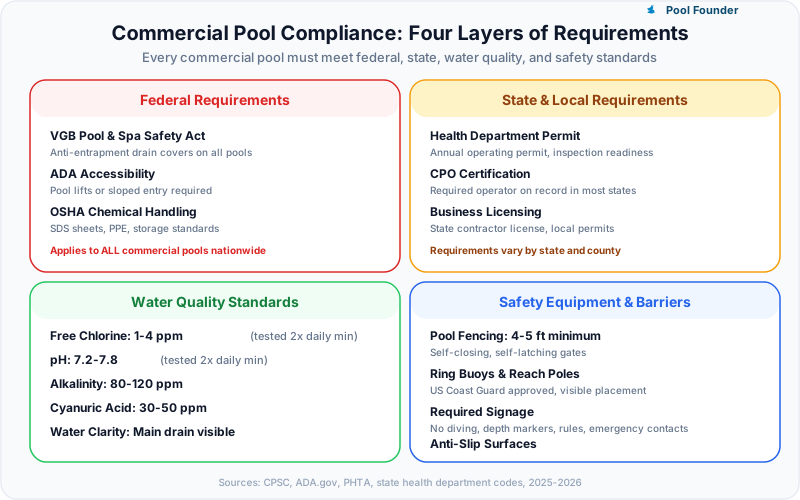
Three federal frameworks govern commercial pool operations: the Virginia Graeme Baker Pool and Spa Safety Act (VGB Act), the Americans with Disabilities Act (ADA), and OSHA workplace safety standards for chemical handling. These apply uniformly across all 50 states and set the minimum compliance floor that no state or local regulation can reduce.
The Virginia Graeme Baker Pool and Spa Safety Act
The VGB Act is federal law, signed in 2007 and enforced by the Consumer Product Safety Commission (CPSC). It applies to every public pool, spa, and water feature in the country. The law was enacted after the drowning death of seven-year-old Virginia Graeme Baker, who became trapped by the suction of a hot tub drain. The VGB Act requires all commercial pool and spa drain covers to meet the ANSI/ASME A112.19.8 standard for anti-entrapment. Pools with a single main drain must also install a secondary anti-entrapment system such as a safety vacuum release system (SVRS), gravity drainage system, suction-limiting vent system, or automatic pump shut-off.
VGB-compliant drain covers have a limited lifespan. They must be recertified or replaced at manufacturer-specified intervals, typically every 5 to 10 years. Many pool operators overlook expiration dates on drain covers, which is one of the most common federal compliance violations found during inspections.
100%
of commercial pools must comply with the VGB Act. It is federal law with no exemptions for pool size or type.
Source: Consumer Product Safety Commission (CPSC)
ADA Accessibility Requirements
The Americans with Disabilities Act requires all public accommodations, including commercial pools, to provide accessible means of entry into the water. For pools with more than 300 linear feet of pool wall, at least two accessible means of entry are required, with at least one being a pool lift or sloped entry. For smaller pools, at least one accessible means of entry is required. Acceptable entry methods include pool lifts, sloped entries, transfer walls, transfer systems, and aquatic wheelchairs. Pool lifts must have a seat that lowers to at least 18 inches below the waterline and have a weight capacity of at least 300 pounds.
OSHA Chemical Handling Standards
While OSHA does not regulate pool design, it does regulate the workplace safety of anyone handling pool chemicals. Commercial pool operators and service technicians must have access to Safety Data Sheets (SDS) for every chemical on site. Proper personal protective equipment including chemical-resistant gloves, safety goggles, and appropriate respiratory protection must be available. Chemical storage must follow incompatibility guidelines, with oxidizers like calcium hypochlorite stored separately from acids like muriatic acid to prevent dangerous reactions. Failure to follow OSHA chemical handling standards can result in workplace injury citations and fines up to $16,131 per serious violation.
What Are State and Local Compliance Requirements?
Beyond federal law, every state imposes its own commercial pool regulations through health department codes, building codes, and operator certification requirements. Local counties and municipalities may add additional requirements on top of state standards. The result is a patchwork of regulations that varies significantly depending on where the pool is located. Every commercial pool requires an annual operating permit from the local health department, and many jurisdictions require permits to be renewed annually with updated documentation and inspection results.
Health Department Permits and Inspections
All commercial and public pools must obtain an operating permit from their local or state health department before opening to the public. Permits typically require submission of pool plans, equipment specifications, chemical treatment systems, and proof of operator certification. Health departments conduct annual inspections and may perform random unannounced spot checks throughout the operating season. In many jurisdictions, a bacteriological water sample must be submitted and pass before the pool is approved for opening each season.
Operator Certification Requirements
Many states require at least one Certified Pool Operator (CPO) or equivalent certified individual to be responsible for each commercial pool. The CPO certification, administered by the Pool and Hot Tub Alliance (PHTA), is the most widely recognized credential. Other accepted certifications include the Aquatic Facility Operator (AFO) certification from the National Recreation and Park Association. Certification requires passing a written exam covering water chemistry, filtration, safety, and regulatory compliance. CPO certification is valid for five years and requires renewal through re-examination.
| Requirement | Florida | Texas | California | Arizona | Georgia |
|---|---|---|---|---|---|
| Operating permit | Required (DOH) | Required (county) | Required (county) | Required (county) | Required (county) |
| Operator certification | CPO required | CPO or equivalent | Varies by county | CPO required | CPO or equivalent |
| Annual inspection | Yes + spot checks | Yes + spot checks | Yes + spot checks | Yes + spot checks | Yes + spot checks |
| Chemical testing frequency | Twice daily | Twice daily | Varies by county | Twice daily | Twice daily |
| Record retention | 3 years on-site | 1 year on-site | 3 years on-site | 1 year on-site | 1 year on-site |
| Bacteriological sample | Before opening | Varies by county | Before opening | Varies by county | Varies by county |
In Florida, the Department of Health (DOH) directly regulates all commercial pools, including hotel, HOA, and municipal pools. Florida is one of the most strictly regulated states for commercial pool compliance. The DOH maintains a searchable database of all permitted pools and their inspection histories.
What Water Quality Standards Must Commercial Pools Meet?
Water quality is the single most scrutinized aspect of commercial pool compliance. Health departments require specific chemical parameters to be maintained within acceptable ranges at all times the pool is open for use. Failure to maintain water quality standards is the most common reason for immediate pool closure orders. Service companies managing commercial accounts must understand that chemical testing for commercial pools is far more frequent and rigorously documented than residential service.
Required Chemical Parameters
Every commercial pool must maintain its water chemistry within the following ranges. These values represent the most commonly accepted standards across major pool states, though specific jurisdictions may have tighter requirements.
| Parameter | Acceptable Range | Ideal Target | Testing Frequency |
|---|---|---|---|
| Free chlorine | 1.0 - 10.0 ppm | 2.0 - 4.0 ppm | At least twice daily |
| pH | 7.2 - 7.8 | 7.4 - 7.6 | At least twice daily |
| Total alkalinity | 60 - 180 ppm | 80 - 120 ppm | Weekly |
| Cyanuric acid (outdoor) | 0 - 100 ppm | 30 - 50 ppm | Monthly |
| Combined chlorine | 0 - 0.4 ppm | 0 ppm | At least twice daily |
| Water temperature | Below 104 F (spas) | 78 - 82 F (pools) | Daily |
| Water clarity | Main drain visible | Crystal clear | Continuous |
Testing Frequency Requirements
Commercial pool chemical testing must be performed at least twice daily for free chlorine, pH, and combined chlorine in most jurisdictions. For HOA and community pools, the testing requirements may vary based on size. HOAs with 25 or more separate interests are typically required to perform daily chemical testing. HOAs with fewer than 25 separate interests may be required to test at least twice weekly, with tests conducted no more than four days apart. All test results must be recorded in a log book that is kept on-site and available for inspection at all times.
Chemical records must be retained on-site for 1 to 3 years depending on jurisdiction. Florida requires 3 years of on-site records. Most other states require at least 1 year. Digital records are accepted in most jurisdictions as long as they can be presented to inspectors on demand.
Documentation Standards
Proper documentation is as important as the water quality itself. Every chemical test must include the date and time the test was performed, the name or initials of the person conducting the test, the specific readings for each parameter tested, and any corrective actions taken if readings were outside acceptable ranges. Many health departments now accept digital chemical logs, which makes compliance easier for pool service companies using modern pool service management software. Digital logs also provide automatic timestamps and trend analysis that can help identify recurring issues before they become violations.
What Safety Equipment and Features Are Required?
Commercial pool safety requirements extend well beyond water chemistry. Physical barriers, drain safety devices, signage, emergency equipment, and accessibility features are all inspected during health department visits. Missing or non-compliant safety equipment is a common cause of inspection failures and can result in immediate pool closure until the deficiency is corrected.
Fencing and Barrier Requirements
All commercial pools must be enclosed by a barrier at least 4 feet in height. Many jurisdictions require 5-foot fencing for commercial applications. Gates must be self-closing and self-latching, with latches positioned on the pool side of the gate at least 54 inches above grade, or otherwise designed to prevent access by young children. The barrier must have no openings that allow passage of a 4-inch sphere. The area between the bottom of the fence and the ground must not allow passage of a 4-inch sphere either. Chain-link fencing must have openings no larger than 1.75 inches.
Drain Covers and Anti-Entrapment Devices
As required by the VGB Act, all main drain covers must be ANSI/ASME A112.19.8 compliant and within their certification period. Drain covers must be firmly secured with no missing screws, cracks, or signs of degradation. Single-drain pools must have an additional anti-entrapment backup system installed. During inspections, drain covers are one of the first items checked, and expired or damaged covers will result in immediate closure orders.
Required Signage
Commercial pools must display a comprehensive set of signs that meet size, placement, and content requirements specified by state and local codes. Missing or non-compliant signage is one of the easiest violations to prevent, yet it remains among the most frequently cited inspection findings.
- Depth markers at the shallow end, deep end, break point, and at maximum 25-foot intervals along the pool perimeter
- No diving signs in areas where water depth is less than 5 feet
- Emergency telephone number signs or direct access to a phone
- CPR instruction signs posted in a visible location near the pool deck
- Pool rules sign covering hours of operation, capacity limits, hygiene requirements, and prohibited activities
- No lifeguard on duty sign if the pool is not staffed by a certified lifeguard
- Chemical hazard warning signs near chemical storage areas
- ADA-compliant signage indicating accessible entry points
Lifeguard and Safety Equipment
Lifeguard requirements vary by jurisdiction and pool type. Many municipal pools and water parks require certified lifeguards during all operating hours. Hotel and HOA pools may operate without lifeguards if proper no lifeguard on duty signage is posted. Regardless of lifeguard requirements, all commercial pools must have readily accessible safety equipment including a U.S. Coast Guard approved ring buoy with attached rope, a reaching pole or shepherd hook at least 12 feet long, a fully stocked first aid kit, and a spine board with head immobilizer for pools deeper than 5 feet.
ADA Accessibility Features
Pool lifts or sloped entries are required to provide accessible means of entry as mandated by the ADA. Accessible routes to the pool area must meet ADA path-of-travel requirements, including proper width, slope, and surface texture. Pool deck surfaces must be slip-resistant and accessible. Signage must include Braille where required. Failure to meet ADA requirements can result in complaints filed with the Department of Justice and civil litigation in addition to fines.
How to Prepare for Health Department Inspections
Health department inspections can be scheduled or unannounced. Most jurisdictions conduct at least one annual comprehensive inspection plus random spot checks during the operating season. Knowing what inspectors look for and having your documentation organized in advance is the difference between a smooth inspection and a violation notice. Pool service companies that manage commercial accounts should treat inspection readiness as an ongoing process, not a once-a-year scramble.
What Do Health Inspectors Check?
A typical commercial pool inspection covers every aspect of pool operation. Inspectors will test the water chemistry independently using their own equipment, examine all drain covers for VGB compliance and expiration dates, verify that all required signage is present and legible, check fencing and gate hardware for proper operation, inspect the chemical storage area for proper ventilation and separation of incompatible chemicals, review chemical log books for completeness and consistency, verify the operating permit is current and posted, confirm the CPO certificate is current and available, inspect safety equipment for condition and accessibility, and check ADA accessibility features.
Most Common Inspection Violations
Understanding the most frequently cited violations helps you prioritize your pre-inspection preparation. These are the issues that health inspectors find most often at commercial pool facilities across the country.
- 1Improper water chemistry, particularly free chlorine below minimum levels or pH outside acceptable range
- 2Incomplete or missing chemical log records
- 3Expired or damaged VGB-compliant drain covers
- 4Missing or illegible required signage, especially depth markers and no diving signs
- 5Gate latches that do not self-close or self-latch properly
- 6Improper chemical storage, including mixing incompatible chemicals in the same area
- 7Expired operating permit or CPO certification
- 8Missing or incomplete safety equipment such as ring buoy without rope or missing first aid supplies
- 9Water clarity issues where the main drain is not clearly visible from the deck
- 10ADA accessibility deficiencies including non-functional pool lifts
Pre-Inspection Checklist
Use this checklist before every scheduled inspection and as a monthly self-audit to maintain continuous compliance throughout the operating season.
- Test water chemistry and verify all parameters are within acceptable ranges
- Review chemical logs for the past 30 days to ensure no gaps or missing entries
- Inspect all drain covers for VGB compliance markings and confirm they are within their certification period
- Walk the entire fence line and test every gate for self-closing and self-latching function
- Verify all required signage is posted, legible, and meets size requirements
- Confirm the current operating permit is posted in a visible location
- Ensure a copy of the CPO certificate is available on-site
- Check all safety equipment including ring buoy, reaching pole, first aid kit, and spine board if required
- Inspect the chemical storage area for proper ventilation, labeling, and separation of incompatibles
- Verify ADA accessibility features including pool lift operation and accessible path of travel
- Confirm emergency phone numbers are current and posted
- Ensure all equipment room doors are locked and labeled appropriately
How to Handle Inspection Violations
If a violation is cited during an inspection, the response depends on the severity. Critical violations involving immediate safety hazards, such as dangerously low chlorine levels, missing drain covers, or broken barriers, can result in immediate pool closure until the issue is corrected and a reinspection is passed. Non-critical violations typically come with a correction deadline, often 10 to 30 days, after which a follow-up inspection is conducted. In either case, document every corrective action taken, keep receipts for any equipment purchased or repairs made, and request a reinspection as soon as the correction is complete. Repeated violations can escalate to increased fines, more frequent inspections, and in severe cases, permit revocation.
Pool service companies should include inspection support in their commercial service contracts. Offering pre-inspection audits, maintaining digital chemical logs, and being present during health department inspections adds significant value and differentiates your service from competitors who only handle weekly chemical treatments.
Ready to streamline your pool service business?
Pool Founder gives you route optimization, automated invoicing, chemical tracking, and everything else you need to run a more profitable pool business.
Frequently Asked Questions
Who is responsible for commercial pool compliance, the property owner or the pool service company?
The property owner or operator holds ultimate legal responsibility for maintaining commercial pool compliance. Health departments issue permits to the property owner, and fines and closure orders are directed at the permit holder. However, pool service companies play a critical role in helping owners maintain compliance, particularly with water chemistry, equipment maintenance, and documentation. Service contracts should clearly define which compliance responsibilities each party handles. Many service companies include compliance monitoring as part of their commercial service agreements, but this does not transfer legal liability from the owner to the service company.
How often are commercial pools inspected by the health department?
Most health departments conduct at least one comprehensive annual inspection of every permitted commercial pool. In addition to the annual inspection, inspectors may perform unannounced spot checks at any time during the operating season. In states like Florida, where the Department of Health directly regulates commercial pools, inspections tend to be more frequent. Pools with a history of violations may be placed on an increased inspection schedule. Some jurisdictions also require a pre-season inspection and bacteriological water sample before the pool can open for the year.
What happens if a commercial pool fails a health department inspection?
The consequences depend on the severity of the violation. Critical violations that pose an immediate health or safety risk, such as dangerously low sanitizer levels, missing or expired drain covers, or non-functional barriers, can result in an immediate pool closure order. The pool cannot reopen until the issue is corrected and a reinspection is passed. Non-critical violations typically come with a correction deadline of 10 to 30 days. Fines vary by jurisdiction but can range from a few hundred dollars to several thousand dollars per violation per day. Repeated violations can lead to increased fines, more frequent inspections, and potential permit revocation.
Does a CPO certification transfer between states?
The Certified Pool Operator (CPO) certification is a nationally recognized credential administered by the Pool and Hot Tub Alliance (PHTA) and is generally accepted in any state that requires operator certification. However, some states and local jurisdictions have additional requirements or accept alternative certifications such as the Aquatic Facility Operator (AFO) credential. While the CPO certification itself is portable, you should always verify with the local health department in any new jurisdiction to confirm which certifications they accept and whether any supplemental local training or registration is required.
What are the ADA requirements for commercial pools?
The Americans with Disabilities Act requires all public accommodations with swimming pools to provide accessible means of entry into the water. Pools with more than 300 linear feet of pool wall must have at least two accessible entry points, with at least one being a pool lift or sloped entry. Pools with 300 linear feet or less need at least one accessible entry point. Acceptable entry methods include pool lifts, sloped entries, transfer walls, transfer systems, and aquatic wheelchairs. Pool lifts must support at least 300 pounds and lower the seat to at least 18 inches below the waterline. The pool deck and path of travel to the pool must also meet ADA accessibility standards including proper width, slope, and slip-resistant surfaces.