Why Should Pool Service Companies Offer Hot Tub Service?
Hot tub service is one of the most overlooked revenue opportunities for pool service companies. Many of your existing pool customers also own hot tubs, and most of them are maintaining them poorly or not at all. A typical hot tub service add-on runs $75 to $150 per month on top of the pool service fee. If 20% of your pool customers also have hot tubs, that is a meaningful revenue increase with minimal additional drive time because you are already at the property.
But hot tub service is not just "small pool service." The chemistry is different, the equipment is different, and the maintenance schedule operates on a completely separate cadence. Water at 100 to 104°F breaks down sanitizer two to three times faster than pool-temperature water. The small water volume (300 to 500 gallons versus 10,000+ for a pool) means chemistry changes happen rapidly and small dosing errors have outsized effects. Corey Adams added hot tub service to his routes early in his career: "We thought we could just test and dose like a pool. We were wrong. Once we developed a separate hot tub protocol, the callbacks stopped and the upsell became one of our best margin services."
This guide covers hot tub service protocol, equipment differences from pools, drain and refill schedules, chemistry management at high temperatures, and how to price hot tub service as a separate line item.
How Is Hot Tub Chemistry Different from Pool Chemistry?
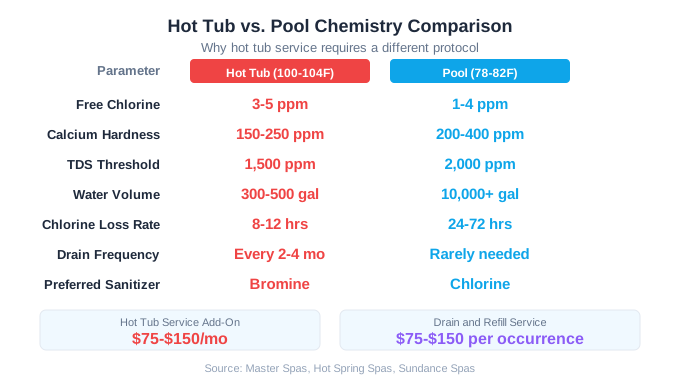
Three factors make hot tub chemistry fundamentally different from pool chemistry: high water temperature, small water volume, and high bather-to-water ratio. These three factors compound each other, creating a chemistry environment that is far more volatile than a swimming pool.
Temperature Effects on Chemistry
Hot tub water at 100 to 104°F accelerates every chemical reaction. Chlorine breaks down two to three times faster than in a pool at 78 to 82°F. pH drifts more rapidly. Bacteria multiply faster in warm water, which means the window between "balanced" and "unsafe" is much smaller. A pool that loses half its free chlorine in 24 hours might maintain adequate levels for three days. A hot tub at 102°F can lose all of its free chlorine in 8 to 12 hours under normal use.
Small Volume Amplification
A typical hot tub holds 300 to 500 gallons. A typical pool holds 10,000 to 20,000 gallons. That 20x to 50x volume difference means every chemical addition has 20x to 50x the concentration impact. One ounce of muriatic acid in a 15,000-gallon pool barely moves the pH needle. The same ounce in a 400-gallon hot tub can drop pH by a full point. This is why hot tub chemical dosing requires precise measurement, not the estimating that many techs use on pools.
Chemistry Targets
| Parameter | Hot Tub Target | Pool Target | Why Different |
|---|---|---|---|
| Free chlorine (if using chlorine) | 3-5 ppm | 1-4 ppm | Higher target to compensate for rapid breakdown |
| Bromine (if using bromine) | 3-5 ppm | N/A for most pools | Bromine is more stable at high temps |
| pH | 7.2-7.6 | 7.4-7.6 | Wider acceptable range, but monitor more frequently |
| Total alkalinity | 80-120 ppm | 80-120 ppm | Same target, but adjust more frequently |
| Calcium hardness | 150-250 ppm | 200-400 ppm | Lower target prevents scaling at high temps |
| TDS | Below 1,500 ppm | Below 2,000 ppm | Lower threshold triggers drain and refill sooner |
Chlorine vs Bromine for Hot Tubs
Bromine is the preferred sanitizer for hot tubs because it remains effective at higher temperatures and higher pH levels than chlorine. Bromine also has a unique property: spent bromide ions can be reactivated by adding a small amount of oxidizer (MPS or chlorine shock), allowing the bromide to be reused. This makes ongoing chemical costs lower than they appear from tablet pricing alone. Bromine tablets cost more per pound ($10 to $30 versus $2 to $10 for chlorine), but the reactivation property and better high-temperature performance make bromine the better value for most hot tub applications.
If the customer prefers chlorine, use dichlor (stabilized chlorine granules), not trichlor tablets or liquid chlorine. Dichlor dissolves quickly, adds minimal CYA per dose, and is designed for the small-volume, high-temperature environment. Never use trichlor tablets in a hot tub. The concentrated acid pH (around 2.8) can damage the shell and erode equipment.
What Does a Hot Tub Service Visit Include?
A standard hot tub service visit takes 15 to 25 minutes and should follow a consistent protocol. Unlike pool service where you can adjust chemistry and move on, hot tub service requires testing before and after adjustments because the small water volume responds immediately to chemical additions.
Service Visit Protocol
- 1Remove and rinse the hot tub cover. Inspect for mold, mildew, or waterlogging. Prop open to air out during service.
- 2Test water chemistry: sanitizer (chlorine or bromine), pH, total alkalinity, and calcium hardness.
- 3Inspect the water: clarity, foam level, odor, waterline ring, and any discoloration.
- 4Clean the filter cartridge. Rinse with a garden hose, or swap with a pre-cleaned cartridge if using a rotation system.
- 5Remove and clean the skimmer basket (if equipped) and inspect the circulation pump intake.
- 6Adjust chemistry: add sanitizer, pH adjuster, and alkalinity increaser as needed. Use precise measurements.
- 7Add oxidizer (MPS or non-chlorine shock) if combined chlorine or bromine is elevated.
- 8Wipe down the waterline and shell above the water with a non-abrasive cleaner.
- 9Inspect jets, air controls, and light for proper operation.
- 10Check water temperature and heater operation.
- 11Replace the cover and confirm the cover clips or straps are secure.
- 12Log all readings and actions in the service report.
Weekly vs Biweekly Service
Hot tubs used three or more times per week need weekly service. Hot tubs used once or twice per week can be maintained biweekly if the customer adds sanitizer between visits. Provide clear instructions for between-visit dosing: a pre-measured packet of sanitizer they add after each use, or a floating dispenser with the correct tablet load. Weekly service is the standard recommendation because it catches chemistry drift before it becomes a problem and gives you more touchpoints to identify equipment issues early.
How Often Should You Drain and Refill a Hot Tub?
Hot tubs need complete drain and refill on a regular schedule, which is something pools almost never require. The small water volume accumulates dissolved solids (TDS) rapidly from chemicals, body oils, lotions, and deodorants. Eventually, the water becomes saturated and chemistry becomes impossible to manage effectively. Draining and refilling with fresh water resets the chemistry baseline.
Drain Frequency Calculation
The standard industry formula for drain frequency is: (Gallons divided by 3) divided by average daily bathers equals days between drains. For a 400-gallon hot tub with 2 average daily users: (400 / 3) / 2 = 67 days, or roughly every two months. For a lightly used tub (1 user, 2 to 3 times per week), the interval extends to three to four months. For heavily used tubs (3 or more daily users, such as a vacation rental), the interval shrinks to 30 to 45 days.
| Usage Level | Daily Bathers | Drain Interval (400-gal tub) | Annual Drains |
|---|---|---|---|
| Light | 0.5 (2-3x/week) | 4 months | 3 |
| Moderate | 2 | 2 months | 6 |
| Heavy | 4+ | 30-45 days | 8-12 |
| Commercial/rental | 6+ | 3-4 weeks | 12-17 |
Drain and Refill Procedure
- 1Add a line purge product 24 hours before draining. Run all jets, blowers, and water features on high for 15 to 30 minutes to flush biofilm from the plumbing.
- 2Turn off the heater and allow water to cool below 100°F before draining.
- 3Drain using the built-in drain valve or a submersible pump. Never use the circulation pump to drain.
- 4Once empty, wipe down all shell surfaces with a mild non-abrasive cleaner. Pay attention to the jet housings and waterline area.
- 5Inspect the gaskets on jets, unions, and the drain fitting for wear or deterioration.
- 6Rinse the shell thoroughly to remove all cleaning product residue.
- 7Close the drain valve and refill with fresh water from a garden hose. Never refill with hot water as it can damage temperature sensors.
- 8Once filled to the proper level, turn on the circulation pump and heater.
- 9Add fresh chemicals: sanitizer, pH adjuster, and alkalinity increaser to bring all parameters into range.
- 10Run the tub for 30 minutes before testing and making final adjustments.
Drain and refill is a separately priced service, typically $75 to $150 per visit depending on tub size and whether it is included in a service package. It takes 60 to 90 minutes including cleaning, refilling, and startup chemistry. Price it as a standalone billable service, not something you absorb into the monthly fee.
What Equipment Differences Should You Know?
Hot tub equipment is smaller, more integrated, and more sensitive than pool equipment. Pools have separate components (pump, filter, heater, controller) that you service independently. Hot tubs have a single equipment pack that integrates the pump(s), heater, control board, and sometimes ozone or UV sanitation into one unit. Understanding these differences prevents costly mistakes.
Pumps
Hot tubs typically have one or two pumps: a circulation pump that runs continuously (low wattage, quiet) and a jet pump that runs on demand (high flow, noisy). Some tubs combine both functions in a two-speed pump. The circulation pump moves water through the heater and filter at all times, which is essential for even heat distribution and continuous filtration. If the circulation pump fails, the heater cannot operate and water quality degrades rapidly. Jet pumps are higher maintenance due to seal wear and bearing noise.
Heaters
Hot tub heaters are electric flow-through elements, not the gas or heat pump systems used on pools. They require adequate water flow to operate safely. Most have a flow switch or pressure switch that prevents the heater from firing without flow. A failed flow switch is one of the most common hot tub service calls: the tub will not heat, and the display shows a flow error. Clean the flow switch, check for air locks in the plumbing, and verify the circulation pump is operating before replacing the switch.
Filters
Hot tubs use cartridge filters, not sand or DE filters. The filter cartridge is small (often 50 to 100 sq ft compared to 200+ for a pool cartridge filter) and handles the entire filtration load for the tub. Because the bather-to-water ratio is so high, hot tub filters clog faster than pool filters and need more frequent cleaning. Rinse the cartridge at every service visit. Deep clean with a cartridge soak solution monthly. Replace the cartridge every 12 to 18 months, or sooner if it cannot be cleaned to restore flow. Keep a few common cartridge sizes on your truck for same-visit replacements.
Ozone and UV Systems
Many modern hot tubs include an ozone generator or UV sanitizer as a supplemental sanitation system. These reduce (but do not eliminate) the need for chemical sanitizer. Ozone generators have a typical lifespan of two to four years. They fail silently, meaning the owner will not notice until water quality degrades. Test the ozone output annually by checking for bubbles in the return line when the generator is running, or use an ozone test strip. UV bulbs need annual replacement regardless of whether they appear to be working.
How Should You Price Hot Tub Service?
Hot tub service should be priced as a separate line item, not bundled into the pool service fee for free. You are performing a distinct service with different chemistry, equipment, and time requirements. Bundling it with pool service undervalues the work and trains customers to expect it at no additional cost.
Pricing Structure
| Service | Frequency | Price Range | Includes |
|---|---|---|---|
| Weekly hot tub service | Weekly | $75-$150/month | Chemistry testing, dosing, filter rinse, waterline cleaning, cover inspection |
| Biweekly hot tub service | Every 2 weeks | $50-$100/month | Same scope as weekly but less frequent |
| Drain and refill | Per occurrence | $75-$150 | Purge, drain, clean, refill, startup chemistry |
| Filter replacement | Per occurrence | $30-$75 + parts | Remove old cartridge, install new, verify flow |
| Seasonal startup | Annual | $100-$200 | Spring startup after winter shutdown, full chemistry balance |
| Winterization | Annual | $100-$200 | Drain, blow lines, add antifreeze, cover and secure |
Chemicals-Included Pricing
Hot tub chemical costs are relatively low: $20 to $50 per month depending on usage, sanitizer type, and whether the tub has a supplemental ozone or UV system. Including chemicals in your monthly fee simplifies billing and prevents customers from buying incompatible products. A hot tub using bromine tablets costs approximately $15 to $30 per month in chemicals. Dichlor chlorine is slightly less. Build the chemical cost into your monthly service fee with a small buffer for cost fluctuations.
Upsell as a Package
Position hot tub service as an add-on package when onboarding new pool customers or during annual contract renewals. "Pool + Spa" packages at a bundled rate (5% to 10% discount versus separate pricing) increase the customer lifetime value and create additional switching costs that improve retention. A customer paying $150 per month for pool service and $75 for hot tub service has $225 per month in recurring revenue, is less likely to cancel, and is more likely to call you first for repair work.
$75-$150/mo
Typical monthly pricing for weekly hot tub service add-on
Source: Industry pricing surveys from pool service operators
What Are the Common Hot Tub Service Challenges?
Hot tubs present a few recurring challenges that are different from pool service problems. Knowing how to handle them efficiently keeps your service time reasonable and prevents callbacks.
Foaming
Foam on the water surface is the most common hot tub complaint. It is caused by dissolved surfactants from body lotions, laundry detergent on bathing suits, deodorants, and hair products. A small amount of foam after jet use is normal. Persistent foam indicates high TDS or surfactant accumulation. Short-term fix: add a defoaming agent (spa defoamer). Long-term fix: drain and refill. Educate the customer that rinsing off before entering the tub (a quick rinse, no soap) dramatically reduces foam between drains.
Cloudy Water
Cloudy water in a hot tub is usually a filtration or sanitation issue, not a chemical balance issue. Check the filter first. A clogged cartridge restricts flow and reduces filtration effectiveness. If the filter is clean, verify sanitizer levels. Low bromine or chlorine allows bacteria and organic matter to accumulate, causing cloudiness. If chemistry and filtration are both fine, the water may simply need draining. High TDS makes water appear hazy even when chemistry is correct.
Biofilm in Plumbing
Biofilm is a slimy bacterial layer that forms inside hot tub plumbing, especially in lines that are not used regularly (auxiliary jets, air channels, water features). Biofilm is resistant to normal sanitizer levels and can cause persistent odor and water quality problems. Treat biofilm with a plumbing purge product before every drain and refill. Run all jets, blowers, and features during the purge to ensure the product reaches all plumbing lines. For persistent biofilm, increase purge frequency or use a biofilm-specific enzymatic cleaner between drains.
Cover Deterioration
Hot tub covers deteriorate from UV exposure, chemical vapor, and water absorption. A waterlogged cover becomes heavy, loses its insulating value, and can collapse into the tub. Inspect the cover at every service visit: check for tears in the vinyl, compression of the foam core, and water weight. A cover that is noticeably heavier than when new needs replacement. Cover replacement runs $300 to $800 depending on size and quality. Recommend cover lifters to customers who struggle with heavy covers, as they extend cover life by reducing the physical stress of daily removal.
Ready to streamline your pool service business?
Pool Founder gives you route optimization, automated invoicing, chemical tracking, and everything else you need to run a more profitable pool business.
Frequently Asked Questions
How often should a hot tub be drained and refilled?
The standard formula is (gallons divided by 3) divided by average daily bathers equals days between drains. A 400-gallon tub with 2 daily users should be drained every 67 days, or roughly every two months. Lightly used tubs (2 to 3 times per week) can go three to four months. Heavily used tubs (daily use by 3+ people) may need draining every 30 to 45 days. Signs that a drain is overdue include persistent foam, cloudy water that does not respond to treatment, strong chemical odor, and TDS readings above 1,500 ppm.
Should hot tubs use bromine or chlorine?
Bromine is the preferred sanitizer for most hot tubs because it remains effective at higher temperatures (100 to 104°F) and at higher pH levels than chlorine. Bromine also has a reactivation property: spent bromide ions can be reactivated by adding a small amount of oxidizer, reducing ongoing chemical costs. The main advantage of chlorine (dichlor granules) is lower upfront cost per pound. Both work effectively when properly dosed. Never use trichlor tablets, liquid chlorine, or calcium hypochlorite in a hot tub.
How much should you charge for hot tub service?
Weekly hot tub service typically runs $75 to $150 per month, with chemicals included adding $20 to $50 to your costs. Drain and refill service is priced separately at $75 to $150 per occurrence. Filter replacements run $30 to $75 plus the cost of the cartridge. Seasonal startup and winterization services run $100 to $200 each. Position hot tub service as an add-on to existing pool service for maximum efficiency, since you are already at the property and the incremental drive time is zero.
Why does hot tub chlorine disappear so fast?
Three factors accelerate chlorine loss in hot tubs: high water temperature (100 to 104°F) breaks down chlorine two to three times faster than pool temperature, high bather-to-water ratio introduces more contaminants per gallon, and the small water volume means each bather load event has a proportionally larger chemical impact. A hot tub can lose all of its free chlorine in 8 to 12 hours of normal use. This is why maintaining 3 to 5 ppm free chlorine (higher than the 1 to 4 ppm pool target) or switching to bromine (which is more temperature-stable) is recommended.
Can you add hot tub service to an existing pool route?
Yes, and it is one of the most efficient upsells in pool service. If the customer already has a pool service account, the hot tub is on the same property, so the incremental drive time is zero. A hot tub service visit adds 15 to 25 minutes to the stop and generates $75 to $150 per month in additional revenue. Survey your existing customer base to identify who owns hot tubs. A simple email or service note asking "Do you have a hot tub? We now offer spa maintenance as an add-on service" can generate immediate uptake.