Why Are HOA Pools a Great Opportunity for Service Companies?
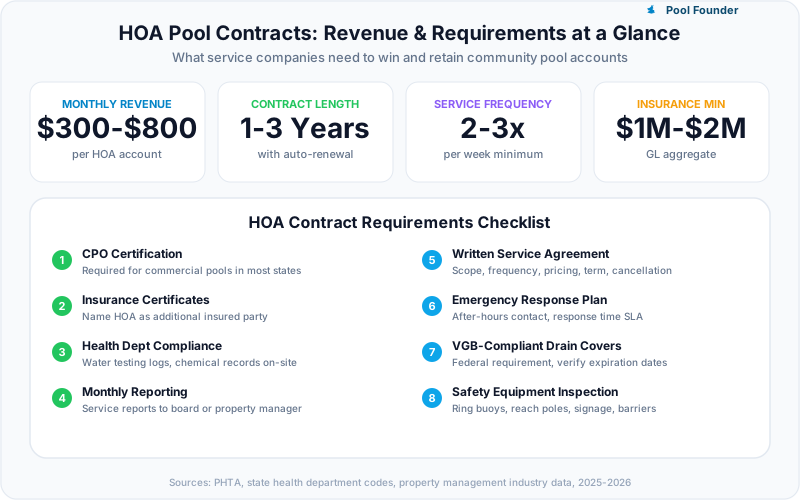
Homeowners association pools represent one of the most reliable and profitable segments in the commercial pool service market. Unlike residential customers who cancel seasonally or switch providers over small price differences, HOA contracts deliver predictable monthly revenue, often spanning multiple years with automatic renewal clauses. A single HOA account typically generates $300 to $800 per month in recurring revenue, and many community associations manage two or more pool and spa facilities on the same property.
Community pools are classified as commercial or public pools by local health departments, which means they carry stricter water quality, safety, and record-keeping requirements than backyard residential pools. For service companies willing to meet these compliance standards, the higher regulatory bar acts as a competitive moat: HOA boards strongly prefer contractors who understand the rules and can shield the association from fines, liability claims, and permit violations. That preference translates into longer contracts, fewer price-shopping cycles, and a steady referral network among property management companies who oversee dozens of communities at once.
This guide is written for pool service company owners who want to add HOA and community pool accounts to their business. It covers compliance requirements, contract structure, winning proposals, and common challenges specific to the HOA decision-making process.
What Do HOAs Require from Pool Service Contractors?
Before you pursue HOA pool contracts, you need to understand what community associations and their property managers expect from service providers. HOA pools fall under commercial pool regulations, which impose requirements well beyond what residential pool owners face. Meeting these requirements is not optional: health department inspectors conduct unannounced visits, and violations can result in pool closure orders that put the HOA board and your company in a difficult position.
Certification and Licensing
In Florida and many other states, anyone responsible for the operation of a commercial pool must hold a Certified Pool Operator (CPO) certification or equivalent credential. The CPO certification, administered by the Pool and Hot Tub Alliance, requires passing a two-day course and examination covering water chemistry, filtration, safety regulations, and facility management. Some states accept the Aquatic Facility Operator (AFO) certification as an alternative. Beyond the CPO, your company must hold the appropriate state and local business licenses, and many jurisdictions require a separate commercial pool service license or registration.
Insurance Requirements
HOA boards and property management companies will require proof of insurance before signing any contract. The standard minimum is $1 million to $2 million in general liability coverage, though some larger communities require $2 million to $5 million in aggregate. You should also carry workers compensation insurance if you have employees, commercial auto coverage for service vehicles, and professional liability insurance. Pool management companies assume liability when contracted, so your insurance certificates must name the HOA as an additional insured party. Verify that your policy specifically covers commercial pool service operations, as some general contractor policies exclude aquatic facility work.
$1M-$2M
Minimum general liability insurance typically required by HOA boards
Source: Industry standard for commercial pool service contracts
Health Department Permits and Testing
Community pools require annual operating permits from the local health department. As the contracted service provider, you may be responsible for managing the permit renewal process on behalf of the HOA. Water chemistry and temperature testing frequency depends on the size of the community. HOAs with 25 or more separate interests (individual units or lots) must test pool water chemistry and temperature daily. HOAs with fewer than 25 separate interests must test at least twice weekly, with no more than four days between tests. All test results must be recorded in a log that the health department can review during inspections.
Record Keeping and Compliance Documentation
HOA boards are typically required to maintain one to three years of pool maintenance records on file, depending on the state (Florida requires three years, while Texas and Arizona require one year). These records include water chemistry test logs, equipment maintenance and repair histories, chemical purchase and usage records, health department inspection reports, and incident reports. Your service agreement should clearly define who maintains these records and how they are shared with the board. Additionally, all community pools must comply with the Virginia Graeme Baker Pool and Spa Safety Act (VGB Act), which requires anti-entrapment drain covers and safety systems. You should include VGB compliance checks as a documented part of your regular service visits.
HOA boards face personal liability for pool safety issues. Demonstrating your knowledge of testing frequencies, record-keeping requirements, and VGB Act compliance in your proposal immediately differentiates you from competitors who treat HOA pools like oversized residential accounts.
What Should an HOA Pool Maintenance Contract Include?
A well-structured HOA pool maintenance contract protects both your company and the association while setting clear expectations for service delivery. Unlike residential agreements that can be a single page, HOA contracts need to address multiple facilities, regulatory obligations, reporting requirements, and the unique governance structure of community associations. The following elements should be included in every HOA pool service contract.
Scope of Services
Define every service included in the base contract and explicitly list services that are excluded or available as add-ons. For community pools, the scope typically includes water chemistry testing and chemical balancing, skimming and vacuuming, brushing of walls and tile, filter cleaning and maintenance, pump and motor inspection, deck and furniture inspection for safety hazards, and chemical supply and delivery. Be specific about what "chemical balancing" means: list the parameters you test (free chlorine, combined chlorine, pH, total alkalinity, calcium hardness, cyanuric acid, TDS) and the target ranges you maintain.
- Water chemistry testing and chemical adjustment at every visit
- Surface skimming, vacuuming, and wall brushing
- Filter inspection, cleaning, and backwashing on schedule
- Pump, motor, and heater operational checks
- Deck area safety inspection and furniture arrangement
- Chemical supply, delivery, and inventory management
- Monthly written service reports to the board or property manager
- Emergency response for equipment failures or water quality issues
Service Frequency
Specify the exact number of visits per week and the days of the week you will service the facility. Most HOA pools require a minimum of two to three visits per week during the operating season, with daily service during peak summer months when bather loads are highest. Year-round pools in warm climates typically receive two to three visits per week throughout the year. Include language addressing holiday schedules and how missed visits due to weather or emergencies will be rescheduled.
Chemical Supply Responsibilities
Clearly state whether chemicals are included in the monthly service fee or billed separately. Including chemicals in the contract simplifies billing for the HOA and gives you control over product quality, but it also means you absorb price fluctuations in the chemical supply chain. Many commercial pool service companies include routine chemicals (chlorine, acid, shock) in the base fee and bill specialty chemicals (algaecides, phosphate removers, stain treatments) as separate line items. Whichever approach you choose, document it clearly to prevent billing disputes.
Reporting Requirements
HOA boards expect regular written reports documenting your service activity. At minimum, provide a monthly summary that includes all water chemistry readings, services performed at each visit, equipment condition and any recommended repairs, chemical usage and inventory levels, and any compliance concerns or health department correspondence. Many service companies now use pool service software to generate automated reports with photos, timestamps, and GPS verification of service visits. This level of documentation builds trust with board members who may never see you at the pool.
Emergency Response and Repairs
Define your response time for emergency calls, such as pump failures, chemical imbalances that require pool closure, or safety hazards. A standard commitment is a four-hour response time during business hours and next-business-day response for non-emergency issues. Specify whether emergency visits are included in the monthly fee or billed at an hourly rate. For equipment repairs, clarify whether your contract covers diagnosis only, diagnosis plus minor repairs, or full equipment maintenance and replacement. Most HOA contracts separate routine maintenance from capital equipment repairs, with repairs billed on a time-and-materials basis after board approval above a specified dollar threshold.
Liability Allocation and Insurance
The contract must clearly allocate liability between your company and the HOA. As the contracted pool management company, you assume liability for services performed under the agreement, but you should not accept unlimited liability for pre-existing conditions, structural defects, or actions taken by HOA residents. Include mutual indemnification clauses, require the HOA to maintain its own liability insurance, and specify that your company will be named as an additional insured on the HOA policy. Require that the HOA notify you immediately of any incidents, injuries, or complaints related to the pool facilities.
Contract Term and Renewal
HOA pool contracts typically run for one to three years with automatic renewal clauses. A one-year initial term with automatic annual renewal and 60 to 90 days written notice for termination is the most common structure. Include an annual price adjustment clause tied to CPI or a fixed percentage increase (typically 3 to 5 percent) to protect against cost inflation. Avoid month-to-month terms for HOA accounts: the sales cycle is too long and the onboarding costs too high to risk cancellation without adequate notice.
| Contract Element | Recommended Terms |
|---|---|
| Initial term | 1-3 years with automatic annual renewal |
| Termination notice | 60-90 days written notice by either party |
| Price adjustment | 3-5% annual increase or CPI-linked escalation |
| Payment terms | Net 30 from invoice date, monthly billing |
| Emergency response | 4-hour response during business hours |
| Repair authorization | Board approval required above $250-$500 threshold |
| Insurance minimum | $1M-$2M general liability, naming HOA as additional insured |
How to Win HOA Pool Service Contracts
Winning HOA pool contracts requires a different approach than acquiring residential customers. HOA decision-making involves board votes, budget cycles, and often a property management company serving as an intermediary between you and the board. Understanding this process and timing your outreach correctly dramatically improves your close rate.
Finding HOA Property Managers
Many HOAs use property management companies as intermediaries who handle vendor selection, contract negotiation, and day-to-day oversight. Winning a single property manager relationship can unlock five, ten, or even fifty community pool accounts across their portfolio. Start by identifying the largest property management companies in your service area. Attend Community Associations Institute (CAI) chapter meetings, HOA industry trade shows, and local property management networking events. Build a target list of property managers and reach out with a brief introduction that emphasizes your commercial pool experience, certifications, and compliance expertise. A warm referral from an existing HOA client is the single most effective way to get a meeting with a new property manager.
Timing Your Proposals to Budget Cycles
HOA boards set annual budgets three to six months before the start of their fiscal year. Most community associations operate on a calendar-year fiscal year, which means budget planning happens in September through November. If you submit a proposal in January, the board may have already allocated its pool service budget for the entire year. To maximize your chances, begin outreach in late summer and submit formal proposals by early October. For communities that are dissatisfied with their current provider, a mid-year proposal can work if you frame it as an emergency solution, but expect the board to defer the decision to the next budget cycle in most cases.
Demonstrating Compliance Expertise
Board members are volunteers who often have no background in pool operations or health department regulations. Your proposal should educate them about their compliance obligations and demonstrate exactly how your service addresses each requirement. Include a compliance checklist in your proposal that maps your services to specific health department requirements: daily or twice-weekly testing schedules, two-year record retention, VGB Act drain cover inspections, annual permit management, and CPO-certified technicians. This approach positions your company as a risk-reduction partner rather than just another vendor.
Competitive Pricing Strategy
HOA pool service contracts typically range from $300 to $800 per month depending on the number of pools and spas, facility size, service frequency, and whether chemicals are included. Price your proposal based on the actual time and materials required for the specific facilities rather than using a generic rate card. Visit the property before quoting to assess pool volume, equipment condition, bather load estimates, and any deferred maintenance that will increase your workload in the first months. Present your pricing in a tiered format with a base service package and optional add-ons for enhanced reporting, additional visits, or equipment maintenance. This gives the board flexibility and avoids the appearance of padding your quote with services they may not need.
$300-$800/mo
Typical monthly range for HOA pool maintenance contracts
Source: Industry surveys and property management estimates
Providing References and Case Studies
HOA boards rely heavily on references when selecting vendors. Prepare a reference sheet with three to five current HOA clients, including the property manager name, community name, and length of service. If possible, include a brief case study showing a measurable outcome: a community where you reduced chemical costs by 15 percent, improved a failing health inspection score, or resolved a recurring algae problem that the previous contractor could not fix. Quantifiable results resonate with board members who are accountable to homeowners for association spending.
Common Challenges with HOA Pool Accounts
HOA pool accounts are lucrative and stable, but they come with unique operational challenges that residential accounts do not. Understanding these challenges before you pursue HOA contracts allows you to build processes that prevent problems rather than reacting to them after they arise.
Board Turnover and Decision-Making Delays
HOA boards typically turn over every one to three years as volunteer members rotate off. A board that hired you and values your work may be replaced by new members who want to rebid every vendor contract or who have a personal connection to a competing pool service company. Protect yourself by building relationships with the property management company (which tends to be more stable than the board) and by documenting your value in monthly reports that any new board member can review. Keep your contract terms clear enough that a new board member can understand the agreement without needing the context of the original negotiation.
Budget Constraints and Price Pressure
HOA boards manage fixed budgets funded by homeowner assessments, and pool maintenance is one of the largest discretionary line items in many community budgets. Expect boards to push back on price increases, request competitive bids every two to three years, and ask you to reduce service frequency to save money. Counter this by showing the cost of non-compliance: health department fines, pool closure orders, emergency repairs from deferred maintenance, and liability exposure. Frame your service as the lowest-cost way to maintain compliance rather than as an expense that can be trimmed.
Multiple Stakeholders and Communication Overhead
A single HOA pool account may involve a property manager, a board president, a facilities committee chair, and occasionally individual homeowners who contact you directly with complaints or requests. Establish a single point of contact (usually the property manager) through whom all service requests, complaints, and approvals must flow. Document this communication structure in your contract to prevent scope creep from individual board members making unauthorized requests and to ensure that your team is not spending unpaid time fielding calls from residents.
Seasonal Usage Spikes and Resident Complaints
Community pools experience dramatic usage spikes during summer weekends, holiday periods, and school breaks. A pool that looks pristine on a Tuesday morning service visit may be cloudy by Saturday afternoon after 80 swimmers use it. Build your service schedule around peak usage periods rather than defaulting to weekday-only visits. Consider including a weekend check visit during June through August as part of your contract. For resident complaints, establish a documented process: complaints go to the property manager, the property manager contacts you, you investigate and respond within 24 hours, and the resolution is recorded in your monthly report.
Liability Concerns and Incident Management
Pool injuries and drowning incidents at community pools create significant legal exposure for both the HOA and the service contractor. Your contract should include a clear incident reporting protocol, define the limits of your liability, and require the HOA to maintain adequate umbrella insurance. Document every safety concern you identify during service visits, even if the board does not immediately act on your recommendation. Written documentation of safety warnings protects your company if an incident occurs after you flagged a hazard. Conduct quarterly safety audits that cover drain cover condition, fencing and gate closures, depth markers, safety equipment, and signage compliance.
Always document safety concerns in writing and send them to the property manager and board president simultaneously. If the HOA fails to address a hazard you have reported, you have a paper trail that demonstrates your due diligence and protects your company in litigation.
Ready to streamline your pool service business?
Pool Founder gives you route optimization, automated invoicing, chemical tracking, and everything else you need to run a more profitable pool business.
Frequently Asked Questions
How often must an HOA test pool water chemistry?
Testing frequency depends on the size of the community. HOAs with 25 or more separate interests (individual units or lots) are required to test pool water chemistry and temperature daily. HOAs with fewer than 25 separate interests must test at least twice per week, with no more than four days between tests. All test results must be recorded in a log and retained for one to three years depending on the state. Health departments can inspect these logs at any time, so maintaining accurate and complete records is essential. Your service contract should specify which party is responsible for testing on days you are not on-site.
Do pool service companies need CPO certification for HOA pools?
In Florida and many other states, yes. Anyone responsible for the operation and maintenance of a commercial or public pool must hold a Certified Pool Operator (CPO) certification or an equivalent credential such as the Aquatic Facility Operator (AFO) certification. Since community association pools are classified as commercial pools by health departments, this requirement applies to any contractor servicing them. Even in states where CPO certification is not legally mandated, holding the credential is a significant competitive advantage when bidding on HOA contracts because it signals compliance expertise to boards and property managers.
What insurance coverage do I need to service HOA pools?
Most HOA boards and property management companies require a minimum of $1 million to $2 million in general liability insurance, with some larger communities requiring up to $5 million in aggregate. You should also carry workers compensation insurance if you have employees, commercial auto insurance for service vehicles, and professional liability (errors and omissions) coverage. Your insurance policy must specifically cover commercial pool service operations, and you will need to provide certificates of insurance that name the HOA as an additional insured party. Review your policy with your insurance agent before pursuing HOA contracts to ensure there are no coverage gaps or exclusions for commercial aquatic facility work.
How do I handle an HOA board that wants to reduce service frequency to cut costs?
This is one of the most common challenges with HOA pool accounts. When a board requests reduced service frequency, respond with a written explanation of the compliance risks: health department testing requirements that may mandate a minimum visit schedule, the increased likelihood of water quality problems between visits, the potential for equipment failures to go undetected, and the liability exposure from operating a commercial pool below recommended maintenance standards. Present an alternative cost-reduction proposal that maintains compliance, such as adjusting chemical suppliers, optimizing your visit schedule to reduce windshield time, or separating routine maintenance from capital equipment repairs. If the board insists on a frequency that puts your company at risk of compliance violations, include contract language that transfers liability for water quality issues on non-service days to the association.