Green Pool Calls Are Revenue. Here Is the Exact Protocol to Handle Them Profitably.
A green pool call is one of the most profitable jobs in residential pool service. Material costs typically run $30-50 in chemicals, but the service charges $300-800 or more depending on severity, according to PoolPro Magazine. The catch is that most techs either underdose the shock, skip the filter management, or quote too low because they have never been taught a repeatable protocol. This guide covers the exact process Corey Adams, Pool Founder co-founder and 15-year pool service veteran, uses on every green pool recovery.
"Green pools used to stress me out early in my career because I did not have a system," Corey says. "I would throw chemicals at it and hope. Now it is one of my favorite calls because the protocol is the same every time, the margins are great, and the customer thinks you are a hero when that water clears up." This guide is written for working pool techs and route operators, not homeowners. It assumes you understand free chlorine, CYA, and basic water balance.
Green pool recovery is a revenue-generating service, not a warranty obligation. If a pool turns green because the customer skipped service, went on vacation without a plan, or let their chemical feeder run dry, this is a billable job. Set that expectation before you start working.
How Do You Assess Green Pool Severity?
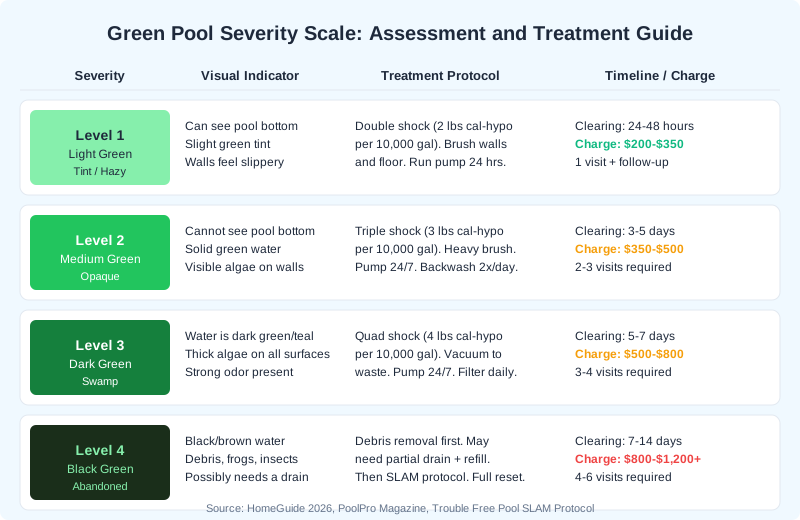
The first step in any green pool recovery is a visual assessment that determines your treatment intensity, number of visits, and price quote. Green pools fall into four severity levels: light green (tinted/hazy, bottom visible), medium green (opaque, bottom not visible), dark green (swamp-like, thick algae on surfaces), and black green (abandoned, debris-filled, possibly requiring a drain). Your treatment protocol, chemical quantities, and pricing all scale with severity.
What Should You Check Before Touching Chemicals?
Before adding a single ounce of chlorine, confirm three things. First, is the pump and filter system operational? A green pool with a dead pump needs equipment repair before chemical treatment, and that changes your quote. Second, is the water level correct? Many green pools have been neglected long enough to lose water from evaporation. Third, are there safety hazards? Abandoned pools can harbor wildlife, sharp debris, and electrical issues with pump equipment.
- 1Check pump, filter, and plumbing for operation. Turn the system on and confirm water flow.
- 2Verify water level is at mid-skimmer. Add water if low before starting treatment.
- 3Inspect for safety hazards: wildlife, submerged debris, electrical issues.
- 4Net out all large debris from the surface and bottom. You cannot shock effectively through a blanket of leaves.
- 5Test water chemistry: pH, free chlorine, CYA, alkalinity. Use a reliable liquid test kit, not strips.
- 6Classify the pool into one of the four severity levels based on visual appearance.
Do not skip the debris removal step. Organic matter like leaves and insects create massive chlorine demand. A pool full of decomposing leaves can consume 10+ ppm of chlorine before it even starts working on the algae. Net first, shock second.
How Much Shock Does a Green Pool Need?
The correct shock dose for a green pool depends on your current CYA level and the severity of the algae bloom. The standard "1 bag per 10,000 gallons" advice on shock packaging is a maintenance dose, not a green pool dose. For active algae, you need to reach the SLAM (Shock Level And Maintain) target, which is 40% of your CYA level according to the Trouble Free Pool protocol. At 40 ppm CYA, that means reaching 16 ppm free chlorine. At 60 ppm CYA, you need 24 ppm.
What Is the SLAM Method and Why Does It Work?
SLAM stands for Shock Level And Maintain. Unlike a single shock-and-hope approach, SLAM requires you to raise free chlorine to 40% of your CYA level and keep it there until three conditions are met: combined chlorine drops to 0.5 ppm or below, the overnight chlorine loss test shows 1.0 ppm or less lost, and the water is visually clear. This sustained high chlorine level ensures all algae, bacteria, and organic contaminants are fully oxidized, not just knocked back temporarily.
| CYA (ppm) | SLAM Target FC (ppm) | Cal-Hypo 73% per 10K gal | Liquid Chlorine 12.5% per 10K gal |
|---|---|---|---|
| 30 | 12 | 1.5 lbs | 1 gallon |
| 40 | 16 | 2 lbs | 1.3 gallons |
| 50 | 20 | 2.5 lbs | 1.6 gallons |
| 60 | 24 | 3 lbs | 2 gallons |
| 80 | 31 | 4 lbs | 2.5 gallons |
Why Does CYA Level Change How Much Chlorine You Need?
CYA (cyanuric acid) bonds with free chlorine and reduces the percentage that is actively sanitizing at any given moment. At 30 ppm CYA, roughly 3% of free chlorine is in the active HOCl form. At 80 ppm CYA, less than 1% is active. To kill algae, you need enough active chlorine to overwhelm the organism. Higher CYA means you need proportionally more total free chlorine to get the same killing power. This is why the "shock level equals 40% of CYA" formula exists.
"The number one reason I see green pool recoveries fail is underdosing," Corey says. "A tech throws one bag of shock at a 15,000-gallon pool with 60 CYA and wonders why it is still green three days later. That one bag gave them maybe 8-9 ppm. They needed 24 ppm. They were not even close. Know your CYA, do the math, and dose correctly the first time."
Always lower pH to 7.2 before shocking. Chlorine is dramatically more effective at lower pH. At pH 7.2, about 63% of free chlorine is in the active HOCl form. At pH 7.8, only 32% is active. Shocking at high pH wastes chemicals and extends recovery time.
What Is the Step-by-Step Green Pool Recovery Protocol?
The full green pool recovery protocol has nine steps. The first visit handles assessment, debris removal, chemistry adjustment, and the initial shock. Follow-up visits handle filter management, retesting, and final cleanup. Most Level 1-2 pools clear in 1-3 visits. Level 3-4 pools can take 4-6 visits over 1-2 weeks.
Visit 1: Assessment, Prep, and Initial Shock
- 1Remove all debris from the pool using a leaf rake and skimmer net. Get leaves, branches, and any organic matter out before adding chemicals.
- 2Test water chemistry with a liquid test kit: pH, free chlorine, combined chlorine, CYA, and alkalinity.
- 3Lower pH to 7.2 using muriatic acid. Add acid with the pump running, wait 30 minutes, and retest. Do not shock until pH is at or below 7.4.
- 4Calculate your SLAM target: multiply CYA by 0.40. If CYA is 50, your target FC is 20 ppm.
- 5Add shock to reach your SLAM target. For cal-hypo, pre-dissolve in a bucket of pool water and broadcast around the perimeter. For liquid chlorine, pour directly around the pool edge with the pump running.
- 6Brush all walls, steps, benches, and the floor thoroughly. Algae forms a protective biofilm that chemicals cannot penetrate without mechanical disruption.
- 7Turn the pump on and set it to run 24/7 until the pool clears. Do not turn the pump off during recovery.
- 8Backwash or clean the filter before leaving. Start the recovery with a clean filter.
Visit 2: Retest and Maintain (24-48 Hours Later)
Return the next day for Level 1-2 pools, or within 48 hours for Level 3-4. Test free chlorine. If FC has dropped to zero, the pool has massive chlorine demand, and you need to re-shock to the SLAM target. This is normal for severe pools. Chlorine demand can consume 10-20+ ppm in the first 24 hours. Also check filter pressure. If pressure has risen 8-10 PSI above clean baseline, backwash (sand/DE) or pull and hose down the cartridge.
Visits 3+: Filter, Vacuum, and Finish
Continue maintaining SLAM-level chlorine and managing the filter until the three completion criteria are met: combined chlorine at 0.5 ppm or below, overnight FC loss of 1.0 ppm or less, and water is crystal clear. Once the water turns from green to cloudy grey/white, the algae is dead but the dead cells are still suspended. The filter will clear this over 24-72 hours. For Level 3-4 pools with heavy dead algae on the bottom, vacuum to waste to bypass the filter entirely.
When vacuuming to waste, you are sending water out of the pool. Monitor the water level and refill as needed. Do not let the water drop more than 6 inches below the skimmer or you risk the pump losing prime and running dry.
How Do You Manage the Filter During Green Pool Recovery?
Filter management is the most overlooked part of green pool recovery. Dead algae cells are extremely fine, and they will clog your filter rapidly. A filter that is not cleaned during recovery will lose flow, the pool will stop circulating, and the clearing process stalls. How you manage the filter depends on the filter type.
| Filter Type | During Recovery | Cleaning Frequency | Key Tip |
|---|---|---|---|
| Sand | Backwash when PSI rises 8-10 above clean | 1-3x per day for severe pools | Add DE powder to sand for finer filtration |
| DE (Diatomaceous Earth) | Backwash and recharge with fresh DE | 1-2x per day for severe pools | Use full DE recharge after each backwash |
| Cartridge | Pull and hose down cartridge elements | Every 12-24 hours for severe pools | Keep a spare cartridge to swap in during cleaning |
When Should You Vacuum to Waste Instead of Filtering?
Vacuum to waste whenever dead algae has settled on the pool floor in visible clumps or a thick layer. This bypasses the filter entirely and sends the dead algae out through the backwash line. Set the multiport valve to "waste," connect your vacuum, and slowly work across the bottom. This is faster and easier on the filter than trying to process all that dead matter through filtration. The trade-off is water loss, so keep a hose running to replace what you are vacuuming out.
"I always tell new techs: your filter is doing most of the work during a green pool recovery, so treat it like the engine it is," Corey says. "If you backwash a DE filter once and then come back three days later wondering why the pool is still cloudy, look at your pressure gauge. It is probably 15 PSI over clean because you clogged it with dead algae on day one and never came back to clean it."
What Should You Charge for Green Pool Recovery?
Green pool recovery should be priced as a separate billable service, not absorbed into regular monthly maintenance. According to HomeGuide 2026 data, professional green pool cleanup costs $300-500 for standard jobs. PoolPro Magazine reports that material costs run $30-50 while customer charges range from $400-1,000 depending on severity. Your chemical cost is a small fraction of the job. The value is your expertise, your time across multiple visits, and the equipment you bring.
| Severity | Chemical Cost | Suggested Charge | Visits | Profit Margin |
|---|---|---|---|---|
| Level 1 (Light) | $15-25 | $200-350 | 1-2 | 85-93% |
| Level 2 (Medium) | $25-40 | $350-500 | 2-3 | 88-94% |
| Level 3 (Dark) | $40-60 | $500-800 | 3-4 | 88-95% |
| Level 4 (Black/Abandoned) | $50-100 | $800-1,200+ | 4-6 | 88-92% |
How Do You Quote a Green Pool Job to the Customer?
Quote based on severity level, not time-and-materials. Walk the pool, classify it visually, and give a flat rate that includes all chemicals, all visits, and filter management through to clear water. Customers prefer a single number over open-ended billing. Frame it as: "This is a Level 3 recovery. The price is $600, and that includes everything until your pool is crystal clear." If the customer is also signing up for recurring service, consider discounting the green-to-clean as a new customer acquisition cost.
Should You Offer Green Pool Recovery as a Standalone Service?
Yes. Green pool recovery is one of the best lead generation tools in pool service. Homeowners searching "green pool help" online are actively looking for someone to solve an urgent problem. They are willing to pay a premium for fast results. Many of these customers convert to recurring monthly service after seeing the quality of your work. Advertise green-to-clean as a service on your website and in local search ads.
Always collect payment before you leave the first visit, or at minimum get a credit card on file. Green pool customers who found you through a one-time search have no existing relationship with your company. Protect your revenue.
What Are the Most Common Green Pool Recovery Mistakes?
After 15 years of fixing green pools and training techs to do the same, Corey has seen every mistake in the book. Most failed recoveries come down to one of five errors that are completely avoidable with the right protocol.
Why Do So Many Green Pool Treatments Fail the First Time?
- 1Underdosing the shock. Using the "1 bag per 10,000 gallons" label dose instead of calculating the SLAM target based on CYA. A pool at 60 CYA needs 24 ppm FC, not 8-9 ppm.
- 2Shocking at high pH. Chlorine is 50% less effective at pH 7.8 compared to pH 7.2. Always lower pH before shocking.
- 3Skipping debris removal. Leaves and organic matter on the pool floor create chlorine demand that competes with algae treatment. Net first, shock second.
- 4Not maintaining SLAM level. One shock dose is not enough for moderate to severe pools. Chlorine demand will consume 10-20+ ppm in the first 24 hours. You must return, retest, and re-dose until the overnight loss test passes.
- 5Neglecting the filter. A clogged filter stops water circulation. Dead algae will choke a cartridge or DE filter within hours on a severe pool. Clean the filter every 12-24 hours during active recovery.
"The worst one I see is techs who shock the pool once, do not come back for a week, and then wonder why it is still green," Corey says. "A green pool recovery is not a set-it-and-forget-it job. You have to be there. You have to test. You have to maintain the chlorine level. That is why it is called Shock Level And Maintain, not Shock and Hope."
If a pool is consuming chlorine to zero within 4-6 hours and the CYA is above 80 ppm, consider a partial drain before continuing the SLAM process. High CYA makes shocking extremely expensive and slow. Draining 30-50% of the water and refilling drops the CYA and reduces total chemical cost.
How Do You Prevent Green Pools on Your Route?
Prevention is better than cure, and green pools on your existing route are bad for your reputation even if they are profitable to fix. The most common causes of green pools on maintained routes are missed visits, inadequate chlorine dosing, high CYA with low free chlorine, and broken or undersized equipment. A systematic approach to prevention saves you emergency calls and protects customer relationships.
What Free Chlorine Level Prevents Algae Growth?
The minimum free chlorine to prevent algae is 7.5% of your CYA level. At 40 ppm CYA, maintain at least 3 ppm FC. At 50 ppm CYA, maintain at least 4 ppm FC. Pools that consistently run below this ratio will eventually turn green, especially in summer heat. Track free chlorine and CYA together on every service visit. If a pool consistently reads under the minimum ratio, either increase your chlorine dose or schedule a partial drain to lower CYA.
- Test and log FC and CYA at every visit. Use software that flags when the FC/CYA ratio drops below the 7.5% minimum.
- Switch to liquid chlorine for pools with CYA above 50 ppm. Trichlor tabs raise CYA 3-5 ppm per month and accelerate the problem. See our trichlor management guide for the full transition plan.
- Set customer expectations for vacation periods. Either install an automatic chlorinator, have the customer add chlorine on a schedule, or plan for a green pool charge when they return.
- Inspect and clean filters on a regular schedule. A partially clogged filter reduces circulation and creates dead spots where algae starts.
- Address equipment issues immediately. A weak pump, cracked suction line, or broken timer that cuts run time below 8 hours per day in summer is a green pool waiting to happen.
Pool Founder tracks water chemistry readings at every stop and flags pools where the FC/CYA ratio falls below target. That kind of visibility across your route lets you catch problems before they turn into emergency calls and unhappy customers.
Run a pool route?
The business side of what you just read.
Pricing, chemical costs, and the tools owners use to keep the numbers straight.
- Commercial pool service pricing2026 rate tables and the cost-plus formula
- Chemical cost per poolWhat chemicals actually cost per stop
- Chemical tracking softwareLog readings and dosing from the pool deck
- Pool service softwareRoutes, invoicing, and service reports in one app
- Free profit & rate calculatorsProfit per pool, minimum rate, break-even
Frequently Asked Questions
How long does it take to clear a green pool?
Clearing time depends on severity. Light green pools with a visible bottom typically clear in 24-48 hours. Medium green opaque pools take 3-5 days. Dark green swamp-level pools take 5-7 days. Black green abandoned pools can take 7-14 days. These timelines assume correct shock dosing, 24/7 pump operation, and regular filter cleaning throughout the recovery process.
How much does professional green pool cleanup cost?
According to HomeGuide 2026 data, professional green pool cleanup costs $300-500 for standard jobs. PoolPro Magazine reports charges of $400-1,000 for severe cases. Material costs are only $30-50 in chemicals. The majority of the charge covers the technician expertise, multiple visits, and filter management required to clear the pool completely.
How much shock do you need for a green pool?
The correct shock dose depends on your CYA (cyanuric acid) level. The SLAM protocol targets free chlorine at 40% of CYA. For a pool at 50 ppm CYA, you need 20 ppm FC. That is about 2.5 lbs of 73% cal-hypo or 1.6 gallons of 12.5% liquid chlorine per 10,000 gallons. The generic "1 bag per 10,000 gallons" label dose is only 8-9 ppm, which is not enough for active algae.
Can you swim in a green pool?
No. A green pool contains active algae, elevated bacteria levels, and potentially harmful pathogens. The CDC recommends pool water maintain 1-3 ppm free chlorine for safe swimming. A green pool typically reads zero free chlorine because all available chlorine has been consumed. Do not allow swimming until the recovery is complete and chlorine levels are stable in the 1-4 ppm range.
Why did my pool turn green overnight?
Pools do not actually turn green overnight, but it can appear that way. Algae grows exponentially once free chlorine drops to zero. A pool that was borderline, with FC below the 7.5% CYA minimum, can go from slightly hazy to fully green in 24-48 hours during warm weather. Common triggers include a missed service visit, a broken chlorinator, a power outage stopping the pump, or heavy rain diluting chlorine levels.
Should you drain a green pool or treat it with chemicals?
Chemical treatment (SLAM) is the correct approach for Level 1-3 green pools. Draining is wasteful, expensive, and risky to the pool structure. The only time to consider a partial drain is when CYA is above 80 ppm (making shocking prohibitively expensive), or when the pool is Level 4 black green with excessive debris that cannot be netted or vacuumed out. Even then, a partial drain of 30-50% combined with SLAM is better than a full drain.
Sources & References
- HomeGuide — 2026 Pool Maintenance Costs: Monthly and Yearly Cleaning Service Cost
- PoolPro Magazine — Green to Clean
- Trouble Free Pool — SLAM: Shock Level and Maintain Protocol
- Trouble Free Pool — CYA/Chlorine Relationship and FC/CYA Chart
- Pool Chemical Calculator — SLAM: Shock Level and Maintain Comprehensive Guide
- PHTA — Sodium Hypochlorite (Liquid Chlorine) Fact Sheet
- Swim University — How to Clear a Green Pool in 24 Hours
- CDC — Home Pool and Hot Tub Water Treatment and Testing Guidelines