When DE Powder Shows Up in the Pool, the Grids Are Done.
Diatomaceous earth (DE) filters deliver the finest filtration available for residential pools, capturing particles down to 2-5 microns. But that performance depends entirely on the condition of the grid fabric. When the polypropylene mesh tears, cracks, or separates from the frame, DE powder bypasses the grids and ends up on the pool floor as a fine white or tan dust. According to All Filters, DE grids last 3-7 years depending on water chemistry, cleaning frequency, and how the filter is maintained. Grid replacement is a bread-and-butter service call that takes 60-90 minutes and pays well.
"DE filter grid replacements are one of the best upsells in pool service," says Corey Adams, Pool Founder co-founder and 15-year pool service veteran. "If a customer is seeing DE on the bottom of the pool, they want it fixed immediately. A full grid set runs $80-200 in parts depending on the filter model, and I charge $250-450 for the complete job. It is straightforward work once you have done it a few times, and the customer sees the difference in water clarity within 24 hours."
How Do You Know DE Filter Grids Need Replacement?
DE grids do not fail suddenly in most cases. They degrade over time through chemical exposure, pressure cycling, and physical cleaning. Knowing the signs lets you recommend replacement before the customer complains about cloudy water or DE powder in the pool.
- DE powder on the pool floor. This is the definitive sign. If you see fine white or tan powder settling on the bottom after the filter runs, DE is passing through torn grids.
- Rapid pressure buildup after recharging. If the filter pressure climbs back to its dirty reading within hours of adding fresh DE, the grids are clogged with embedded debris that cleaning cannot remove.
- DE in the pump basket or skimmer. Severe grid failure can push DE backward into the plumbing, depositing it in unexpected places.
- Visible tears or holes during cleaning. Any rip in the grid fabric, even a small one, allows DE bypass. Inspect grids closely during every full teardown cleaning.
- Collapsed or warped grid frames. The ABS plastic frames can crack and warp from exposure to pool chemicals and heat, causing the fabric to separate from the frame.
A DE filter with one torn grid will still appear to work, but water clarity will suffer. Do not patch individual grids. If one grid has failed, the rest are the same age and will follow soon. Always replace the full set.
What Parts Do You Need for a DE Grid Replacement?
A standard DE filter grid assembly contains 7 full-size grids and 1 partial (half) grid arranged in a circular pattern on a central manifold. The manifold connects all grids and channels filtered water to the outlet. When ordering parts, you need to know the filter model and the grid square footage.
| Filter Model | Grid Area | Grid Set Cost | Manifold Cost |
|---|---|---|---|
| Hayward DE4820 (48 sq ft) | 48 sq ft | $100-160 | $45-70 |
| Hayward DE6020 (60 sq ft) | 60 sq ft | $120-180 | $50-80 |
| Pentair FNS Plus 48 | 48 sq ft | $110-170 | $50-75 |
| Pentair FNS Plus 60 | 60 sq ft | $130-190 | $55-85 |
| Hayward Perflex EC65 | 23 sq ft | $80-120 | $30-50 |
| Jandy DEV48 | 48 sq ft | $110-170 | $50-75 |
Always inspect the manifold when you have the grids out. Cracks in the manifold allow DE bypass even with new grids. If the manifold is cracked, replace it at the same time. Also inspect the top manifold O-ring or gasket, the tank O-ring, and the standpipe O-ring. These are cheap parts that prevent leaks after reassembly.
Step-by-Step: DE Filter Grid Removal and Replacement
This procedure covers top-mount DE filters like the Hayward DE series and Pentair FNS Plus, which represent the vast majority of residential DE filters. The Hayward Perflex (bump-style) uses a different internal design but the grid replacement concept is similar.
- 1Turn off the pump and release pressure. Open the air relief valve on top of the filter to release trapped pressure. Never open a filter under pressure.
- 2Drain the filter. Open the drain plug at the bottom of the filter tank and allow all water to drain. This also flushes loose DE.
- 3Remove the filter top. Loosen the band clamp or the bolts holding the top and bottom halves of the tank together. Lift the top straight up and set it aside.
- 4Lift out the grid assembly. Grip the manifold top (the circular piece the air relief tube connects to) and pull the entire grid assembly straight up out of the tank. It will be heavy with old DE. Set it on a tarp or clean surface.
- 5Hose down the old grids. Rinse the grid assembly thoroughly with a garden hose to remove all DE. This lets you inspect the grids clearly.
- 6Inspect each grid and the manifold. Run your fingers along every grid panel feeling for tears, thin spots, or holes. Check the manifold for cracks, especially at the grid connection points. Check that each grid seats firmly into the manifold without wobbling.
- 7Remove old grids from the manifold. Grids typically snap or slide onto the manifold spokes. Remove each one, noting the orientation (full and partial grids are arranged in a specific pattern).
- 8Install new grids. Snap or slide each new grid onto the manifold in the correct pattern. Ensure they seat fully and do not wobble. The partial grid goes in the designated position.
- 9Clean the tank interior. While the grids are out, scrub the inside of the filter tank with a hose and brush. Remove all old DE, algae, and debris.
- 10Reassemble the filter. Lower the grid assembly back into the tank, aligning the standpipe with the bottom outlet. Replace the tank O-ring if it shows wear. Set the top back on and tighten the band clamp evenly.
- 11Recharge with DE powder. Turn on the pump, open the air relief valve until water flows, then add the correct amount of DE through the skimmer with the pump running.
Never run a DE filter without DE powder. The bare grids will clog instantly with debris and are very difficult to clean. Always recharge immediately after reassembly.
How Much DE Powder Should You Add?
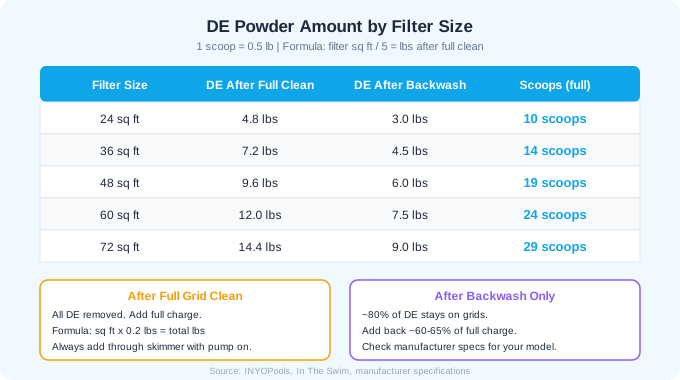
The amount of DE powder depends on the filter size and whether you did a full grid clean or just a backwash. The standard formula is 1 pound of DE per 10 square feet of filter area after a full teardown cleaning, though some manufacturers specify slightly different amounts. A standard DE scoop holds approximately half a pound.
How to Add DE Powder Correctly
- 1Turn on the pump and let it prime fully.
- 2Open the air relief valve until a steady stream of water flows, then close it.
- 3Mix the measured DE powder in a bucket with pool water to create a thin slurry.
- 4Slowly pour the slurry into the skimmer while the pump is running. Go slowly to avoid overloading the skimmer.
- 5After all DE is added, let the pump run for at least 5 minutes to distribute the DE evenly across the grids.
- 6Check the filter pressure and record it as the new clean baseline.
If DE powder blows back into the pool immediately after adding it through the skimmer, you have a broken grid, a cracked manifold, or the grid assembly is not seated on the standpipe correctly. Shut down and reinspect.
Common DE Filter Mistakes to Avoid
DE filter service has more opportunities for error than sand or cartridge filters because of the precision required in reassembly and DE dosing. Avoiding these common mistakes will prevent callbacks and customer complaints.
- Adding too much DE. Excess DE clogs the grids faster, raising pressure quickly and reducing the time between cleanings. Follow the manufacturer specs exactly.
- Adding too little DE. Insufficient DE means gaps in coverage on the grid fabric. Debris embeds directly into the fabric, shortening grid life and reducing filtration quality.
- Skipping the manifold inspection. New grids on a cracked manifold still allow DE bypass. Check the manifold every time you have the grids out.
- Forgetting the tank O-ring. A dried-out or pinched tank O-ring causes leaks at the band clamp. Lubricate it with silicone lube or replace it. Cost: $10-20.
- Not cleaning the tank interior. Old DE and debris left in the tank contaminate the new grids immediately. Take five minutes to scrub the tank.
- Reassembling under pressure. Always confirm the air relief valve is open and the system is depressurized before removing the top. DE filter tanks operate at 15-30 PSI, and a pressurized top can cause serious injury.
How Should You Price a DE Grid Replacement?
A DE grid replacement is a mid-range service call that pays well because of the perceived complexity. Customers know the filter is a major piece of equipment and expect a fair price for the service. Your pricing should cover parts, labor, and a modest markup on the grid set.
| Component | Your Cost | Customer Price |
|---|---|---|
| Grid set (48-60 sq ft) | $100-190 | $150-280 |
| Manifold (if needed) | $45-85 | $70-130 |
| Tank O-ring | $10-20 | Included |
| DE powder (10-12 lbs) | $8-15 | Included |
| Labor (60-90 min) | $40-60 (your cost) | $150-250 |
| Total (grids only) | $160-285 | $300-530 |
"I quote DE grid replacements at $350-450 for most residential filters," Corey says. "That includes the grid set, new O-rings, fresh DE, and the labor. If the manifold needs replacing, I add $80-130. The customer gets crystal-clear water within a day, and I earn a solid margin on a job that takes about an hour. It is one of the most predictable repairs in pool service."
Run a pool route?
The business side of what you just read.
Pricing, chemical costs, and the tools owners use to keep the numbers straight.
- Commercial pool service pricing2026 rate tables and the cost-plus formula
- Chemical cost per poolWhat chemicals actually cost per stop
- Chemical tracking softwareLog readings and dosing from the pool deck
- Pool service softwareRoutes, invoicing, and service reports in one app
- Free profit & rate calculatorsProfit per pool, minimum rate, break-even
Frequently Asked Questions
How long do DE filter grids last?
DE filter grids typically last 3-7 years depending on water chemistry, cleaning frequency, and usage. Pools with aggressive chemistry (low pH, high sanitizer levels) or pools that are cleaned with muriatic acid soaks tend to wear grids faster. Expect to replace grids at least once during the filter tank lifetime.
Can I replace just one torn DE grid instead of the full set?
Technically yes, but it is not recommended. If one grid has failed, the remaining grids are the same age and in similar condition. They will likely fail within months. Replacing the full set avoids a callback and gives the customer a complete refresh. Individual grids cost $15-30 each, while a full set costs $80-200, making it more cost-effective to do the full replacement.
What causes DE powder to end up on the pool floor?
DE powder in the pool means it is bypassing the grids, which happens when a grid is torn or when the manifold is cracked. It can also occur if the grid assembly is not seated properly on the standpipe, if the manifold top is not sealed, or if too much DE was added at once, blowing past the grids before they could coat.
How much DE powder should I add after a full grid clean?
The standard formula is 1 pound of DE per 10 square feet of filter area (or divide the filter sq ft by 5). A 48 sq ft filter takes approximately 9.6 lbs, and a 60 sq ft filter takes 12 lbs. One standard DE scoop holds about 0.5 lbs. Always follow the manufacturer specs for your specific filter model.
Is it safe to use a DE filter without DE powder?
No. Running a DE filter without DE powder allows debris to embed directly into the grid fabric, which clogs the grids rapidly and is very difficult to clean. The DE powder is the actual filter media that captures particles. Without it, the grids act as a very coarse strainer and the pool will not filter properly.
How do I dispose of old DE powder and grids?
Used DE powder can typically be disposed of in regular trash after drying, or washed into a landscaped area away from storm drains. Check your local regulations, as some municipalities classify DE waste differently. Old plastic grids go in regular trash. Never wash DE directly into storm drains or waterways.