What Is CPO Certification and Why Does It Matter for Your Pool Business?
The Certified Pool/Spa Operator (CPO) certification is the most widely recognized credential in the commercial pool industry. Administered by the Pool and Hot Tub Alliance (PHTA), it proves you understand water chemistry, filtration systems, safety regulations, and facility management at a professional level. Twenty-seven states require CPO certification for anyone operating a commercial or public pool, and many property managers and HOAs will not sign a service contract with a company that does not have at least one CPO-certified operator on staff.
Whether you are launching a pool service business, expanding into commercial accounts, or renewing an expiring certification, this guide walks you through every step. We cover who needs CPO certification, the two course formats available, exam details, realistic cost breakdowns, study strategies that actually work, state-by-state requirements, and the renewal process. Every fact in this guide comes from PHTA, state health departments, or verified training providers.
CPO certification is valid for 5 years with no grace period. If your certification lapses, you must retake the entire course and exam. Set a calendar reminder at least 6 months before expiration to schedule your renewal course.
Who Needs CPO Certification?
CPO certification is required for operators of commercial, public, and semi-public pools in 27 U.S. states. It is not required for residential pool maintenance in any state. If you service hotels, HOAs, municipal pools, water parks, fitness centers, or apartment complexes, you likely need at least one CPO-certified person involved in the operation. Even in states that do not mandate certification, having CPO credentials gives you a competitive edge when bidding on commercial contracts.
Do I Need CPO Certification for Residential Pool Service?
No state requires CPO certification for residential-only pool service. However, the knowledge you gain from the CPO course, particularly around water chemistry calculations, filtration troubleshooting, and chemical safety, makes you a better technician on every route. Many pool service owners who started residential-only eventually expand into commercial work, and having your CPO already in hand means you can take on those higher-margin accounts the moment the opportunity appears.
When Is CPO Certification Required by Law?
Health departments in 27 states require that every commercial or public pool facility has a CPO-certified operator (or equivalent) responsible for its operation. Another 7 states have local requirements where individual counties or cities mandate certification even though the state itself does not. In these jurisdictions, a health inspector will ask to see proof of certification during inspections. Operating without it can result in fines, failed inspections, or pool closure orders.
| Requirement Level | States | What It Means |
|---|---|---|
| Statewide CPO required | FL, TX, GA, NJ, NY, NC, SC, CO, NV, NM, and 17 others (27 total) | Every commercial pool must have a CPO-certified operator |
| Local requirements only | AL, AZ, CA, MI, MO, PA, VA | Major counties and cities require CPO, but no statewide mandate |
| No requirement | CT, HI, IL, IN, KS, KY, LA, MS, ND, OH, OK, RI, SD, TN, VT, WI | No CPO mandate, but certification still helps win contracts |
In Florida, the Department of Health requires a CPO-certified operator for every commercial pool. Florida has some of the strictest commercial pool regulations in the country. If you operate in Florida, CPO certification is non-negotiable.
How Do You Get CPO Certified?
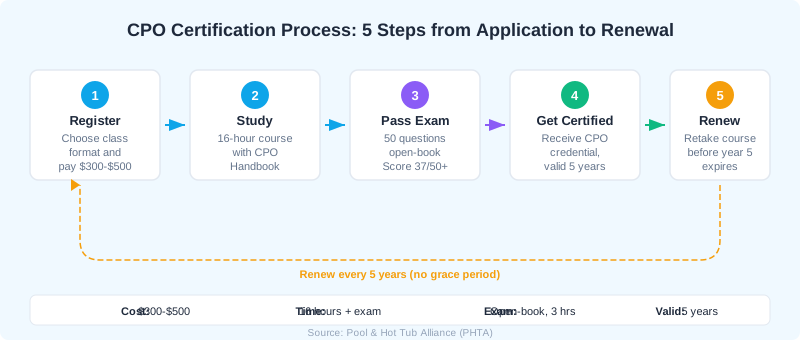
Getting CPO certified involves completing a PHTA-approved 16-hour course and passing a 50-question exam. The course is offered in multiple formats: a traditional two-day in-person class, a blended "Fusion" format combining online self-study with a one-day in-person session, or a fully virtual option delivered live over Zoom. No prior industry experience is required. The course covers everything from water chemistry fundamentals to regulatory compliance.
What Are the CPO Course Format Options?
PHTA offers three approved course delivery methods. The traditional classroom course runs 16 hours over two consecutive days with an instructor. The Fusion format splits the work into online Pool Operator Primer modules you complete at your own pace, followed by a one-day instructor-led session. The virtual option delivers the same content live over Zoom or another video platform. All three formats cover identical material and lead to the same certification.
| Format | Duration | Delivery | Best For |
|---|---|---|---|
| Two-day classroom | 16 hours (2 days) | In-person with instructor | Hands-on learners who prefer face-to-face instruction |
| Fusion (blended) | Self-paced online + 1 day in-person | Online modules then classroom | Busy operators who want to study on their own schedule |
| Virtual live | 16 hours (typically 2 days) | Live via Zoom | Remote learners or those without a local class |
| On-demand | Self-paced online | Pre-recorded lessons | Self-motivated learners with flexible schedules |
Some states do not accept fully online CPO courses. Arizona, for example, recognizes online CPO statewide except in Pima County and Cochise County, which require in-person attendance. Always check your local health department before enrolling in an online-only course.
Is Online CPO Certification the Same as In-Person?
Yes. An online CPO course provides the exact same CPO certification as an in-person class. The credential is identical regardless of how you completed the coursework. The difference is in the learning experience. In-person classes offer direct interaction with the instructor, hands-on demonstrations with equipment, and immediate Q&A. Online courses offer scheduling flexibility and the ability to revisit material. Choose the format that fits how you learn best, but verify your state accepts online delivery first.
What Does the CPO Exam Look Like?
The CPO exam is a 50-question multiple-choice test. It is open-book and open-note, meaning you can reference your CPO Handbook during the exam. You have 3 hours to complete it. A passing score is 37 out of 50 correct answers (74%). The exam is administered at the end of the course, either in person or online depending on your course format.
What Topics Does the CPO Exam Cover?
The exam draws questions from every chapter of the CPO Handbook. The heaviest-weighted topics are water chemistry (pH, chlorine, alkalinity, calcium hardness, cyanuric acid), pool calculations (turnover rates, chemical dosing, flow rates), filtration and circulation systems (sand, DE, and cartridge filters), disinfection methods, safety regulations including the VGB Act, and facility management. Chapters 3, 6, and 7 of the handbook are the most math-intensive and tend to trip up first-time test-takers.
- Water chemistry: pH, free chlorine, combined chlorine, total alkalinity, calcium hardness, cyanuric acid, and the Langelier Saturation Index
- Pool calculations: turnover rate, flow rate, chemical dosing formulas, volume calculations
- Filtration systems: sand, diatomaceous earth (DE), and cartridge filter operation, maintenance, and backwashing
- Disinfection: chlorine types (gas, liquid, cal-hypo, trichlor, dichlor), bromine, UV, ozone
- Safety: VGB Act compliance, entrapment prevention, chemical storage, emergency procedures
- Regulatory compliance: health department requirements, record keeping, inspection preparation
- Facility management: equipment maintenance, energy efficiency, staffing
How Many Times Can You Retake the CPO Exam?
PHTA allows one initial exam attempt and up to two retakes, for a total of three attempts. All retakes must be completed within 6 months of your original exam date. If you fail all three attempts, you must retake the full course before you can sit for the exam again. Some training providers include all three attempts in the course price, while others charge a retake fee of $60 to $85 per attempt. Check with your provider before enrolling.
| Exam Detail | Specification |
|---|---|
| Number of questions | 50 multiple-choice |
| Passing score | 37/50 (74%) |
| Time limit | 3 hours |
| Format | Open-book, open-note |
| Retake policy | Up to 2 retakes within 6 months |
| After 3 failures | Must retake full course |
| ADA accommodations | Time extensions available |
How Much Does CPO Certification Cost?
The total cost of CPO certification ranges from $300 to $500 depending on the training provider, course format, and what is included. For 2026, PHTA has set the minimum tuition at $390. This typically includes the CPO Handbook, Pool Operator Primer modules, and exam fees. Some providers charge more for additional materials, exam retakes, or premium formats. The Fusion format (online self-study plus one-day classroom) tends to cost slightly more, with some providers charging up to $465.
What Is Included in the CPO Course Fee?
Most training providers include the CPO Handbook (the official textbook), access to online study modules, practice exams, and at least one exam attempt in the base course fee. Some providers include all three exam attempts at no extra charge, which is worth asking about when comparing programs. The CPO Handbook alone is an essential reference that you will use throughout your career, so the course fee covers more than just exam prep.
| Cost Component | Typical Range | Notes |
|---|---|---|
| Standard course tuition | $390 - $465 | PHTA minimum is $390 for 2026 |
| Exam retake fee | $0 - $85 per attempt | Some providers include all 3 attempts |
| CPO Handbook | Included in tuition | Hard copy included with most courses |
| Renewal course (every 5 years) | $300 - $500 | Same cost as initial certification |
CPO certification pays for itself fast. Commercial pool contracts typically pay $300 to $800 per month per facility. A single commercial account can cover the cost of certification in your first month of service. If your business is growing into commercial work, this is one of the highest-ROI investments you can make.
How Should You Study for the CPO Exam?
The CPO exam has a high pass rate when candidates actually prepare, but the math-heavy chapters catch people off guard. The exam is open-book, so you do not need to memorize every formula. What you do need is fluency with the CPO Handbook so you can find answers quickly under time pressure. Three hours sounds generous for 50 questions, but the calculation problems eat up time if you are flipping through unfamiliar pages.
What Are the Best CPO Exam Study Strategies?
Start by reading the CPO Handbook cover to cover at least once before the class. During the course, tab the key formula pages and reference charts so you can find them instantly during the exam. Practice the math problems until you can work them without hesitation. The calculation chapters (chapters 3, 6, and 7) cover turnover rates, chemical dosing, and flow rate formulas. These are the questions where most people lose points.
- 1Read the CPO Handbook before attending class. Skim all chapters and pay close attention to water chemistry and pool calculations.
- 2Tab your handbook with sticky notes on formula pages, chemical dosing charts, and reference tables. You will need to find these quickly during the exam.
- 3Practice pool volume calculations, turnover rate formulas, and chemical dosing problems until they feel automatic.
- 4Take every practice exam your training provider offers. Focus on questions you get wrong and revisit those handbook sections.
- 5Understand the Langelier Saturation Index (LSI) and how to calculate it. LSI questions appear regularly on the exam.
- 6Review the VGB Act requirements, drain cover standards, and anti-entrapment device regulations. These are easy points if you know the material.
- 7On exam day, answer the questions you know first, then go back to the calculation problems. Do not burn 15 minutes on one question.
The most common reason people fail the CPO exam is not the difficulty of the questions. It is running out of time on calculation problems because they cannot find the right formula in the handbook fast enough. Tab your book thoroughly before exam day.
How Does CPO Certification Renewal Work?
CPO certification is valid for exactly 5 years from the date of certification. There is no grace period. If your certification expires, it is gone, and you must complete the entire certification process from scratch. To renew, you must complete another PHTA-approved CPO course and pass the exam again before your expiration date. The renewal course covers the same material as the initial certification, updated with any regulatory changes that occurred during the 5-year period.
What Are the CPO Renewal Options?
Renewal uses the same course formats as initial certification: a two-day classroom course, the blended Fusion format, or a virtual live class. The cost is the same as the initial certification, typically $300 to $500 depending on the provider. You must pass the 50-question exam again with a score of 37 out of 50 or higher. The renewal exam covers current standards, so expect updated questions reflecting any regulatory changes in the past five years.
What Happens If My CPO Certification Expires?
If your CPO certification lapses, you must complete the entire certification course and exam again. There is no abbreviated renewal or re-activation process for expired certifications. For pool service companies managing commercial accounts, a lapsed CPO can trigger compliance violations during health department inspections and potentially jeopardize your contracts. Set a reminder at least 6 months before your certification expiration date to give yourself time to find and register for a renewal course.
5 Years
CPO certification validity period. No grace period for renewal. Lapsed certifications require starting the full course over from the beginning.
Source: Pool & Hot Tub Alliance (PHTA)
CPO vs. AFO: Which Certification Should You Get?
The two nationally recognized pool operator certifications are the Certified Pool/Spa Operator (CPO) from PHTA and the Aquatic Facility Operator (AFO) from the National Recreation and Park Association (NRPA). Both are accepted in all 50 states and both are valid for 5 years. However, CPO is far more widely recognized in the commercial pool service industry and is the credential most health departments specifically reference in their regulations.
What Is the Difference Between CPO and AFO?
CPO focuses on pool operations, chemical treatment, filtration, and regulatory compliance. It is designed for anyone who operates or services pools. AFO has a broader scope that includes facility programming, aquatic fitness, swim lessons, and management of municipal aquatic centers. If you run a pool service company, CPO is the more practical choice. If you manage a municipal recreation facility with swim programs and aquatic fitness classes, AFO may be more relevant.
| Feature | CPO (PHTA) | AFO (NRPA) |
|---|---|---|
| Administering body | Pool & Hot Tub Alliance | National Recreation and Park Association |
| Focus | Pool operations, chemistry, safety | Facility management, programming, operations |
| Exam format | 50 questions, open-book | 50 questions, open-book |
| Passing score | 74% (37/50) | 78% |
| Validity | 5 years | 5 years |
| Best for | Pool service companies, commercial operators | Municipal facilities, parks and recreation |
For pool service business owners, CPO is the standard credential. When health departments, property managers, and insurance companies ask for certification, they are almost always asking for CPO specifically. Get CPO first. Add AFO later if you expand into municipal facility management.
How Does CPO Certification Help Your Pool Service Business?
CPO certification directly impacts your ability to win and retain commercial accounts. Hotels, HOAs, municipalities, and fitness centers routinely require proof of CPO certification before signing a service contract. Beyond meeting legal requirements, CPO certification signals to property managers that you take water safety seriously and have the technical knowledge to keep their facility compliant. It is a credibility marker that separates professional operators from unlicensed competitors.
What Are the Business Benefits of CPO Certification?
- Win commercial contracts: Hotels, HOAs, and property managers often require CPO certification as a condition of their service agreements. Without it, you cannot even bid on many commercial accounts.
- Charge higher rates: Commercial pool service typically pays $300 to $800 per month per facility, significantly more than residential stops. CPO certification is your entry ticket to this revenue tier.
- Reduce insurance premiums: Insurance carriers often offer lower premiums to companies with CPO-certified operators because certified staff are less likely to cause chemical incidents or compliance failures.
- Pass health inspections: In 27 states, your commercial clients need a CPO-certified operator on record. Being that person, or having one on your team, keeps your clients compliant and your contracts secure.
- Improve technician retention: Paying for your techs to get CPO certified shows you invest in their careers. Certified technicians tend to stay longer and make fewer costly mistakes.
From a practical standpoint, the CPO course teaches you calculation methods and troubleshooting techniques that save time in the field. When you can diagnose a chemistry problem at a glance instead of guessing, you spend less time per stop and avoid callbacks. That efficiency compounds across every commercial account on your route.
Free starter kit
Start a pool service business with the numbers already run.
A short email series from an owner who started with $1,200 and a used truck. No software pitch, just the four things that decide whether year one works.
- Startup cost breakdownEvery line item from $2K bootstrap to fully equipped
- Pricing calculatorThe minimum you can charge per visit and still profit
- First-10-customers playbookDoor hangers, referrals, and the phone script that closes
- Licensing & insurance checklistWhat your state requires and which insurers pay claims
Already running routes? Try Pool Founder free
Frequently Asked Questions
How long does it take to get CPO certified?
The CPO certification course requires 16 hours of instruction, typically completed over two consecutive days for in-person classes. The blended Fusion format allows you to complete the online portion at your own pace before attending a one-day in-person session. The exam is administered at the end of the course and takes up to 3 hours. Most candidates complete the entire process, from registration to certification, within one to two weeks.
Is the CPO exam hard to pass?
The CPO exam is manageable with proper preparation. It is 50 multiple-choice questions, open-book, with a 3-hour time limit. You need 37 out of 50 correct (74%) to pass. The questions that give people the most trouble are the math-based calculations covering pool volume, turnover rates, and chemical dosing. Tab your CPO Handbook before the exam so you can find formulas quickly. Training providers report high pass rates among students who complete the coursework and practice problems.
Can I take the CPO certification exam online?
Yes. PHTA-approved training providers offer fully virtual and online CPO courses with online exam administration. The online certification is identical to the in-person version. However, some states and local jurisdictions do not accept online CPO courses. For example, Arizona recognizes online CPO statewide except in Pima County and Cochise County. Always verify with your local health department before enrolling in an online course to make sure it will be accepted in your jurisdiction.
How much does CPO certification cost in 2026?
CPO certification costs between $300 and $500 depending on the training provider and course format. PHTA has set the minimum tuition at $390 for 2026. This typically includes the CPO Handbook, online study modules, and exam fees. Some providers include all three exam attempts in the base price, while others charge $60 to $85 for each retake. Renewal every 5 years costs the same as initial certification.
Does CPO certification transfer between states?
Yes. The CPO certification is a nationally recognized credential administered by PHTA and is accepted in every state that requires operator certification. You do not need to recertify when moving to a new state. However, some states and local jurisdictions have additional requirements beyond CPO, such as supplemental local training or registration with the health department. Always check with the health department in your new jurisdiction to confirm what they require.
What is the difference between CPO certification and a pool contractor license?
CPO certification and a pool contractor license are two separate credentials. CPO certification proves you can safely operate and maintain a pool (water chemistry, filtration, safety compliance). A pool contractor license, issued by your state licensing board, authorizes you to perform construction, repair, or renovation work on pools. Many pool service professionals need both: CPO for ongoing maintenance and operation of commercial facilities, and a contractor license if they also perform repairs, equipment installation, or construction work.
Sources & References
- PHTA — Certified Pool/Spa Operator (CPO) Certification Program
- PHTA — CPO Courses and Class Finder
- Pool Training Academy — What to Expect on CPO Exam Day
- Pool Training Academy — Is Online CPO the Same as In-Person?
- PoolDial — CPO Certification Requirements by State
- The Training Center — CPO Certification Course and Exam Details
- The Training Center — CPO Recertification and Renewal
- Pool Certs — How to Study and Prepare for a CPO Exam