Why Does Your Commercial Pool Proposal Need to Be Better Than Everyone Else?
Commercial pool service proposals are how you win $3,000 to $24,000+ annual contracts. The property manager reviewing your bid is comparing it against two to five other proposals, and they are not just looking at price. They are evaluating your competence, reliability, compliance knowledge, and professionalism based entirely on the document you submit. A one-page quote with a monthly number and a handshake will lose to a structured proposal that demonstrates you understand the facility, the regulations, and the specific challenges of that property.
Corey Adams spent years bidding on commercial pool contracts before he figured out the pattern. "The proposals that won were never the cheapest," he says. "They were the ones where the property manager read it and thought, this company actually understands what we need. Every time I included a site assessment with specific findings and a compliance checklist that mapped to health department requirements, I won the contract. The companies that just emailed a price lost." This guide breaks down the elements of a winning commercial pool proposal and gives you a template structure you can adapt for any property type.
This guide covers proposals for ongoing commercial pool maintenance contracts, not one-time repair or construction bids. The approach applies to hotels, HOAs, apartment complexes, fitness centers, and any other commercial aquatic facility.
What Goes Into a Winning Commercial Pool Proposal?
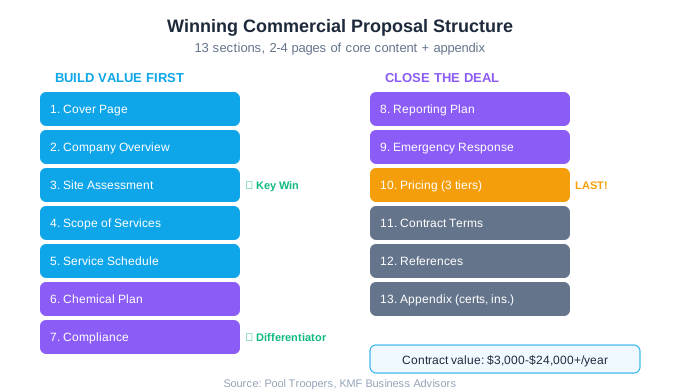
A strong commercial pool proposal follows a predictable structure. Property managers review proposals quickly, so put the most important information up front and support it with details in later sections. The following template structure works for any commercial property type. Adapt the details to the specific facility.
Proposal Template Structure
- 1Cover page: your company name, logo, the property name and address, proposal date, and your direct contact information
- 2Company overview: years in business, number of commercial accounts, CPO/AFO certifications, insurance coverage summary, and one or two sentences about your approach
- 3Site assessment findings: specific observations from your property visit with photos
- 4Scope of services: every task included in the monthly fee, explicitly listed
- 5Service schedule: number of weekly visits, days, times, and seasonal adjustments
- 6Chemical management plan: supply approach, product quality standards, and dosing methodology
- 7Compliance commitment: how you handle testing, record-keeping, permits, and health department coordination
- 8Reporting and communication: what the client receives monthly and how you communicate issues
- 9Emergency response plan: guaranteed response times and after-hours availability
- 10Pricing: tiered options with clear terms for annual escalation and add-on services
- 11Contract terms: duration, renewal, termination, payment terms, and insurance requirements
- 12References: three to five current commercial clients with contact information
- 13Appendix: copies of CPO certificates, insurance certificate, and sample monthly report
The entire proposal should be two to four pages of core content plus the appendix. Property managers do not read ten-page proposals. Be thorough but concise. Every section should answer a specific concern that the decision-maker has about hiring your company.
2-4 pages
Optimal length for commercial pool service proposal core content
Source: Industry best practice from commercial pool operators
Why Does the Site Assessment Win the Contract?
The site assessment is the single most important section of your proposal. It demonstrates that you physically visited the property, evaluated the specific conditions, and developed your pricing based on actual findings rather than a generic rate card. Most of your competitors skip this step. They email a standard quote without visiting. That immediately puts them at a disadvantage.
What to Assess During Your Site Visit
- Pool dimensions and calculated volume (do not rely on the property manager estimate)
- Number and type of aquatic features (pool, spa, wading pool, water features)
- Filtration system type, size, and condition
- Pump model, horsepower, age, and operating condition
- Heater type and condition (if applicable)
- Chemical automation system make, model, and calibration status
- Chemical storage area condition and capacity
- Deck condition, drainage, and safety hazards
- Fencing, gates, latches, and access control
- Drain covers and VGB Act compliance status
- Safety equipment (ring buoys, shepherd hooks, first aid kit, signage)
- Current water chemistry: free chlorine, pH, alkalinity, calcium hardness, CYA, temperature
- Evidence of deferred maintenance or recurring problems (staining, algae history, equipment patches)
How to Present Your Findings
In your proposal, summarize the site assessment in three to five bullet points covering the most significant findings. Include one or two photos that illustrate your observations. If you found deferred maintenance issues, present them diplomatically. You are not criticizing the current provider or the property manager. You are identifying conditions that affect your service plan and pricing. For example: "The pool filtration system includes a Pentair TR-100 sand filter that appears to be 8-10 years old with moderate calcification on the laterals. We recommend budgeting for filter media replacement within the first contract year to maintain optimal water clarity."
The site assessment also protects you. If you discover failing equipment or deferred maintenance during the visit, documenting it in your proposal prevents the property manager from expecting you to fix inherited problems at no additional cost. Everything is on paper before the contract is signed.
How Should You Structure the Scope of Services?
The scope of services section prevents scope creep, which is the number one margin killer on commercial pool contracts. Every task included in the monthly fee should be explicitly listed. Every service that is not included should be clearly excluded. Ambiguity in your scope is an invitation for the property manager to ask you to do work you never priced.
Routine Maintenance (Included in Monthly Fee)
- Water chemistry testing: free chlorine, combined chlorine, pH, total alkalinity, calcium hardness, CYA, and temperature at every visit
- Chemical balancing: adjustment of sanitizer, pH, alkalinity, and calcium as needed
- Surface skimming and debris removal from pool and surrounding deck area
- Brushing of walls, steps, benches, and tile line
- Vacuuming as needed (specify: every visit, twice weekly, or weekly)
- Skimmer basket and pump strainer basket cleaning
- Filter pressure check and backwash/cleaning per maintenance schedule
- Equipment function check: pumps, heaters, chemical feeders, automation, lighting
- Water level monitoring and adjustment
- Chemical automation system monitoring and calibration per schedule
- Chemical supply and delivery (if chemicals-included pricing)
- Monthly written service report with water chemistry data, service log, and equipment condition
Add-On Services (Available at Additional Cost)
- Equipment repairs and parts replacement (with approval above specified dollar threshold)
- Filter media replacement
- Pool draining, acid washing, or resurfacing
- Deck pressure washing or furniture cleaning
- Seasonal opening and closing services
- Emergency response outside of normal business hours
- Health department inspection coordination and representation
- Capital equipment replacement recommendations and installation coordination
Define a clear repair authorization threshold in your proposal. A common approach: repairs under $250 are included in the monthly fee or authorized without prior approval. Repairs between $250 and $500 require property manager verbal approval. Repairs over $500 require written approval and are billed separately on a time-and-materials basis. This structure keeps the pool operational for minor issues while protecting both parties on larger expenses.
How Should You Present Compliance in Your Proposal?
Compliance is where you differentiate yourself from every competitor who treats a commercial pool like a large residential account. Most property managers are not pool experts. They know the health department inspects the pool, they know violations are bad, and they know they need a contractor who keeps them out of trouble. Your compliance section should educate them about their obligations and demonstrate exactly how your service addresses each one.
Compliance Checklist to Include
| Requirement | Your Service Response |
|---|---|
| Water chemistry testing frequency | Testing at every scheduled visit, minimum 3x/week (daily during peak season if required by code) |
| Record retention | Digital and printed logs maintained for 1-3 years per state requirement |
| CPO certification | CPO-certified technician assigned to this property, certificate copy attached |
| Health department permits | Annual permit renewal tracked and managed on your behalf |
| VGB Act drain compliance | Drain cover inspection documented at every visit |
| Safety equipment audit | Ring buoys, hooks, signage, and first aid verified quarterly |
| Chemical storage compliance | Chemical storage area inspected for proper ventilation, labeling, and separation |
| Emergency action plan | Written emergency response protocol provided to on-site staff |
This table does more selling than your pricing page. When a property manager sees that you have mapped your service to every health department requirement, they know you will keep the pool open and the community out of trouble. Board members and corporate asset managers are risk-averse. They choose the contractor who reduces risk, not the one with the lowest price.
If the facility has any existing health department violations on record (these are public documents in most jurisdictions), reference them in your proposal and explain specifically how your service plan addresses each one. This turns a liability into a selling point.
How Should You Price Your Commercial Proposal?
Pricing presentation matters as much as the number itself. A single monthly price on a page is a commodity quote. Tiered options with clear scope definitions are a professional proposal. Present your pricing in a way that gives the decision-maker flexibility while protecting your margins.
Tiered Pricing Structure
| Service Tier | Included | Best For |
|---|---|---|
| Standard | Routine maintenance, chemistry, cleaning, filter care, monthly reports | Properties with reliable equipment and low-to-moderate bather load |
| Enhanced | Standard plus chemicals included, quarterly equipment assessment, priority emergency response | Properties wanting predictable budgeting and proactive equipment management |
| Premium | Enhanced plus weekly service reports, annual acid wash or deep clean, dedicated technician assignment | High-visibility properties (hotels, large HOAs) with high guest expectations |
Presenting tiers accomplishes two things. First, it anchors the property manager to the middle option, which is usually where you want them. The standard tier looks like it might leave gaps, the premium tier feels like more than they need, and the enhanced tier feels just right. Second, it prevents direct price comparison with competitors who submit a single number. If a competitor quotes $450 per month and you present three tiers at $400, $550, and $750, the conversation shifts from "whose price is lower" to "which level of service do we want."
Annual Escalation and Chemical Cost Protection
Include annual price adjustment language directly in the proposal, not buried in the contract terms. State clearly: "Service pricing will adjust by 3% to 5% annually at each contract renewal date to reflect increases in labor, chemical, and operational costs." If chemicals are included, add: "In the event of a chemical cost increase exceeding 15% above the baseline established at contract signing, pricing may be adjusted mid-term with 30 days written notice." Property managers understand that costs rise. They respect transparency about escalation more than they respect a low first-year price that doubles in year two.
$3,000-$24,000+
Annual contract value range for commercial pool service accounts
Source: Pool Troopers and industry data
What Mistakes Kill Commercial Pool Proposals?
Knowing what to include matters, but knowing what to avoid is equally important. These are the most common proposal mistakes that cost pool service companies commercial contracts.
Quoting Without a Site Visit
A price submitted without visiting the property tells the decision-maker you are guessing. It also exposes you to costly surprises: aging equipment that requires constant repair, undersized filtration that demands extra visits, or deferred maintenance that consumes your first three months of margin. Always visit. Always document. The 90 minutes you spend on a site assessment saves you from a year of underpriced work.
Vague Scope of Services
"We will maintain the pool to the highest standards" means nothing. Specify exactly what you test, how often you brush, when you backwash, and what is included versus excluded. Vague scope leads to scope creep, which leads to margin erosion, which leads to resentment and eventually a lost account when you try to raise prices to recover.
Leading with Price
If the first thing the property manager sees is a dollar amount, they will compare it to every other dollar amount on their desk. Your proposal should build value before revealing price. By the time they reach your pricing section, they should already understand that you assessed the property personally, you know the equipment and its condition, you have a compliance plan, and your reporting keeps them informed. Price is the last section, not the first.
Missing Insurance and Certification Documentation
A proposal without attached insurance certificates and CPO credentials is incomplete. Many property managers will not even review a bid that is missing these documents. Include them in an appendix every time, even if the RFP does not specifically request them. It signals professionalism and saves a round of back-and-forth requests.
No References
Commercial decision-makers rely heavily on references. Three to five current commercial clients with property manager name, property name, and length of service. If possible, include one brief case study: "At Lakewood Community Pool, we inherited a facility with three consecutive failing health inspections. Within 60 days of our engagement, the pool passed inspection with zero findings. We have maintained a perfect inspection record for the 18 months since." Quantifiable results close deals.
Before submitting, proofread your proposal carefully. Typos, incorrect property names, and copy-paste errors from previous proposals signal carelessness. If you cannot get the proposal right, why would the property manager trust you with their pool?
Ready to streamline your pool service business?
Pool Founder gives you route optimization, automated invoicing, chemical tracking, and everything else you need to run a more profitable pool business.
Frequently Asked Questions
How long should a commercial pool service proposal be?
The core content should be two to four pages covering your company overview, site assessment findings, scope of services, compliance approach, pricing tiers, and contract terms. Add an appendix with CPO certificates, insurance certificates, and a sample monthly report. Property managers review multiple bids and will not read a ten-page document. Be thorough but concise. Every section should directly address a concern the decision-maker has about hiring your company.
Should you always visit the property before submitting a proposal?
Yes, always. A proposal submitted without a site visit tells the property manager you are guessing at your pricing and scope. The site visit lets you measure pool volume, assess equipment condition, identify deferred maintenance, verify compliance status, and document findings with photos. This information directly affects your cost estimate and prevents surprises after the contract is signed. The 90 minutes invested in a site assessment can save you from a year of underpriced work on an account with hidden problems.
How many pricing tiers should a commercial pool proposal include?
Three tiers is the standard: a base package covering routine maintenance, a mid-tier package adding chemicals and proactive equipment assessment, and a premium package with enhanced reporting and dedicated technician assignment. Three tiers give the decision-maker flexibility, anchor them toward the middle option, and prevent direct price comparison with competitors who submit a single number. Make sure each tier is profitable. Do not create a loss-leader base tier hoping to upsell later.
What references should you include in a commercial pool proposal?
Include three to five current commercial clients with the property manager name, community or property name, length of service, and direct contact information. Match your references to the property type you are bidding on: if you are bidding an HOA, include HOA references. If possible, include one brief case study with quantifiable results, such as resolving health department violations, reducing chemical costs by a specific percentage, or maintaining a perfect inspection record over a defined period.
How do you handle proposals when you have no commercial experience?
Lead with your CPO certification, insurance coverage, and compliance knowledge rather than a client list. Offer a 90-day trial period at your full contract rate so the property manager can evaluate your service quality before committing to a full-year contract. Price competitively but do not undercut to win your first account. Volunteer to provide free weekly reports during the trial so the property manager has full visibility into your work. Your first commercial account becomes your reference for every subsequent proposal, so deliver exceptional service from day one.