Why Are Apartment Pools a Unique Commercial Opportunity?
Apartment complex pools sit in a sweet spot for pool service companies expanding into commercial work. They are smaller and less complex than hotel or municipal facilities, but they generate three to five times more monthly revenue than a residential account. A typical apartment pool contract runs $250 to $600 per month, with complexes that have multiple pools, spas, or splash pads pushing well beyond $800. And unlike HOA accounts where you navigate volunteer board politics, apartment pools are managed by professional property management companies that make fast vendor decisions based on performance and price.
The real opportunity is portfolio density. Large property management companies in metro areas manage 10 to 50 apartment communities, each with at least one pool. Win the property manager relationship, and a single sales conversation can unlock dozens of accounts. Corey Adams, who spent 15 years in the field before co-founding Pool Founder, saw this firsthand: "The apartment guys were our best commercial accounts. Same management company, same expectations across every property, and they paid on time every month. Once we had five properties with one management group, they just kept sending us new ones."
This guide covers apartment complex pool service from the operator perspective: how to price it, what compliance looks like, how to scale across multiple properties for one management company, and the operational differences that trip up companies making the transition from residential.
How Do You Price Apartment Complex Pool Service?
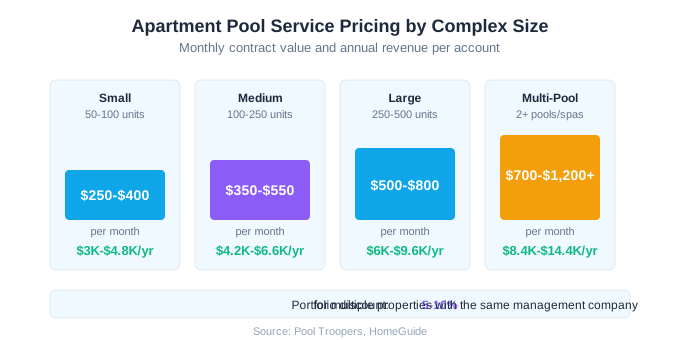
Apartment complex pool service pricing depends on pool volume, number of aquatic features, service frequency, and whether chemicals are included. The table below summarizes typical pricing by complex size. These ranges assume standard service scope: chemical balancing, surface cleaning, filter maintenance, and equipment checks at each visit.
| Complex Size | Pool Volume | Service Frequency | Monthly Price Range | Annual Value |
|---|---|---|---|---|
| Small (50-100 units) | 10,000-20,000 gal | 2-3x per week | $250-$400 | $3,000-$4,800 |
| Medium (100-250 units) | 20,000-35,000 gal | 3-4x per week | $350-$550 | $4,200-$6,600 |
| Large (250-500 units) | 30,000-50,000 gal | 4-5x per week | $500-$800 | $6,000-$9,600 |
| Multi-pool complex | 40,000-80,000+ gal | 5-7x per week | $700-$1,200+ | $8,400-$14,400+ |
Chemicals-Included vs. Chemicals-Extra
Most apartment management companies prefer chemicals-included pricing because it gives them a single predictable monthly number for budgeting. This approach works in your favor too: you control product quality, avoid situations where the maintenance staff buys cheap chemicals that create problems you have to fix, and you can negotiate bulk purchasing across multiple properties. The typical chemical markup is 50% to 100% over wholesale cost, but when you roll it into a bundled monthly fee, the markup becomes invisible to the client.
Portfolio Pricing for Multiple Properties
When a management company offers you multiple properties, price the portfolio as a whole rather than quoting each property independently. You save on drive time by clustering visits, you reduce administrative overhead by billing through one accounts payable department, and you gain volume leverage on chemical purchasing. A 5% to 10% portfolio discount is common and still leaves you with better margins than standalone accounts because of the efficiency gains. Do not discount more than 10%. The management company is already getting value from single-vendor simplicity.
$250-$600/mo
Typical monthly range for apartment complex pool service
Source: Pool Troopers and industry estimates
What Compliance Requirements Apply to Apartment Pools?
Apartment complex pools are classified as commercial or public pools by state and local health departments, which means they carry the same regulatory requirements as hotel pools, community pools, and fitness center pools. The specific requirements vary by jurisdiction, but the following apply in most states.
Operating Permits and Inspections
Every apartment pool requires an annual operating permit from the local health department. Permit fees range from $100 to $500 depending on the jurisdiction and number of aquatic features. Health inspectors conduct unannounced visits, typically one to three times per year, and they will check water chemistry readings, review maintenance logs, inspect safety equipment, and verify drain cover compliance with the Virginia Graeme Baker Pool and Spa Safety Act. As the contracted service provider, you may be responsible for managing the permit renewal process on behalf of the property.
Water Chemistry Testing and Record-Keeping
Most jurisdictions require water chemistry testing a minimum of three times per week for apartment pools, with daily testing required during peak season in many states. All test results must be recorded and retained for one to three years depending on the state. Required parameters typically include free chlorine (1.0 to 4.0 ppm), pH (7.2 to 7.8), total alkalinity (80 to 120 ppm), and water temperature. Your service contract should clarify who is responsible for testing on days you are not scheduled to visit the property.
CPO Certification
At least 43 states require a Certified Pool Operator (CPO) or equivalent credential for anyone responsible for commercial pool operations. Your technicians servicing apartment pools must hold this certification. Some management companies require that a CPO-certified technician be assigned to every property, while others accept having a CPO on staff who oversees the work. Maintain copies of all certifications in your company files and include them with your insurance certificates when submitting proposals.
Health department violations at apartment pools directly affect the property management company ability to lease units. A pool closure during summer can cost an apartment complex thousands in lost lease signings and resident satisfaction scores. This is why management companies are willing to pay more for a service provider who keeps them in compliance.
How Do You Manage Multiple Properties for One Management Company?
Scaling from one apartment pool to 10 or 20 properties with the same management company is where the real money is in apartment pool service. But it also introduces operational complexity that can erode your margins if you do not build the right systems. Here is what changes when you move from individual accounts to portfolio service.
Standardized Service Protocols
Create a written service protocol that every technician follows at every apartment property. This includes the exact sequence of tasks per visit, the parameters tested, the target ranges maintained, the photos taken, and the report generated. Management companies love consistency. If the property manager at Complex A gets a different service experience than Complex B, you will hear about it. A standardized protocol also makes training new technicians faster and reduces the risk of compliance gaps when you reassign routes.
Route Optimization
When you service multiple properties for one management company, cluster them on the same route days to minimize drive time. Each 15 minutes of drive time saved per property adds up to significant annual savings across a portfolio. If the management company has properties spread across your service area, propose a visit schedule that groups geographically close properties on the same days rather than trying to hit every property on the same day of the week.
Centralized Reporting
The property manager does not want to log into 15 different systems or read 15 separate email threads to check on their pools. Provide a single monthly summary report that covers every property in the portfolio. Include water chemistry averages, service completion rates, equipment condition, and any flagged issues. Pool service software that generates automated reports with photos and GPS verification saves hours of administrative time per month and differentiates you from competitors who send handwritten notes or nothing at all.
Chemical Inventory and Bulk Purchasing
With multiple properties consuming chemicals, you have enough volume to negotiate directly with chemical distributors for wholesale pricing. Track chemical consumption by property to identify outliers that may indicate a leak, equipment malfunction, or higher-than-reported bather loads. Centralized chemical purchasing also lets you maintain quality control across the portfolio and prevents on-site maintenance staff from adding incompatible products.
When a management company sees you running 10 properties smoothly with consistent reporting and zero compliance issues, they will give you every new property that comes into their portfolio. The goal is to become their default pool service vendor, not just another contractor on a bid list.
What Do Apartment Operators Do Differently Than HOAs?
If you are used to servicing HOA community pools, apartment pools will feel familiar but operate differently in several important ways. Understanding these differences helps you tailor your approach and avoid misaligned expectations.
Decision-Making Speed
HOA boards are volunteer committees that meet monthly and require formal votes. Apartment property managers are professional operators who make vendor decisions quickly, sometimes within a week. This means your sales cycle is shorter, but it also means the management company will drop you faster if service quality slips. Performance reviews happen quarterly, not annually, and the threshold for replacement is lower because switching costs are lower for professional operators.
Lease Cycle Pressure
Apartment operators think in terms of lease cycles and occupancy rates. The pool is a leasing amenity, not a community benefit. This means pool appearance matters as much as water chemistry. A prospective tenant touring in June will not sign a lease if the pool looks neglected. Expect management companies to request extra attention during leasing season: power-washed decks, spotless tile lines, crystal-clear water, and furniture that is clean and arranged. Some contracts include seasonal deep-cleaning visits as a specific deliverable.
On-Site Maintenance Staff
Most apartment complexes have on-site maintenance staff who may add chemicals between your visits, adjust equipment settings, or attempt minor repairs. This creates a coordination challenge. Establish clear boundaries in your contract about who is authorized to touch pool equipment and chemicals. Provide brief training to on-site staff on what they can safely do (skim debris, check water level) and what they should leave to your technicians (chemical adjustments, equipment repairs, backwashing). Unauthorized chemical additions by maintenance staff are one of the most common causes of water quality problems at apartment pools.
Budget and Payment Structure
Apartment management companies operate on tight per-unit budgets and process payments through centralized accounts payable departments. Payment terms are almost always net-30, and larger companies may push for net-45 or net-60. Factor the longer payment cycle into your cash flow planning. On the positive side, apartment management companies pay reliably. Collection issues are rare because your invoice is a small line item in a large operating budget, and the person approving payment is a professional who processes vendor invoices every day.
| Factor | HOA Pool | Apartment Pool |
|---|---|---|
| Decision maker | Volunteer board (monthly meetings) | Property manager (same-week decisions) |
| Sales cycle | 2-6 months | 1-4 weeks |
| Budget authority | Annual board vote | Manager discretion within budget |
| Pool purpose | Community amenity | Leasing amenity |
| Payment terms | Net 30 | Net 30-60 |
| Appearance priority | Moderate | High (affects leasing) |
| On-site staff involvement | Minimal | Regular (maintenance team) |
| Retention driver | Board relationships | Performance metrics |
What Are the Common Challenges with Apartment Pool Accounts?
Apartment pools are profitable and operationally straightforward, but they come with specific challenges that can eat into your margins if you do not plan for them.
High Bather Load with Small Water Volume
Apartment pools are typically 15,000 to 40,000 gallons serving 100 to 500 residents. That is a much higher bather-to-gallon ratio than an HOA community pool or hotel pool. The result is faster sanitizer consumption, higher combined chlorine levels, and more frequent shock treatments. Price your chemical costs based on bather load estimates, not just pool volume. An apartment pool with 300 residents will consume significantly more chemicals than a 20-unit condo pool of the same size.
Resident Behavior and Vandalism
Apartment pool users are renters, not owners. They have less incentive to follow pool rules, and turnover among residents is constant. Expect more debris, more food and drink contamination, more broken furniture, and occasionally intentional vandalism. Your contract should clearly state that damage from resident misuse or vandalism is the property responsibility, not yours. Document the pool condition with timestamped photos at every visit so there is no dispute about when damage occurred.
Deferred Maintenance and Aging Equipment
Apartment complexes, especially older ones, often have deferred maintenance on pool equipment. You may inherit pumps that are past their useful life, filters that have not been cleaned properly in years, and chemical feeders that barely function. Conduct a thorough equipment assessment before you quote the account, and include a section in your proposal that identifies deferred maintenance items with estimated repair or replacement costs. This sets realistic expectations with the property manager and prevents you from absorbing repair costs that should be capital expenditures.
Seasonal Closure and Reopening
In northern and mid-Atlantic markets, apartment pools close for winter and reopen in late spring. Your contract should specify seasonal opening and closing services as separate line items with clear pricing. Opening services (startup chemical treatment, equipment inspection, safety audit) typically take four to eight hours and should be priced at $300 to $800 depending on pool size and condition. Do not roll these costs into the monthly rate, or you will subsidize intensive startup work with routine maintenance revenue.
Ready to streamline your pool service business?
Pool Founder gives you route optimization, automated invoicing, chemical tracking, and everything else you need to run a more profitable pool business.
Frequently Asked Questions
How much does apartment complex pool service cost per month?
Apartment complex pool service typically costs $250 to $600 per month for a single pool, with larger complexes that have multiple pools, spas, or splash pads running $700 to $1,200 or more per month. Pricing depends on pool volume, service frequency (typically three to five visits per week), and whether chemicals are included in the monthly fee. Annual contract values range from $3,000 to $14,400 depending on the scope. Portfolio pricing for multiple properties with the same management company often includes a 5% to 10% discount while improving your overall margins through route efficiency.
How do apartment pool compliance requirements differ from residential?
Apartment pools are classified as commercial pools by health departments, which means they require annual operating permits, scheduled health department inspections, water chemistry testing a minimum of three times per week (daily during peak season in many states), one to three years of record retention, VGB Act drain cover compliance, and CPO-certified service technicians. Residential pools have none of these requirements in most states. The compliance overhead is significant, but it also creates a barrier to entry that keeps less capable competitors out of the market.
Should you offer a portfolio discount for multiple apartment properties?
Yes, but limit it to 5% to 10% off individual property pricing. The management company already receives value from single-vendor simplicity, consolidated billing, and consistent service across their portfolio. Your efficiency gains from clustered routing, centralized reporting, and bulk chemical purchasing offset the discount. Do not exceed 10% discount because it signals that your individual property pricing has excessive margin, which invites further negotiation.
How do you handle apartment maintenance staff adding chemicals?
Include clear language in your contract defining who is authorized to adjust chemicals and equipment. Provide brief training to on-site maintenance staff covering what they can safely do (skim debris, check water level, report equipment alarms) and what they should leave to your technicians (chemical adjustments, equipment repairs, backwashing). Unauthorized chemical additions are one of the most common causes of water quality problems at apartment pools. When you arrive and find chemistry out of range, document it and notify the property manager. Repeated unauthorized adjustments should trigger a conversation about revising the on-site staff protocols.
What insurance coverage do apartment management companies require?
Most apartment management companies require $1 million to $2 million in general liability insurance, workers compensation coverage for all employees, commercial auto insurance, and certificates of insurance naming the property owner and management company as additional insureds. Some larger national management companies require $5 million aggregate coverage. Verify that your policy specifically covers commercial pool service operations. Standard general contractor policies sometimes exclude aquatic facility work, which would leave you exposed if a claim occurs at an apartment pool.