A Pool with an Attached Spa Is Not One Body of Water
Homeowners think of their pool and attached spa as one unit. You cannot. A spillover spa shares water with the pool when the spa overflows, but when the spa is isolated and heated to 100 to 104 degrees, it becomes a completely different chemistry environment. Higher temperatures accelerate chlorine consumption, raise pH faster, and create conditions where bacteria multiply exponentially compared to the 80-degree pool water sitting six feet away.
According to HomeGuide and Angi, professional hot tub maintenance costs $50 to $200 per month on its own. When attached to a pool you are already servicing, the incremental work is less, but it is not zero. Failing to account for the spa in your pricing and your service protocol leads to callbacks, unhappy customers sitting in cloudy water, and potential health liability.
This guide covers how to properly service pool and spa combinations, price the spa add-on, manage separate chemistry, and avoid the most common mistakes that lead to water quality complaints.
How Do Pool and Spa Plumbing Configurations Affect Service?
Before you can service a pool and spa combo correctly, you need to understand the plumbing configuration. The three most common setups have very different implications for chemistry management and service time.
What Are the Three Main Pool-Spa Plumbing Configurations?
| Configuration | How It Works | Chemistry Impact | Service Implication |
|---|---|---|---|
| Spillover (shared) | Spa overflows into pool continuously | Shared water, one chemistry system | Spa heater raises pool temp slightly, increases chlorine demand |
| Spillover with isolation valve | Spa can be isolated from pool | Two separate systems when isolated | Must test and treat both when spa is in isolated mode |
| Separate systems | Independent plumbing, pump, heater | Completely independent chemistry | Treat as two separate service stops |
The spillover with isolation valve is the most common configuration in residential pools built in the last 15 years. When the homeowner runs the spa, they close the isolation valve, heat the spa water, and soak. When they are done, they open the valve and the hot spa water spills back into the pool. This cycle creates a chemistry challenge: the spa water heats up, loses chlorine faster, and then dumps that chlorine-depleted water back into the pool.
Always ask the homeowner how often they use the spa and whether they isolate it before heating. If they use it three or more times per week in isolated mode, the spa needs separate chemical attention at every service visit.
How Does Spa Temperature Affect Water Chemistry?
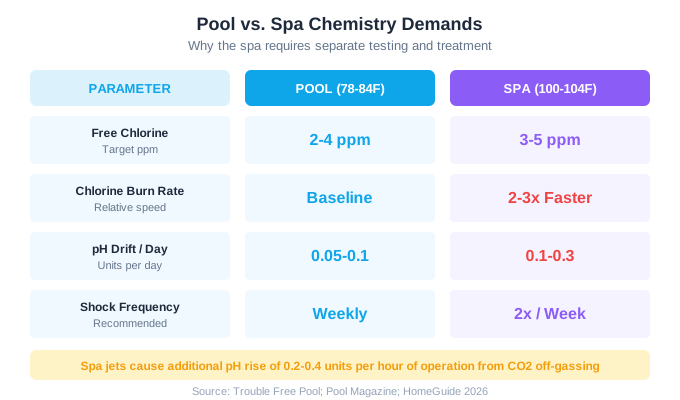
Water temperature is the single biggest variable in spa chemistry. A spa heated to 102 degrees Fahrenheit consumes free chlorine roughly two to three times faster than pool water at 82 degrees. The higher temperature also accelerates pH drift, increases the rate of biofilm formation on spa surfaces, and makes the water more hospitable to bacteria like Pseudomonas aeruginosa (the organism behind hot tub folliculitis).
| Parameter | Pool (78-84F) | Spa (100-104F) | Why It Differs |
|---|---|---|---|
| Free chlorine target | 2-4 ppm | 3-5 ppm | Higher temp = faster chlorine degradation |
| Chlorine consumption rate | Baseline | 2-3x faster | Heat accelerates all chemical reactions |
| pH drift per day | 0.05-0.1 | 0.1-0.3 | Aeration from jets + heat drives off CO2 |
| Biofilm risk | Low | High | Warm, agitated water = ideal growth conditions |
| Recommended shock frequency | Weekly | 2x/week with heavy use | Organic load from bathers is concentrated |
The spa jets compound the chemistry challenge. When jets run, they aerate the water aggressively, which drives off dissolved CO2 and pushes pH upward. A spa that runs its jets for an hour can see pH rise 0.2 to 0.4 units in that single session. This is why spa pH tends to drift high between visits even when pool pH stays stable.
How Should You Price Pool and Spa Combo Service?
The industry standard for a pool and spa combo ranges from $155 to $210 per month for full service according to HomeGuide and Angi 2026 pricing data. That represents a $30 to $55 premium over a pool-only rate. Whether that premium adequately covers your additional costs depends on the spa configuration and usage patterns.
$30-55/mo
Typical spa add-on premium over pool-only service rate
Source: HomeGuide, Angi 2026 pricing data
What Does the Spa Add-On Actually Cost You?
| Cost Category | Monthly Cost | Notes |
|---|---|---|
| Additional chemicals | $8-15/mo | Extra chlorine, acid, shock for spa volume |
| Additional service time | 8-12 min/visit | $3-5 labor cost at $20/hr tech rate |
| Filter cleaning (spa) | $0-5/mo | Amortized over quarterly deep cleans |
| Total incremental cost | $15-25/mo | Your minimum premium must exceed this |
At a $40 per month spa add-on, your net margin on the spa portion is $15 to $25 per month. That margin is acceptable only because the spa service is layered onto an existing pool stop. If you had to make a separate trip for the spa alone, the economics would not work. This is why combo pricing must always be sold as a package, not as two separate line items.
Never discount the spa add-on to win the pool account. The spa is where callbacks originate. Under-serviced spas produce cloudy water, skin irritation complaints, and negative reviews. Charge the full premium and deliver the full service.
What Is the Correct Service Protocol for Pool-Spa Combos?
Corey Adams, Pool Founder co-founder and 15-year pool service veteran, has a specific protocol for pool-spa combos. "Always service the spa first. Test the spa water independently, treat it, then open the spillover valve and service the pool. If you test the pool first and then let the spa dump into it, you just contaminated your pool readings with untreated spa water."
Step-by-Step Combo Service Protocol
- 1Check spa isolation valve position. If isolated, test spa water first before opening any valves.
- 2Test spa water independently: FC, pH, TA, temperature. Record in your service app.
- 3Treat spa chemistry: add chlorine and acid as needed to the spa while isolated.
- 4Brush spa walls and seats. Clean spa filter basket.
- 5Open spillover valve to allow spa to circulate with pool.
- 6Wait 2 to 3 minutes for water to mix before testing pool.
- 7Test pool water: FC, pH, TA, CYA (monthly). Record readings.
- 8Treat pool chemistry based on pool readings.
- 9Skim pool surface, brush walls, empty pump and skimmer baskets.
- 10Verify automation settings: spa heat setpoint, pump schedule, spillover timer.
The entire combo service should take 25 to 35 minutes for a standard residential setup. If you are consistently spending more than 35 minutes, the spa likely has an underlying issue (biofilm in the plumbing, failing heater, or inadequate filtration) that needs a one-time corrective service, which you should quote separately.
What Are the Most Common Pool-Spa Combo Mistakes?
The mistakes that generate the most callbacks and customer complaints with combo accounts almost always involve treating the spa as an afterthought rather than a separate body of water with its own chemistry requirements.
Seven Mistakes That Lead to Spa Callbacks
- 1Testing only the pool and assuming the spa is fine because the water is shared. When the spa is isolated and heated, the chemistry diverges within hours.
- 2Using trichlor tabs in the spa. The small volume causes CYA to spike rapidly, and the tabs dissolve unevenly in hot water, creating bleached spots on surfaces.
- 3Ignoring spa jets and plumbing as biofilm habitats. Flush spa lines with a pipe cleaner product quarterly to prevent musty odors and cloudy water.
- 4Not adjusting chlorine targets upward for the spa. A spa at 3 ppm FC will drop to under 1 ppm within 24 hours at 102 degrees with bather use. Target 3 to 5 ppm at every visit.
- 5Forgetting to check the spa heater thermostat. A malfunctioning heater that runs the spa to 110+ degrees accelerates every chemistry problem and creates a scald risk.
- 6Skipping the spillover valve check. If the valve is stuck in isolated position, the spa water never circulates through the main filter, and bacteria counts climb.
- 7Pricing the combo the same as a pool-only account. The spa adds 8 to 12 minutes of service time, $8 to $15 in chemicals, and significantly higher callback risk. Charge for it.
When Should You Recommend a Spa Drain and Refill?
Spas accumulate dissolved solids, body oils, lotions, and chemical byproducts faster than pools because the water volume is small relative to the bather load. A typical attached spa holds 400 to 800 gallons. Two adults soaking for 30 minutes introduce the equivalent organic load that a full pool might see in a week of normal use.
The industry rule of thumb for standalone hot tubs is to drain and refill every three to four months. For attached spas that share circulation with the pool, the interval extends to every four to six months because the larger pool volume dilutes contaminants when the spillover valve opens. However, TDS (total dissolved solids) above 1,500 ppm, persistent foam despite enzyme treatment, or a musty smell that does not resolve with shocking all indicate an immediate drain is needed.
A spa drain and refill is a $75 to $150 service call that takes 30 to 45 minutes. Schedule it proactively every four to six months as part of the combo maintenance plan rather than waiting for complaints. This positions you as proactive and locks in predictable revenue.
Ready to streamline your pool service business?
Pool Founder gives you route optimization, automated invoicing, chemical tracking, and everything else you need to run a more profitable pool business.
Frequently Asked Questions
How much more should I charge for a pool and spa combo?
The standard spa add-on premium is $30 to $55 per month over your pool-only rate, bringing total combo service to $155 to $210 per month. Your incremental cost for the spa is $15 to $25 per month in chemicals and labor. Never price the combo the same as a pool-only account. The spa adds 8 to 12 minutes of service time per visit and requires separate chemistry testing and treatment.
Do I need to test the spa water separately from the pool?
Yes, whenever the spa has been isolated from the pool. If the homeowner heats and uses the spa between your visits (which requires closing the isolation valve), the spa water chemistry will differ significantly from the pool. Test the spa first, treat it, then open the spillover valve before testing the pool. If the spa is always in spillover mode and never isolated, one set of readings at the pool is usually sufficient.
Why does spa water use chlorine so much faster than pool water?
Three factors compound in a spa: higher water temperature (100-104F versus 78-84F) accelerates all chemical reactions including chlorine degradation, jet aeration drives off dissolved CO2 and increases oxidant demand, and the concentrated bather load in a small volume introduces more organic contaminants per gallon than a pool. Combined, these factors cause spa chlorine to deplete two to three times faster than pool chlorine.
Can I use trichlor tabs in an attached spa?
It is not recommended. Trichlor tabs add CYA with every dose, and the small volume of a spa (400-800 gallons) means CYA accumulates rapidly. Additionally, trichlor has a pH of approximately 2.8, which can cause localized acid damage to spa surfaces. Use liquid chlorine (sodium hypochlorite) or granular dichlor in measured doses for spa sanitization.
How often should an attached spa be drained and refilled?
Every four to six months for attached spas that share circulation with the pool through a spillover valve. The pool volume helps dilute dissolved solids, extending the interval compared to standalone hot tubs (which need draining every three to four months). Drain sooner if TDS exceeds 1,500 ppm, persistent foam appears despite enzyme treatment, or the water develops a musty odor that shocking does not resolve.
What is the most common mistake with pool-spa combo service?
Treating the spa as part of the pool rather than a separate body of water. When a spa is isolated and heated, its chemistry diverges from the pool within hours. Testing only the pool and assuming the spa is fine leads to low chlorine levels in the spa, cloudy water, skin irritation, and potential bacterial growth. Always test and treat the spa independently when it has been used in isolated mode.