How Bad Is the Pool Service Labor Shortage?
The pool service industry faces a structural labor shortage that is reshaping how companies operate, price services, and plan for growth. There are approximately 10.7 million swimming pools in the United States serviced by an industry employing just over 84,000 workers. That is roughly 127 pools per worker, and the ratio is getting worse as pool construction continues while the labor pipeline stays flat.
Pool technician wages have risen significantly since 2020, with the average hourly rate now at $18-21 per hour nationally. Yet companies in every major pool market report difficulty hiring qualified technicians. The problem is not just wages. It is a shortage of people who want outdoor, physically demanding work in extreme heat, combined with a training pipeline that barely exists.
84,000+
workers employed in the U.S. pool service industry
Source: IBISWorld
10.7M
swimming pools in the United States requiring service
Source: PHTA
$18-$21/hr
average pool technician hourly wage nationally in 2025
Source: Indeed, ZipRecruiter, PayScale
127:1
ratio of pools to pool service workers nationally
What Does Pool Technician Pay Look Like in 2026?
The average pool technician earns $18-21 per hour nationally, with annual salaries ranging from $36,000 to $54,000 depending on experience, market, and employer. Indeed reports the average at $20.76/hour, ZipRecruiter at $18.77/hour for repair technicians, and Glassdoor at $50,000-52,000 annually. The wide range reflects differences between entry-level route technicians and experienced repair specialists.
| Pay Metric | Entry Level | Experienced | Lead Tech / Repair |
|---|---|---|---|
| Hourly rate | $15-17 | $18-22 | $22-30 |
| Annual salary | $31,000-35,000 | $37,000-46,000 | $46,000-62,000 |
| 25th percentile | $15.87/hr | $18.00/hr | $22.00/hr |
| 75th percentile | $18.50/hr | $22.00/hr | $28.00/hr |
| Top markets (AZ, FL, CA) | +10-20% premium | +10-20% premium | +15-25% premium |
Wages have increased roughly 20-25% since 2020 across most pool markets. The BioLab fire, the pandemic pool boom, and general labor market tightness all contributed. Companies that have not adjusted pay since 2020 are losing technicians to competitors or to other trades entirely. The highest-paying states for pool technicians are those with year-round pool seasons: Florida, Arizona, California, and Texas.
What Is the Tech-to-Pool Ratio in Major Markets?
The national average is roughly 127 pools per service industry worker, but this varies dramatically by market. Florida has 1.59 million residential pools, Arizona has 505,000 with one pool for every 13 residents, and California has 1.34 million. In high-density pool markets, the competition for technicians is fierce because there are simply more pools than available workers to service them.
| Market | Residential Pools | Est. Service Workers | Pools per Worker |
|---|---|---|---|
| Florida | 1,590,000 | ~18,000 | ~88:1 |
| California | 1,340,000 | ~14,000 | ~96:1 |
| Texas | ~900,000 | ~9,000 | ~100:1 |
| Arizona | 505,000 | ~5,500 | ~92:1 |
| National Average | 10,700,000 | 84,000+ | ~127:1 |
The sunbelt states with the most pools also have the most intense labor competition. Florida and Arizona have the best pools-per-worker ratios, but those numbers still represent a shortage. A typical pool technician can service 18-25 pools per day depending on route density. With 250 working days per year, one tech can handle 80-125 weekly recurring accounts. The math does not work at 127 pools per worker when many of those pools need weekly service.
What Is Driving the Technician Shortage?
The shortage has multiple causes that compound each other. The pandemic created 400,000+ new residential pools between 2020 and 2022, dramatically increasing demand for service. At the same time, the broader labor market tightened, and competing trades (HVAC, electrical, plumbing) increased wages faster than pool service, pulling workers away.
Key Shortage Drivers
- Post-pandemic pool boom: New residential pool construction surged in 2020-2022, adding hundreds of thousands of pools requiring ongoing service.
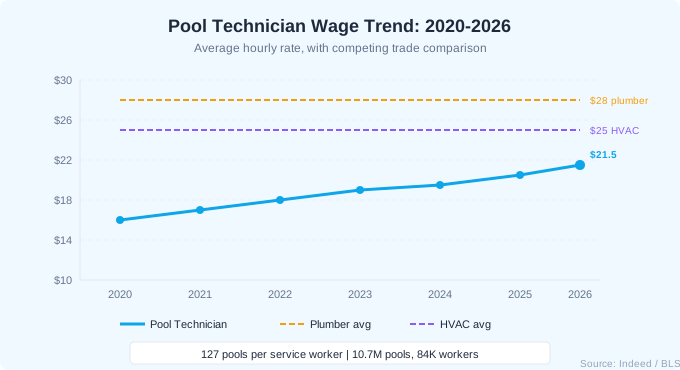
- Competing trades pay more: Plumbers average $28/hour, HVAC technicians average $25/hour, while pool techs average $18-21/hour. The gap pulls workers into higher-paying trades.
- Physical demands: Pool service involves outdoor work in extreme heat, heavy chemical handling, and repetitive physical labor. Younger workers increasingly prefer indoor or remote work.
- No formal training pipeline: Unlike HVAC or electrical, there is no standardized apprenticeship or trade school pathway for pool service. Companies must train from scratch.
- Seasonal markets lose workers: In northern states, seasonal layoffs send technicians to other industries during winter. Many never return in spring.
- Aging workforce: A significant portion of pool technicians are over 40, and the industry is not replacing retirees at the same rate they are leaving.
The PHTA CPO (Certified Pool Operator) certification exists but is focused on commercial pool management, not residential service. There is no widely recognized certification for residential pool service technicians, making it harder to attract workers who want a clear career path.
How Are Pool Companies Adapting to the Labor Shortage?
Companies are responding with a mix of higher pay, better benefits, technology adoption, and operational restructuring. The most successful adaptations focus on making existing technicians more productive rather than simply trying to hire more. Route optimization, digital service reports, and automated billing all reduce the non-service time that eats into a technician's day.
Operational Adaptations
- 1Raising wages and adding benefits: Companies offering $20+/hour with health insurance and retirement benefits report 2-3x more applicants than those at $15-17/hour with no benefits.
- 2Route optimization technology: GPS-enabled routing reduces drive time 20-30%, allowing each tech to handle 3-6 more stops per day without working longer hours.
- 3Simplified service protocols: Standardizing service procedures so new hires can be productive within 2-3 weeks instead of the traditional 2-3 months.
- 4Tiered technician roles: Creating "route tech" and "repair specialist" career paths so entry-level hires do not need full repair knowledge on day one.
- 5Retention bonuses: Offering quarterly or annual retention bonuses ($500-2,000) to reduce turnover, which costs $3,000-5,000 per replacement.
- 6Technology to reduce admin burden: Digital service reports, automated billing, and customer portals eliminate 30-60 minutes of daily paperwork per technician.
What Does the Wage Trend Look Like Going Forward?
Pool technician wages are projected to continue increasing at 3-5% annually through 2030, driven by structural labor shortage and increasing demand. The gap between pool service wages and competing trades (plumbing, HVAC, electrical) is narrowing as pool companies are forced to raise pay to compete. Companies that budget for 4-5% annual wage increases will maintain staffing levels. Those that hold wages flat will face accelerating turnover.
| Year | Est. Avg Hourly Rate | Change from 2020 | Key Factor |
|---|---|---|---|
| 2020 | $15-17 | Baseline | Pre-pandemic baseline |
| 2021 | $16-18 | +6-8% | Pandemic labor tightening |
| 2022 | $17-19 | +12-15% | Pool boom demand surge |
| 2023 | $18-20 | +18-22% | Post-pandemic normalization |
| 2024 | $18-21 | +20-24% | Steady demand, tight market |
| 2025 | $19-22 | +22-28% | Continued pressure from competing trades |
| 2026 (projected) | $20-23 | +25-32% | Structural shortage continues |
The implication for pool service pricing is clear. If labor costs increase 25-30% over 5 years, service prices must increase proportionally. Companies that have not raised prices since 2020 are absorbing the entire wage increase in their margins. The data shows that the average monthly pool service rate has tracked wage increases closely, rising from $100-120 in 2020 to $140-175 in 2025 depending on market.
How Does the Labor Shortage Affect Company Valuations?
Employee retention and recruitment capability directly affect pool company valuations. Buyers, especially PE-backed acquirers, evaluate staffing stability as a core risk factor. A company with full staffing, low turnover (under 20% annually), and documented training processes commands a premium. A company that is short-staffed, over-reliant on the owner for daily service, or experiencing high turnover gets discounted.
| Staffing Metric | Premium Valuation | Discounted Valuation |
|---|---|---|
| Technician turnover | Under 15% annually | Over 30% annually |
| Owner involvement in daily routes | None (manages only) | On a truck daily |
| Training documentation | Written SOPs, onboarding program | Verbal training only |
| Wage competitiveness | At or above market rate | Below market, losing staff |
| Benefits offered | Health, retirement, PTO | No benefits |
Corey Adams, Pool Founder co-founder and 15-year pool veteran: "The labor shortage is real, but it is also an opportunity. Companies that figure out how to train, retain, and make technicians more productive with technology will pull ahead. The ones still paying $15/hour with no benefits and no career path are going to struggle to exist in 5 years."
Ready to streamline your pool service business?
Pool Founder gives you route optimization, automated invoicing, chemical tracking, and everything else you need to run a more profitable pool business.
Frequently Asked Questions
How much do pool technicians make in 2026?
Pool technicians earn $18-21/hour nationally, with annual salaries ranging from $36,000 to $54,000. Entry-level route technicians start at $15-17/hour, while experienced repair specialists earn $22-30/hour. Top markets like Arizona, Florida, and California pay 10-25% premiums above national averages.
Why is there a pool technician shortage?
The shortage is driven by the post-pandemic pool construction boom (400,000+ new pools), competition from higher-paying trades (plumbing at $28/hour, HVAC at $25/hour), no formal training pipeline, physical work demands, and seasonal layoffs in northern markets that lose workers permanently.
How many pools are there per technician in the US?
The national average is approximately 127 pools per pool service worker based on 10.7 million pools and 84,000+ industry employees. In major pool markets like Florida the ratio is about 88:1, California about 96:1, and Texas about 100:1.
How much have pool technician wages increased since 2020?
Pool technician wages have increased 20-30% since 2020, from an average of $15-17/hour to $18-21/hour in 2025. This increase was driven by the pandemic labor shortage, post-pandemic pool boom, and competition from other trades. Wages are projected to continue rising 3-5% annually.
How are pool companies dealing with the labor shortage?
Companies are adapting by raising wages and adding benefits, using route optimization technology to increase stops per day by 15-20%, simplifying training with standardized procedures, creating tiered technician roles, offering retention bonuses, and using technology to eliminate daily paperwork.
Does the labor shortage affect pool company valuations?
Yes. Buyers evaluate staffing stability as a core risk factor. Companies with low turnover (under 15%), documented training processes, competitive wages, and no owner dependence on daily routes command premium valuations. Short-staffed companies with high turnover get discounted 10-20%.
Sources & References
- IBISWorld: Swimming Pools in the US Industry Report (Employment Data)
- PHTA: Pool & Hot Tub Alliance Industry Data
- Indeed: Pool Technician Salary Data
- ZipRecruiter: Pool Maintenance Technician Salary
- Glassdoor: Pool Technician Salary Trends 2026
- U.S. Bureau of Labor Statistics: Occupational Employment and Wage Statistics