Why Does Pool Market Size by State Matter for Your Business?
The U.S. pool service market hit $8.8 billion in 2025 across more than 78,800 businesses, but that money is not spread evenly. Four states alone account for 54% of all pool industry sales. If you are planning to start a pool business, buy a route, or expand into a new market, knowing where the pools actually are is the difference between building on a gold mine and building on sand.
This article breaks down the number of residential pools by state, estimates market size based on pool density and service spending, and identifies the fastest-growing markets. Every number comes from industry sources including the Pool & Hot Tub Alliance (PHTA), IBISWorld, Grand View Research, Pkdata, and HBWeekly permit data.
This page is updated as new industry data becomes available. Last update: March 2026. Journalists, researchers, and bloggers are welcome to cite this page with a link back.
10.7M
total swimming pools in the United States
Source: PHTA
$8.8B
U.S. pool cleaning services market size (2025)
Source: IBISWorld
54%
of pool industry sales from just 4 states (FL, CA, TX, AZ)
Source: PoolDial
4.2%
compound annual growth rate through 2029
Source: Grand View Research
How Many Residential Pools Are in the United States?
The Pool & Hot Tub Alliance (PHTA) estimates 10.7 million swimming pools in the United States, including roughly 10.4 million residential pools and 309,000 public or commercial facilities. About 59% of residential pools are in-ground and 41% are above-ground. That translates to approximately 8% of U.S. households owning a swimming pool.
Pool ownership is heavily concentrated in warm-weather states. Over 40% of all in-ground pools sit in just two states: Florida and California. Add Texas and Arizona and you cover more than half the entire installed base. This concentration shapes everything from where pool service companies cluster to where private equity firms are acquiring routes.
There is no single government registry of residential pools in the U.S. These estimates come from Pkdata (an Atlanta-based research firm tracking the pool industry since 1992), the PHTA, and aggregated permit and real estate data compiled by PoolResearch.com and Pool Guard USA.
Which States Have the Most Residential Pools?
Florida leads the nation with an estimated 1.59 million residential pools, followed by California at 1.34 million and Texas at 801,000. The top 10 states account for roughly 6.3 million pools, more than 60% of the national total. Here is the full top-10 breakdown based on aggregated industry estimates.
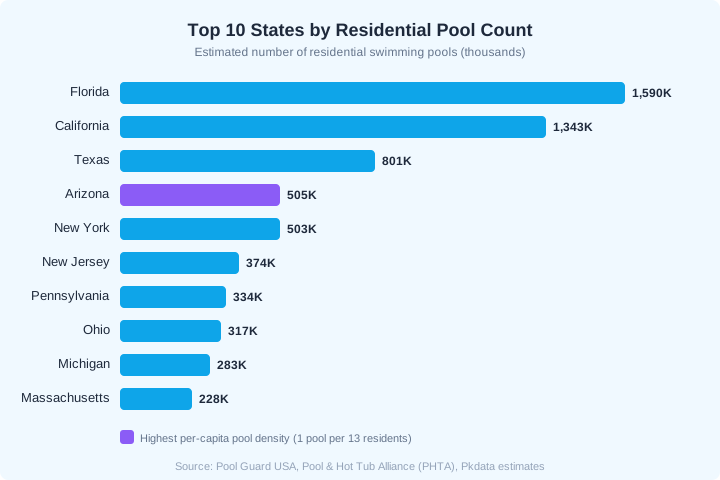
| Rank | State | Estimated Pools | People per Pool |
|---|---|---|---|
| 1 | Florida | 1,590,000 | 14 |
| 2 | California | 1,343,000 | 29 |
| 3 | Texas | 801,000 | 36 |
| 4 | Arizona | 505,000 | 13 |
| 5 | New York | 503,000 | 38 |
| 6 | New Jersey | 374,000 | 24 |
| 7 | Pennsylvania | 334,000 | 38 |
| 8 | Ohio | 317,000 | 37 |
| 9 | Michigan | 283,000 | 35 |
| 10 | Massachusetts | 228,000 | 30 |
Two things jump out from this data. First, raw pool count does not equal pool density. Arizona has fewer total pools than New York but one pool for every 13 residents compared to one for every 38 in New York. That per-capita density translates directly into how saturated (or open) a local service market really is. Second, cold-weather states like Ohio, Michigan, and Massachusetts still crack the top 10 thanks to large populations and strong above-ground pool adoption.
Which States Have the Highest Pool Density Per Capita?
Arizona ranks first in pool density at one pool for every 13 residents, making it the most pool-saturated state in the country. Florida follows closely at one per 14, then New Mexico at one per 15. Per-capita density matters more than raw count when you are evaluating route density and drive time between stops.
| Rank | State | People per Pool | What It Means |
|---|---|---|---|
| 1 | Arizona | 13 | Highest density in the U.S. |
| 2 | Florida | 14 | Largest total pool count |
| 3 | New Mexico | 15 | Small state, high ownership |
| 4 | Nevada | 21 | Las Vegas drives density |
| 5 | New Jersey | 24 | Dense suburbs, strong market |
For pool service operators, high per-capita density means tighter routes, shorter drive times, and more pools per hour. In Phoenix, 32.7% of homes have a pool. In Miami it is 30.6%. Tampa is at 27.7%, Orlando at 25.9%, and Las Vegas at 23.8%. These metro-level numbers explain why the largest pool service companies concentrate in these cities.
A pool service tech in Phoenix can hit 20+ pools per day on tight routes because nearly a third of homes have a pool. In a market like Atlanta, where the ratio is 1 pool per 55 residents, you need to plan routes more carefully to maintain the same daily volume.
How Big Is the U.S. Pool Service Market in 2025-2026?
IBISWorld values the U.S. swimming pool cleaning services market at $8.8 billion in 2025, growing at a 2.9% compound annual growth rate over the past five years. Grand View Research places the broader pool services market (cleaning, maintenance, and equipment repair) at $8.08 billion in 2023 with a 4.2% CAGR through 2029, projecting $10.33 billion by that year. The broader pool and spa industry, including construction, retail, and hot tubs, exceeds $62 billion according to the PHTA.
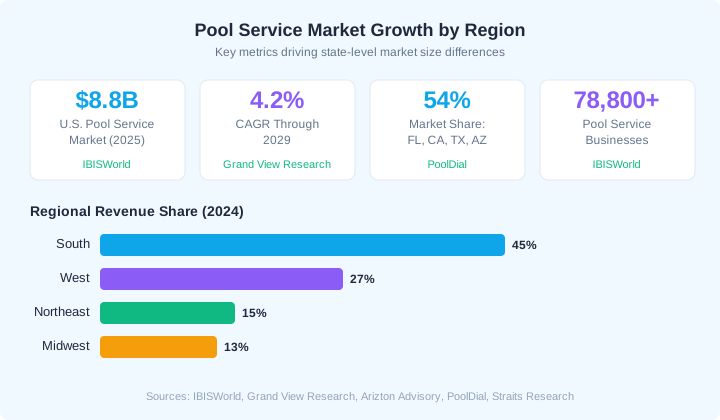
IBISWorld counts 78,817 pool cleaning service businesses in the United States, though the real number of people servicing pools for money is likely 2-3x higher when you include sole proprietors, handyman operations, and landscaping companies that also clean pools.
The service segment is the most resilient part of the pool industry. According to the PHTA Q3 2025 Quarterly Pulse Survey, 55% of service companies reported increased call volume, and the service and maintenance segment was the only sector to report bottom-line profit growth (+1% to +5%) while construction and retail remained flat.
What Is the Estimated Pool Service Market Size by State?
No publicly available report breaks the $8.8 billion service market into exact state-level revenue figures. But we can build reliable estimates using pool counts, average per-pool service spending ($1,200-$1,800 per year according to HomeAdvisor), and the known concentration data: four states hold 54% of all pool industry sales.
| State | Est. Pools | Est. Service Market | Share of U.S. Market |
|---|---|---|---|
| Florida | 1,590,000 | $1.9-2.4B | ~22% |
| California | 1,343,000 | $1.6-2.0B | ~18% |
| Texas | 801,000 | $800M-1.2B | ~10% |
| Arizona | 505,000 | $500-750M | ~7% |
| New York | 503,000 | $400-600M | ~5% |
| New Jersey | 374,000 | $300-450M | ~4% |
| Pennsylvania | 334,000 | $250-400M | ~3% |
| Ohio | 317,000 | $200-350M | ~3% |
| Georgia | 190,000 | $150-250M | ~2% |
| All Others | ~4,943,000 | $2.2-3.0B | ~26% |
These are estimates based on pool counts multiplied by average annual service spending ($1,200-$1,800 per pool per year from HomeAdvisor/Angi), adjusted for regional pricing differences. Actual revenue figures vary based on service mix, commercial accounts, and seasonal demand. Florida and California markets command higher per-pool revenue because of year-round service seasons.
Florida and California together account for roughly 40% of the estimated service market. This matches PoolDial reporting that these two states combined represent about 65% of the residential pool service market when you factor in their year-round service seasons and higher average service pricing.
Which States Are Growing the Fastest for Pool Service?
The fastest-growing pool service markets are in Sun Belt states with strong population in-migration. South Carolina led the nation in net domestic migration at 3.6% of its population in 2024, followed by Idaho (3.4%), Nevada (2.8%), Florida (2.1%), and Tennessee (1.9%) according to Pew Research. More people moving in means more homes with pools and more demand for weekly service.
According to HBWeekly permit data, Florida issued 27,500 new pool construction permits in 2024, down 11% year-over-year from the pandemic peak but still the largest single-state volume in the country. Texas metro areas (Dallas, Houston, Austin, San Antonio) combined for nearly 7,500 permits, down 18% year-over-year. The declines reflect normalization from the 2020-2022 pool construction boom, not a shrinking market. Every new pool built becomes a recurring service customer.
| State/Region | Growth Driver | Pool Market Outlook |
|---|---|---|
| South Carolina | Fastest domestic migration (3.6%) | Rapid new pool demand |
| Idaho | Second-fastest migration (3.4%) | Emerging pool market |
| Nevada | Population growth + Las Vegas density | Strong service demand |
| Texas | 7,500 new pool permits in 2024 | Steady expansion |
| Florida | 27,500 new pool permits in 2024 | Largest but maturing |
| Georgia (Atlanta) | Stabilizing after post-pandemic correction | Outer suburbs growing |
| North Carolina | Raleigh/Charlotte among top migration metros | Growing quickly |
The PHTA reports that 69% of pool industry businesses expect revenue growth over the next 12 months, with the service segment leading all other sectors. Sun Belt population growth over the next decade is projected at 11 million (+7.0%), while non-Sun Belt states are forecast to grow by only 475,000 (+0.3%) according to Clarion Partners research. That demographic shift will continue concentrating pool service demand in the South and West.
How Many Pool Service Businesses Operate in Each State?
There are approximately 24,657 registered swimming pool contractors in the United States according to RenTech Digital data. The top three states for pool contractors are Texas (4,175), Florida (4,047), and California (3,749). For pool cleaning services specifically, the ranking shifts: Florida leads with 4,419 businesses, California has 3,268, and Texas has 2,888.
| State | Pool Contractors | Pool Cleaning Services | Pools per Business |
|---|---|---|---|
| Florida | 4,047 | 4,419 | ~360 |
| Texas | 4,175 | 2,888 | ~190 |
| California | 3,749 | 3,268 | ~380 |
| Arizona | ~1,200 | ~1,100 | ~420 |
The "pools per business" ratio hints at market saturation. Arizona averages about 420 pools per cleaning business, suggesting room for growth. Florida sits around 360, which is tighter but offset by year-round demand. These ratios do not capture sole proprietors and unlicensed operators, so the actual competitive landscape is denser than the registered numbers suggest.
If you are evaluating where to start or expand a pool service business, look at the ratio of pools to registered cleaning businesses in your target metro. A ratio above 400 generally signals opportunity. Below 200 means you will be fighting for every customer.
What Does the Average Pool Owner Spend on Service?
The average U.S. pool owner spends $1,200 to $1,800 per year on professional maintenance according to HomeAdvisor/Angi, or roughly $100 to $150 per month. Pool owners who use weekly professional service spend $2,400 to $3,600 annually. Total ownership costs including amortized repairs and equipment reach $4,500 to $6,000 per year.
Spending varies significantly by state and region. In Texas, professional service averages about $1,400 per year. In Florida and Arizona, year-round service seasons push annual spending higher, closer to $1,800 to $2,400. California pricing tends to be the highest due to higher labor costs and regulatory compliance around water usage.
| Service Type | Monthly Cost | Annual Cost |
|---|---|---|
| Basic DIY maintenance | $50-80 | $600-960 |
| Professional weekly service | $100-250 | $1,200-3,000 |
| Full-service with chemicals | $150-300 | $1,800-3,600 |
| Total ownership (incl. repairs) | $375-500 | $4,500-6,000 |
For pool service business owners, these numbers translate directly into revenue. A standard residential route with 80 pools at $150/month generates $144,000 in annual recurring revenue before adding repair work, equipment sales, and chemical markup. That is the business model that makes pool service routes so attractive to buyers and private equity investors.
How Does Private Equity Affect the State-by-State Market?
Private equity-backed roll-ups have acquired hundreds of small pool service companies over the past five years, with the heaviest activity in Florida and Texas. These acquisitions are reshaping the competitive landscape in the largest state markets. Companies like Pool Troopers (backed by Norwest Venture Partners) now operate across Florida, Texas, Georgia, South Carolina, and Arizona.
For independent pool service operators, PE activity creates both pressure and opportunity. In markets where roll-ups are aggressive, customer acquisition costs rise and technicians may get poached by companies offering higher pay. But PE companies typically focus on metro areas with 500,000+ pools, leaving suburban and rural markets wide open for independents who know their territory.
The flip side: if you are building a pool service company to sell someday, PE activity in your state is a good sign. Route values in Florida and Texas have climbed to 10-14x monthly revenue for well-documented routes with clean customer records, strong retention, and route management software in place.
Free starter kit
Start a pool service business with the numbers already run.
A short email series from an owner who started with $1,200 and a used truck. No software pitch, just the four things that decide whether year one works.
- Startup cost breakdownEvery line item from $2K bootstrap to fully equipped
- Pricing calculatorThe minimum you can charge per visit and still profit
- First-10-customers playbookDoor hangers, referrals, and the phone script that closes
- Licensing & insurance checklistWhat your state requires and which insurers pay claims
Already running routes? Try Pool Founder free
Frequently Asked Questions
How many swimming pools are in the United States?
The Pool & Hot Tub Alliance (PHTA) estimates 10.7 million swimming pools in the U.S., including approximately 10.4 million residential pools and 309,000 public or commercial pools. About 8% of American households own a swimming pool.
Which state has the most residential pools?
Florida leads with approximately 1.59 million residential pools, followed by California (1.34 million), Texas (801,000), Arizona (505,000), and New York (503,000). These top five states hold over half of all U.S. residential pools.
What is the pool service market size in the United States?
IBISWorld values the U.S. swimming pool cleaning services market at $8.8 billion in 2025. Grand View Research projects the broader pool services market to reach $10.33 billion by 2029, growing at a 4.2% compound annual growth rate. The total pool and spa industry exceeds $62 billion.
Which state has the highest pool density per capita?
Arizona has the highest pool density at one pool for every 13 residents, followed by Florida (1 per 14), New Mexico (1 per 15), Nevada (1 per 21), and New Jersey (1 per 24). High density means tighter service routes and more efficient operations for pool techs.
What are the fastest-growing states for pool service?
Sun Belt states with strong population in-migration are growing fastest. South Carolina, Idaho, and Nevada lead in domestic migration rates. Florida still issues the most new pool permits (27,500 in 2024) followed by Texas metros at 7,500 permits. The Carolinas and Georgia are emerging growth markets.
How much does the average pool owner spend on maintenance per year?
The average U.S. pool owner spends $1,200 to $1,800 per year on professional maintenance according to HomeAdvisor/Angi. Pool owners using weekly professional service spend $2,400 to $3,600 annually. Total ownership costs including repairs reach $4,500 to $6,000 per year.
Sources & References
- IBISWorld - Swimming Pool Cleaning Services in the US Market Size (2025)
- Grand View Research - U.S. Swimming Pool Services Market Size
- Pool & Hot Tub Alliance - Industry Research and Q3 2025 Pulse Survey
- Pool Guard USA - What State Has The Most Pools? (2026 Rankings)
- PoolDial - How Many Pools Are in the United States? 2026 State-by-State Data
- Pkdata - Residential Inground Pools Installed Base by State
- Pool Guard USA - Atlanta Pool Statistics and Georgia Pool Market Data
- HBWeekly - Annual Review: Florida Swimming Pool Construction 2024
- HBWeekly - Texas Swimming Pool Construction Annual Review 2024
- Pew Research - Population Growth in Most States Outpaced Long-Term Trends in 2024
- Arizton Advisory - U.S. Pool Maintenance & Cleaning Services Market
- HomeAdvisor/Angi - Pool Maintenance Cost Data
- Straits Research - U.S. Swimming Pool Construction Market Size Report
- RenTech Digital - List of Swimming Pool Contractors in the United States