What Is Happening With Private Equity in Pool Service?
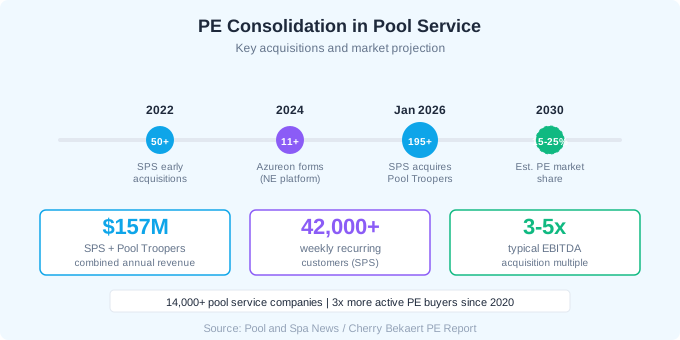
Private equity is consolidating the pool service industry faster than most operators realize. SPS PoolCare, backed by private equity, has completed 195 acquisitions and now services over 42,000 weekly recurring customers across 19 markets. Their acquisition of Pool Troopers in January 2026, the #2 company on the industry's Top 50 Service list, created a combined entity generating $157 million in annual revenue. The company plans to perform over 2 million weekly pool services in 2026.
The pool service industry has exactly the characteristics private equity targets: fragmented market with thousands of small operators, recurring monthly revenue, essential services with low churn, and valuations that are still affordable compared to other home service sectors. Five years ago, only a limited number of buyers were interested in pool service companies. Today, the number of active PE buyers has tripled, and the M&A activity shows no signs of slowing.
195
acquisitions completed by SPS PoolCare as of early 2026
Source: SPS PoolCare press releases
$157M
combined annual revenue of SPS PoolCare + Pool Troopers
Source: Pool and Spa News
42,000+
weekly recurring customers serviced by SPS PoolCare
Source: SPS PoolCare
3x
increase in active PE buyers in pool/home services over the past 5 years
Source: Cherry Bekaert PE Report
The Consolidation Timeline
Which Companies Are Acquiring Pool Service Businesses?
Two major PE-backed platforms dominate pool service acquisitions in 2025-2026: SPS PoolCare (operating nationally, focused on sunbelt markets) and Azureon (focused on the Northeast). Additionally, regional platforms, independent consolidators, and individual pool company owners looking to expand through acquisition make up a growing buyer market. The common thread is PE capital seeking recurring revenue in fragmented home services.
| Acquirer | Backing | Acquisitions | Geography | Focus |
|---|---|---|---|---|
| SPS PoolCare | Private equity | 195+ | 19 markets, 5 states | National scale, recurring residential |
| Pool Troopers (acquired by SPS) | Was PE-backed | Multiple pre-merger | Florida, Texas | Merged into SPS Jan 2026 |
| Azureon | O2 Investment Partners | 11+ | Northeast (5 states) | Regional platform, full-service |
| Regional platforms | Various PE firms | Varies | Market-specific | Building regional density |
| Individual buyers | Self-funded or SBA loans | 1-5 typically | Local markets | Route expansion, market entry |
SPS PoolCare is the clear market leader, having completed its 195th acquisition with the purchase of AZ Veteran Pool Care in Arizona. The SPS-Pool Troopers merger in January 2026 combined the #1 and #2 companies on the industry's Top 50 Service list. SPS has publicly stated that their M&A activity "will not be slowing down" even while integrating Pool Troopers.
Azureon, backed by O2 Investment Partners, is building a regional platform in the Northeast through acquisitions of companies like Precision Pool, Northern Pool & Spa, Pelican Pools, and Northstar. With 11+ acquisitions across 9 locations in 5 states, Azureon represents the second wave of consolidation targeting seasonal markets that national players have been slower to enter.
What Multiples Are Being Paid for Pool Service Companies?
Pool service businesses typically sell at 3-5x EBITDA, with well-managed companies with strong retention commanding the higher end. Route-level transactions (buying customer accounts rather than entire businesses) are valued at 10-14x monthly billing, which translates to roughly 1.0-1.5x annual recurring revenue. PE buyers may pay a premium of 0.5-1.0x EBITDA above market for strategic acquisitions in target geographies.
| Valuation Method | Typical Range | Premium Range | What Drives Premium |
|---|---|---|---|
| EBITDA multiple | 3-5x | 5-7x for strategic | Market position, density, management team |
| Monthly billing multiple | 10-14x | 14-16x for premium | High retention (90%+), route density |
| Annual revenue multiple | 1.0-1.5x | 1.5-2.0x | Recurring revenue %, growth rate |
| Per-customer value | $1,200-$2,000 | $2,000-$2,500 | High ARPU, low churn, commercial mix |
EBITDA margins for well-run pool maintenance companies typically run 15-25% of revenue, reflecting efficient cost controls, pricing power, and recurring income. Buyers value stable margins because they predict future cash flow. Companies with margins below 15% are either underpricing or operationally inefficient, and buyers will discount accordingly.
Risk factors that reduce valuation by 10-20% include: key-person dependency (owner on a truck daily), customer concentration (one client representing more than 15% of revenue), below-market pricing, and rising chemical or labor costs without corresponding price increases.
Why Is Private Equity Targeting Pool Service?
Private equity targets industries with specific characteristics that create predictable returns. Pool service checks every box: fragmented market (14,000+ companies, mostly small), recurring revenue (80-90% of revenue is monthly contracts), essential service (pools require maintenance regardless of economic conditions), and affordable entry multiples compared to other consolidated industries.
The PE Investment Thesis for Pool Service
- Extreme fragmentation: Over 14,000 registered pool service companies, most with fewer than 5 employees. This creates thousands of potential acquisition targets.
- Recurring revenue: Weekly and monthly service contracts provide predictable cash flow with 80-90% annual retention rates.
- Essential service: Pools require chemical treatment and cleaning regardless of economic conditions. Homeowners cancel discretionary spending before canceling pool maintenance.
- Low technology adoption: Only 25-35% of pool companies use management software. PE platforms can create operational improvement by deploying technology across acquired companies.
- Aging owner demographics: Many pool company owners are approaching retirement age with no succession plan, creating motivated sellers.
- Economies of scale: Centralized purchasing (chemicals, equipment), shared back-office operations (billing, HR, insurance), and route density improvements reduce costs as the platform grows.
- Proven playbook: The same roll-up strategy has been successfully executed in HVAC, plumbing, pest control, and landscaping. Pool service is the next frontier.
What Does Consolidation Mean for Independent Pool Companies?
Consolidation creates both opportunity and threat for independent pool service companies. The opportunity is a liquid exit market: if you have built a profitable, well-run operation, there are more buyers willing to pay good multiples than at any point in the industry's history. The threat is competitive: PE-backed platforms have access to capital, technology, and purchasing power that a solo operator cannot match.
| Factor | Opportunity | Threat |
|---|---|---|
| Exit options | More buyers at higher multiples | Pressure to sell before market shifts |
| Competition | PE platforms often have growing pains | Competing against funded operators |
| Pricing | PE companies tend to raise prices | If they undercut to gain market share |
| Talent | Techs may prefer stable employers | PE companies may poach your employees |
| Technology | More software options available | PE companies deploy tech faster |
| Customer trust | Customers prefer local relationships | PE brands invest in marketing |
The biggest advantage independent operators have is customer relationships. PE roll-ups frequently struggle with post-acquisition churn because customers signed up for a relationship with the owner, not a corporate brand. Companies like SPS PoolCare maintain local branding and technicians to mitigate this, but the transition is never seamless. Independents who deliver great service and maintain strong customer relationships remain highly competitive.
How Should Independents Prepare for a Consolidating Market?
Whether you plan to sell eventually or plan to compete independently forever, the preparation is the same: build a business that is valuable. That means strong retention, documented processes, competitive pricing, financial records that can withstand due diligence, and operations that do not depend on you being on a truck every day. A business that a buyer would want to acquire is also a business that generates maximum profit for its owner.
Preparing for Sale (or Preparing to Compete)
- 1Get your financials clean. PE buyers want 2-3 years of accurate P&L statements, clear revenue by customer, and documented EBITDA. QuickBooks or proper accounting software is the minimum.
- 2Measure and improve retention. Routes with 90%+ retention sell for premium multiples. Every percentage point of retention you add increases your valuation.
- 3Reduce owner dependency. Buyers discount businesses where the owner is the primary technician. Hire technicians, build systems, and step into a management role.
- 4Document everything. Service procedures, training processes, customer onboarding, route maps. A buyer is purchasing a system, not a job.
- 5Raise prices to market rate. Below-market pricing reduces your revenue multiple. A buyer will raise prices after acquisition anyway, so capture that value yourself.
- 6Invest in technology. Digital service reports, automated billing, and route software make your operation more efficient and more attractive to buyers.
- 7Build route density. Tight geographic routes are worth more than scattered ones. Focus growth in specific neighborhoods and zip codes.
What Is the Future of Pool Service Consolidation?
The consolidation trend is accelerating, not slowing. SPS PoolCare has explicitly stated they are not pausing acquisitions even while integrating Pool Troopers. Azureon is building a Northeast platform that did not exist two years ago. New PE platforms are forming regularly. The consumer and residential services sector continued to attract significant private equity interest in 2025, driven by secular demand resilience and fragmentation.
The pool service industry is following the same consolidation arc that HVAC, plumbing, and pest control experienced 5-10 years earlier. In those industries, PE roll-ups eventually captured 15-25% of the market while the remaining 75-85% stayed independent. Pool service will likely follow the same pattern: a handful of large national/regional platforms alongside thousands of independent operators who compete on local relationships and service quality.
| Timeline | Expected Development | Impact on Independents |
|---|---|---|
| 2026-2027 | SPS continues rapid acquisition, 2-3 new regional platforms form | More exit options, slight increase in competition |
| 2027-2028 | First platforms reach $200M+ revenue, operational efficiencies improve | Wage pressure increases, technology gap widens |
| 2028-2030 | Potential first PE exit/IPO creates new acquisition cycle | Market matures, multiples may increase for remaining targets |
| 2030+ | Consolidation matures at 15-25% market share for PE platforms | Stable competitive landscape, independents dominate on service quality |
Corey Adams, Pool Founder co-founder and 15-year pool veteran: "PE consolidation is the biggest structural change in pool service in decades. But here is the thing: the best pool companies have always been the ones with the best relationships. A private equity company can buy customers, but they cannot buy the trust that comes from the same tech showing up every week for 5 years. That is still your advantage."
Free starter kit
Start a pool service business with the numbers already run.
A short email series from an owner who started with $1,200 and a used truck. No software pitch, just the four things that decide whether year one works.
- Startup cost breakdownEvery line item from $2K bootstrap to fully equipped
- Pricing calculatorThe minimum you can charge per visit and still profit
- First-10-customers playbookDoor hangers, referrals, and the phone script that closes
- Licensing & insurance checklistWhat your state requires and which insurers pay claims
Already running routes? Try Pool Founder free
Frequently Asked Questions
How many pool service companies has SPS PoolCare acquired?
SPS PoolCare has completed 195+ acquisitions as of early 2026, including the landmark acquisition of Pool Troopers (the #2 company on the industry Top 50). The combined entity services over 42,000 weekly recurring customers across 19 markets and generates $157 million in annual revenue.
What multiples do pool service companies sell for?
Pool service businesses typically sell at 3-5x EBITDA, with strategic acquisitions commanding 5-7x. Route-level transactions are valued at 10-14x monthly billing. Companies with 90%+ retention, strong route density, and no owner dependency command premium multiples at the top of these ranges.
Why is private equity buying pool service companies?
Pool service has the characteristics PE targets: extreme market fragmentation (14,000+ companies), recurring monthly revenue, essential services with high retention, low technology adoption (creating improvement opportunity), aging owner demographics, and affordable entry multiples. The same strategy was proven successful in HVAC and pest control.
Should I sell my pool service company to a PE buyer?
That depends on your goals. PE buyers are paying good multiples (3-5x EBITDA, 10-14x monthly billing) for well-run operations. If you are approaching retirement, want liquidity, or lack a succession plan, selling to a PE platform is a strong option. If you want to keep building, the same practices that attract buyers also maximize profitability as an independent.
Can independent pool companies compete with PE-backed platforms?
Yes. PE platforms capture 15-25% of consolidated markets while independents retain 75-85%. Independents compete on local customer relationships, personalized service, and community trust. PE platforms often struggle with post-acquisition customer churn because homeowners value their relationship with a specific technician or owner.
What is Azureon in the pool service industry?
Azureon is a PE-backed pool service platform formed in 2024 with backing from O2 Investment Partners. It has completed 11+ acquisitions across 9 locations in 5 Northeastern states, combining companies like The Aqua Doctor, Chaikin Ultimate Pools, Cool Pool & Spa, Gorlin Pools, and Rainbow Pools into a single regional platform.
Sources & References
- Pool and Spa News: SPS PoolCare Acquires Pool Troopers
- SPS PoolCare: Acquisition Announcements
- O2 Investment Partners: Azureon Platform Announcements
- Cherry Bekaert: Private Equity Report 2025 Trends and 2026 Outlook
- Pool and Spa News: Consolidation and the Pool/Spa Industry
- DealStream: Pool Service Business Rules of Thumb (Valuation)
- PE Professional: SPS PoolCare Adds Pool Troopers