Chemical Costs Are the Number You Cannot Afford to Guess
Pool service chemical cost per pool is the single most misunderstood line item in your P&L. Ask ten pool company owners what their average chemical cost per stop is, and you will get ten guesses. Not numbers. Guesses. That is a problem when chemicals represent 15 to 25% of your total service cost per pool.
Corey Adams tracked chemical usage across hundreds of pools over 15 years. His conclusion: "Most guys underprice by $3 to $5 per pool per visit because they are using their gut instead of their data. On 150 pools a week, that is $450 to $750 per week you are leaving on the table, or worse, eating."
$8-$15
average chemical cost per residential pool visit for a standard 10,000-15,000 gallon pool
This report breaks down actual chemical costs by pool type, identifies the biggest cost drivers, and gives you a framework for calculating your own per-pool chemical cost so you can price accurately.
What Are the Average Chemical Costs Per Pool Visit?
The average chemical cost for a standard residential pool visit falls between $8 and $15. That range assumes a 10,000 to 15,000 gallon pool with a functioning chlorinator or tablet feeder, serviced weekly, in normal condition. The number shifts significantly based on pool size, water source chemistry, and local climate.
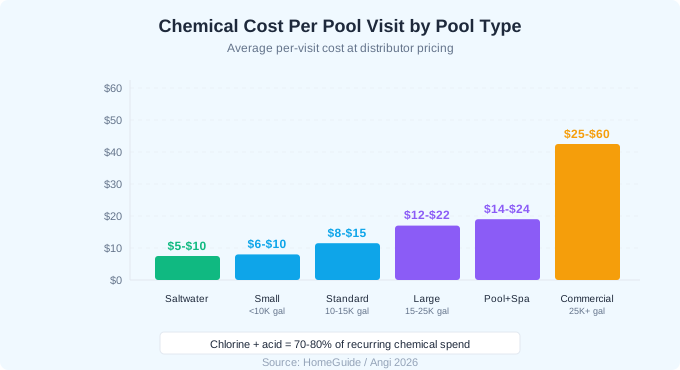
| Pool Type | Avg Cost/Visit | Annual Cost | Key Cost Driver |
|---|---|---|---|
| Small residential (under 10k gal) | $6-$10 | $310-$520 | Lower volume of all chemicals |
| Standard residential (10-15k gal) | $8-$15 | $415-$780 | Chlorine and acid are the primary costs |
| Large residential (15-25k gal) | $12-$22 | $625-$1,145 | Higher chlorine demand, more acid |
| Pool with spa combo | $14-$24 | $730-$1,250 | Spa requires separate chemical balance |
| Saltwater pool | $5-$10 | $260-$520 | Cell produces chlorine; acid and CYA remain |
| Commercial (25k+ gal) | $25-$60 | $1,300-$3,120 | Volume and bather load drive everything |
Saltwater pools are not "chemical-free." They still need muriatic acid, stabilizer, and occasional calcium adjustments. The per-visit cost is lower because the salt cell generates chlorine, but the cell itself costs $400 to $800 to replace every 3 to 5 years.
What Does Each Chemical Actually Cost?
Knowing your per-chemical cost at wholesale or distributor pricing is the foundation of accurate per-pool math. Retail pricing from big box stores runs 30 to 50% higher than what you should be paying as a service company buying in bulk. If you are still buying individual jugs of chlorine at retail, you are overpaying.
| Chemical | Unit | Retail Price | Distributor Price | Typical Usage/Visit |
|---|---|---|---|---|
| Liquid chlorine (12.5%) | Gallon | $5.50-$7.00 | $3.00-$4.50 | 0.5-1.5 gal |
| Muriatic acid | Gallon | $8-$12 | $5-$8 | 8-16 oz |
| Stabilizer (CYA) | Pound | $4-$6 | $2.50-$4 | Seasonal, 1-2 lbs |
| Cal-hypo (shock) | Pound | $4-$6 | $2.50-$4 | As needed |
| Soda ash (pH up) | Pound | $2-$4 | $1-$2 | Occasional, 0.5-1 lb |
| Calcium chloride | Pound | $1.50-$3 | $0.80-$1.50 | Seasonal, 2-5 lbs |
| DE powder | 25 lb bag | $25-$35 | $18-$25 | Filter cleans only |
| Algaecide | Quart | $12-$20 | $7-$12 | Monthly or as needed |
Liquid chlorine and muriatic acid make up 70 to 80% of your recurring chemical spend. Everything else is seasonal or situational. If you want to control chemical costs, start with your chlorine purchasing. Buying in bulk (drums or totes) from a local chemical distributor can cut your per-gallon cost by 30 to 40% compared to jugs from a pool supply store.
What Factors Drive Chemical Cost Variation Between Pools?
Two pools on the same street with the same size can have wildly different chemical demands. Understanding the cost drivers helps you price each account accurately rather than using a flat average that overcharges easy pools and undercharges difficult ones.
Pool Size and Volume
A 20,000 gallon pool needs roughly twice the chemicals of a 10,000 gallon pool. This seems obvious but many operators charge the same service rate for both. If your flat rate includes chemicals, you are subsidizing large pools with margin from small ones.
Sun Exposure and Stabilizer Levels
Pools with full sun exposure burn through chlorine faster. A pool with adequate cyanuric acid (30-50 ppm) and partial shade might need 0.5 gallons of chlorine per visit. The same pool with no shade and low stabilizer can demand 1.5 gallons or more. That is a $3 to $5 cost difference on chlorine alone.
Bather Load and Usage
Pools used daily by a family of five eat significantly more chlorine than a retiree couple pool that is mostly decorative. Commercial pools with heavy bather loads can consume three to five times the chemicals of a comparable residential pool.
Source Water Chemistry
Your local tap water sets a baseline for chemical adjustments. Hard water areas require more acid to control pH and scale. Soft water areas need calcium additions. Well water can introduce metals that demand sequestrant treatments. Know your local water profile.
Tree Cover and Debris Load
Pools surrounded by trees accumulate organic debris that consumes chlorine. Heavy debris pools can require 30 to 50% more chlorine per visit just to overcome the oxidant demand from leaves, pollen, and dirt.
How Do You Calculate Your Actual Chemical Cost Per Pool?
Stop guessing and start measuring. Here is a straightforward framework for calculating your real chemical cost per pool. You need 60 to 90 days of data to get a reliable average.
- 1Track every chemical used at every stop. Have your techs log the type and quantity of each chemical applied. Most field service apps let you build product catalogs with per-unit costs.
- 2Record your purchase costs, not retail prices. Use what you actually pay your distributor, including delivery fees and any volume discounts.
- 3Run a per-pool report monthly. Total chemical cost for each pool divided by number of visits equals your average cost per visit for that pool.
- 4Group pools into tiers. You will see natural clusters: low-cost pools ($5-$8/visit), average pools ($8-$15/visit), and high-cost pools ($15-$25+/visit).
- 5Price accordingly. High-cost pools should either pay a higher service rate or be on an overage billing model that charges for chemicals above a standard allowance.
If you cannot tell a customer exactly how much chemical went into their pool last month, you are guessing at pricing. Track it, and the data will tell you which pools are profitable and which are dragging your margins down.
How Have Chlorine Prices Changed Since 2020?
Chlorine prices spiked dramatically after the 2020 BioLab fire in Louisiana destroyed a major manufacturing facility, and they have not fully returned to pre-pandemic levels. Understanding this trend matters because chlorine is your largest recurring chemical expense.
| Year | Liquid Chlorine (per gal, distributor) | Tablets (per lb) |
|---|---|---|
| 2019 | $2.50-$3.50 | $2.00-$3.00 |
| 2021 (peak) | $5.00-$7.00 | $5.00-$6.50 |
| 2023 | $4.00-$5.50 | $3.50-$5.00 |
| 2025-2026 | $3.00-$4.50 | $3.00-$4.50 |
Prices have come down from the 2021 peak but remain 20 to 40% above 2019 levels. If you set your service rates during the pre-pandemic period and never adjusted for chemical cost increases, you have been losing margin for five years. A pool that cost you $6 per visit in chemicals in 2019 now costs $8 to $10.
20-40%
higher than pre-pandemic levels is where liquid chlorine prices sit in 2026
Source: Pool Magazine / ChemAnalyst
What Is the Best Way to Bill for Chemicals?
There are four approaches to chemical billing, and each fits different account types. The method you choose directly affects your margin protection and customer satisfaction.
All Included in Service Rate
Simple for the customer, but you absorb all chemical cost fluctuations. Best for standard residential pools where usage is predictable. Build your rate assuming the average cost plus a 15 to 20% buffer.
Chemicals Billed Separately
Every chemical is a separate line item on the invoice. Common for commercial accounts and HOAs that need documentation. Fully protects your margins but creates more invoicing complexity.
Overage Billing (Recommended for Most)
Include a standard chemical allowance per visit and only charge for usage above that threshold. This is the sweet spot: customers get predictable costs for normal visits, and you are covered when a pool needs extra treatment. Set the allowance at your median usage, not your average.
Chemical Markup
Buy at distributor pricing, charge at a 30 to 50% markup. This turns chemicals into a profit center rather than a cost center. Works best when combined with transparent per-visit chemical reporting so customers see exactly what went into their pool.
Free starter kit
Start a pool service business with the numbers already run.
A short email series from an owner who started with $1,200 and a used truck. No software pitch, just the four things that decide whether year one works.
- Startup cost breakdownEvery line item from $2K bootstrap to fully equipped
- Pricing calculatorThe minimum you can charge per visit and still profit
- First-10-customers playbookDoor hangers, referrals, and the phone script that closes
- Licensing & insurance checklistWhat your state requires and which insurers pay claims
Already running routes? Try Pool Founder free
Frequently Asked Questions
How much do pool chemicals cost per month for a service company?
For a service company running 100 residential pools weekly, average monthly chemical spend is $3,200 to $6,000, depending on pool sizes and local conditions. That works out to $8 to $15 per pool per visit for standard residential pools. Buying from a distributor rather than retail can cut costs by 30 to 40%.
What is the biggest chemical expense for pool service companies?
Liquid chlorine is the largest recurring chemical expense, accounting for 50 to 60% of total chemical costs. Muriatic acid is second at 15 to 20%. Together, these two chemicals make up 70 to 80% of your per-visit chemical spend.
Are saltwater pools cheaper to maintain for service companies?
Yes, per-visit chemical costs for saltwater pools are typically $5 to $10 compared to $8 to $15 for standard chlorine pools, because the salt cell produces chlorine. However, cell replacement every 3 to 5 years ($400 to $800) and occasional acid washing of the cell add to the total cost of service.
How do I reduce chemical costs per pool?
Buy from a chemical distributor in bulk rather than retail, keep stabilizer (CYA) levels at 30 to 50 ppm to reduce chlorine burn-off, service pools on a consistent weekly schedule to prevent costly recoveries, and track usage per pool to identify and reprice accounts that consistently run high.
Should I charge extra for pools that need more chemicals?
Yes. Pools that consistently use chemicals above your standard allowance should be priced higher or billed using an overage model. A pool that costs you $18 per visit in chemicals but is priced at your standard rate is losing you money every week. Track chemical usage per pool and adjust pricing quarterly.
How much has the price of pool chemicals increased since 2020?
Liquid chlorine prices rose over 60% from 2020 to the 2021 peak and remain 20 to 40% above pre-pandemic levels in 2026. A gallon of 12.5% liquid chlorine that cost $2.50 to $3.50 in 2019 now costs $3.00 to $4.50 at distributor pricing. If you have not raised your rates since 2020, you are losing margin.