Is Social Media Worth the Time for Pool Service Companies?
Social media can generate pool service customers, but most pool companies waste hours on platforms and content types that produce zero leads. The reality is that some social channels work well for local service businesses and others are nearly useless. Facebook and Nextdoor generate actual leads because they are where homeowners discuss and recommend local services. Instagram builds brand awareness but rarely converts directly. TikTok and X (Twitter) are almost never worth the time for a local pool company.
This guide cuts through the noise and focuses on what actually generates customers. Which platforms to prioritize, what content types produce inquiries, how much time is worth investing, and what to skip entirely. Your time is better spent servicing pools than creating content that nobody sees.
Which Social Media Platforms Work for Pool Service?
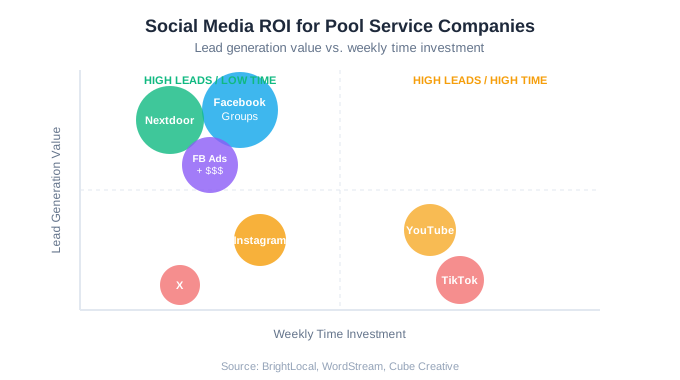
Not every social platform is worth your time. Pool service is a local, trust-based business. The platforms that work are the ones where local homeowners gather, discuss home maintenance, and ask for recommendations. Here is how each platform stacks up for pool service lead generation.
| Platform | Lead Generation Value | Time Investment | Recommendation |
|---|---|---|---|
| Facebook (organic + groups) | High | 2-3 hrs/week | Essential. Join local groups, respond to requests. |
| Nextdoor | High | 1-2 hrs/week | Essential. 77% of users are homeowners. |
| Facebook Ads | Medium-High | 1-2 hrs/week + ad budget | Good for spring campaigns and new markets. |
| Low-Medium | 2-3 hrs/week | Nice for brand building. Rarely generates direct leads. | |
| YouTube | Low-Medium | 3-5 hrs/week | Only worth it if you enjoy creating video content. |
| TikTok | Very Low | 3-5 hrs/week | Skip. Audience is too young and not local enough. |
| X (Twitter) | Very Low | 1-2 hrs/week | Skip entirely for local pool service. |
| Niche | 1 hr/week | Only useful for commercial pool contracts. |
If you only have 3 hours per week for social media, spend it all on Facebook groups and Nextdoor. Those two platforms generate more pool service leads than every other platform combined for most local operators.
How Should Pool Companies Use Facebook for Leads?
Facebook works for pool service companies primarily through local community groups, not through your business page posts. Your business page is a credibility checkpoint that customers visit after hearing about you. Local Facebook groups are where homeowners actively ask "who does good pool service in [city]?" and that is where you generate actual leads.
Facebook Strategy for Pool Service
- 1Join every local community group, neighborhood group, and homeowner group in your service area
- 2Monitor these groups daily for pool-related questions and service requests
- 3When someone asks for a pool service recommendation, respond with a helpful answer (not just "Call me!")
- 4Share genuinely useful tips in groups: seasonal reminders, chemistry basics, equipment advice
- 5Post on your business page 2-3 times per week: before/after photos, customer reviews, seasonal tips
- 6Respond to every comment and message within a few hours
The approach that works in Facebook groups is being helpful first and promotional second. Answer pool chemistry questions. Give free advice. When people see you helping others consistently, they trust you and hire you. The pool company that responds with "I can help with that" to a green pool photo gets the call.
What Content Types Generate the Most Inquiries?
Not all social media content is created equal for lead generation. Some content types consistently generate inquiries and new customers. Others get likes but produce nothing. Pool service companies should focus on content that demonstrates their work quality, builds trust, and creates an obvious reason for someone to reach out.
| Content Type | Lead Generation | Engagement | Effort |
|---|---|---|---|
| Before/after pool photos | High | High | Low (take phone photos on the job) |
| Customer testimonial screenshots | High | Medium | Low (screenshot Google reviews) |
| Green pool recovery timelapse | Medium-High | Very High | Medium (requires multiple photos) |
| Seasonal tip posts | Medium | Medium | Low (write a quick paragraph) |
| Behind-the-scenes day-in-life | Low-Medium | High | Medium |
| Memes and humor | Very Low | High | Low |
| Generic motivational quotes | None | Low | Low |
| Company news/announcements | None | Very Low | Low |
Before/after photos are the single best content type for pool service social media. They take 30 seconds to capture (one photo before you start, one after), they show tangible results, and they give potential customers visual proof of what you do. Post one per week minimum.
Always get customer permission before posting photos of their pool or property on social media. A quick text asking "Mind if I share this before/after on our Facebook page?" takes 10 seconds and avoids problems.
How Much Time Should You Spend on Social Media?
Most pool service owners either spend zero time on social media or way too much time trying to be influencers. The right amount is somewhere in between. For a solo operator or small pool company, 3-5 hours per week is the sweet spot. That is enough to maintain a consistent presence, respond to leads, and post useful content without taking time away from servicing pools.
Weekly Social Media Time Allocation
| Activity | Time | Frequency |
|---|---|---|
| Monitor and respond in Facebook groups | 30 min | Daily (5 min/day) |
| Check and respond on Nextdoor | 15 min | Daily (3 min/day) |
| Post before/after photo on Facebook/Instagram | 15 min | 2-3x per week |
| Respond to comments and messages | 15 min | Daily as needed |
| Post seasonal tip or advice | 15 min | 1x per week |
| Review and share a customer testimonial | 10 min | 1x per week |
That adds up to about 3-4 hours per week, mostly in small increments you can handle between service stops. The monitoring and responding piece (Facebook groups and Nextdoor) is the highest-value activity. If you only have 30 minutes a day, spend it all there.
Should Pool Companies Run Paid Social Media Ads?
Facebook Ads can work for pool service companies, but they work differently than Google Ads. Google Ads capture people already searching for pool service (high intent). Facebook Ads put your offer in front of homeowners who are not actively searching but might be interested (lower intent). That means Facebook Ads typically have a higher cost per lead ($30-$60) and lower conversion rate than Google Ads for pool service.
When Do Facebook Ads Make Sense?
- Spring opening season: Target homeowners with pools in your service area with a timely offer
- New market entry: When nobody knows your name yet, paid awareness helps
- Referral amplification: Boost posts about your referral program to reach friends of existing customers
- Retargeting: Show ads to people who visited your website but did not call (requires Facebook Pixel)
- Off-season promotions: Equipment upgrades, holiday gift certificates, annual plan signups
Budget $200-$400/month for Facebook Ads if you are going to test them. Run campaigns for at least 30 days before evaluating. Target homeowners within your service area with interest targeting (pool, home improvement, outdoor living). Use before/after photos as your ad creative, not stock images.
Facebook ad costs are rising. The average CPL surged 21% year-over-year to $27.66 in 2025. If your budget is limited, Google Ads and organic social media (Facebook groups, Nextdoor) typically deliver better ROI for pool service companies.
What Social Media Mistakes Should Pool Companies Avoid?
The biggest social media mistake for pool companies is not being inactive. It is being active on the wrong things. Hours spent creating TikTok videos that get views from teenagers across the country will not put a single pool on your route. Here are the most common mistakes and what to do instead.
| Mistake | Why It Fails | Do This Instead |
|---|---|---|
| Posting only promotions | People scroll past ads in their social feed | Mix 80% helpful/interesting content with 20% promotional |
| Ignoring messages and comments | Unanswered inquiries go to competitors | Respond within 2-4 hours during business hours |
| Posting inconsistently | Sporadic posting kills algorithm reach | 2-3 posts per week, same days each week |
| Using stock photos | Feels inauthentic, does not build trust | Use real photos from real jobs (phone photos are fine) |
| Trying to be on every platform | Spreads effort too thin, none done well | Master Facebook + Nextdoor first |
| Arguing with commenters | Makes you look unprofessional | Respond professionally or ignore trolls |
| Spending money before organic effort | Paying for reach you could get free | Exhaust free options first (groups, Nextdoor, reviews) |
How Do You Measure Whether Social Media Is Working?
Likes, followers, and reach are vanity metrics. They feel good but do not pay bills. The only metrics that matter for a pool service company are leads generated (calls, messages, form fills that came from social media) and customers acquired. Track these two numbers monthly and compare them against the time and money you invested.
Simple Tracking Method
- Ask every new lead: "How did you hear about us?" and track the answers
- Monitor Facebook and Nextdoor messages weekly and count inquiries
- Use a unique phone number or tracking link in your social media profiles
- Track which leads from social media actually convert to paying customers
- Calculate your cost per customer: (time spent x your hourly value + any ad spend) / customers acquired
If you are spending 4 hours per week on social media and generating 2 new customers per month, and your time is worth $50/hour, your cost per customer from social media is about $400. Compare that to your Google Ads cost per customer or your referral program cost per customer to decide if the time investment is justified.
Ready to streamline your pool service business?
Pool Founder gives you route optimization, automated invoicing, chemical tracking, and everything else you need to run a more profitable pool business.
Frequently Asked Questions
What is the best social media platform for pool service companies?
Facebook (specifically local community groups) and Nextdoor generate the most pool service leads. Nextdoor has 77% homeowner users who actively discuss and recommend local services. Focus your time on these two platforms before anything else.
How often should a pool company post on social media?
Post 2-3 times per week on Facebook and Instagram, and engage daily in local Facebook groups and on Nextdoor. Consistency matters more than frequency. Posting twice a week every week outperforms posting daily for a month and then going silent.
Do Facebook Ads work for pool service companies?
Facebook Ads can work, particularly for spring campaigns and new market entry, with an average cost per lead of $30-$60. However, Google Ads typically deliver better ROI for pool service because they capture high-intent searchers. Budget $200-$400/month minimum to test Facebook Ads effectively.
What type of content gets pool service customers?
Before/after pool photos are the highest-performing content type. They take 30 seconds to capture, show tangible results, and give potential customers visual proof. Customer testimonial screenshots and green pool recovery timelines also generate inquiries.
How much time should a pool company spend on social media?
Spend 3-5 hours per week total, mostly in small daily increments. The highest-value activity is monitoring and responding in Facebook groups and Nextdoor (30 minutes/day). Content creation (photos, tips) takes another 1-2 hours per week. Anything beyond 5 hours/week has diminishing returns.
Should pool companies use TikTok or YouTube?
TikTok is not worth the time for most local pool service companies. The audience skews young, and the platform does not drive local service inquiries. YouTube can work if you enjoy creating video content, but it requires 3-5 hours per week and takes months to build an audience. Focus on Facebook and Nextdoor first.