Why Do Pool Companies Need a 12-Month Marketing Calendar?
Most pool service companies market reactively. They run ads when the phone stops ringing, send emails when they remember, and panic in January when the schedule looks thin. A 12-month marketing calendar fixes that by aligning your marketing activities with the natural buying cycle of pool owners. Spring campaigns capture opening demand. Summer referral programs leverage happy customers. Fall retention prevents winter cancellations. Winter pre-season sales lock in revenue before the rush.
This calendar is built for pool service companies spending $200-$1,000/month on marketing. It prioritizes free and low-cost channels (Google Business Profile, reviews, email, referrals) while timing paid advertising around periods with the highest conversion rates. Every month has specific actions, not just general advice.
This calendar assumes a seasonal market (April-October pool season). Year-round markets like Florida and Arizona should shift the spring/fall activities forward by 4-6 weeks and maintain summer marketing intensity through October.
What Should You Do in January and February?
January and February are planning and pre-season sales months. While your competitors are dormant, you should be locking in spring opening commitments and building the marketing foundation for the year. Pool owners start thinking about their pools in February, and the companies that reach them first capture the bookings.
January Action Items
- Audit your Google Business Profile: update hours, services, photos, and service area
- Send an email to all past customers with an early-bird spring opening offer (10% off for booking before March 1)
- Update your website with current pricing, service descriptions, and seasonal content
- Set your annual marketing budget (recommend 5-8% of revenue for service companies)
- Order new business cards, door hangers, and vehicle magnets if needed
February Action Items
- Launch early-bird opening campaign via email, text, and social media
- Post on Google Business Profile: "Now booking spring pool openings"
- Start a small Google Ads campaign targeting "pool opening near me" and "pool service [city]"
- Reach out to last year's one-time customers who did not convert to recurring service
- Connect with real estate agents about pool inspection partnerships for spring home sales
10-15%
higher close rate on spring opening bookings made before March versus April rush
What Marketing Drives the Most Revenue in March and April?
March and April are the highest-impact marketing months for seasonal pool companies. This is when homeowners actively search for pool service, and the companies visible in Google search, Google Maps, and local ads capture the majority of new annual customers. Allocate 25-30% of your annual marketing budget to these two months.
March Action Items
- Increase Google Ads budget by 50-100% (this is when search volume spikes)
- Post weekly on Google Business Profile with spring tips and before/after photos
- Send a "Spring is coming" email with pool opening checklist and booking link
- Distribute door hangers in target neighborhoods (focus on areas with high pool density)
- Ask your top 10 customers for Google reviews (aim for 2-3 new reviews this month)
April Action Items
- Peak Google Ads spend. Target "pool opening," "pool cleaning service," "weekly pool service"
- Launch a Facebook/Instagram ad campaign with before/after spring opening photos
- Respond to every Nextdoor post asking for pool service recommendations
- Offer a "refer a neighbor" bonus ($25-$50 credit) to existing customers
- Post on social media 3x/week with opening photos, tips, and customer testimonials
Pools & Spas has the lowest cost per lead of any home services category on Google Ads at $45.15 according to LocaliQ 2025 benchmarks. Spring is when conversion rates are highest because search intent is strongest.
How Should You Market During the Summer Peak (May-July)?
May through July is when your service capacity is at its fullest and your customers are most engaged with their pools. Marketing during summer shifts from new customer acquisition to upselling existing customers, generating referrals, and building the review portfolio that will fuel next year's growth. You should still acquire new customers, but the emphasis changes.
May-July Action Items
- Launch your formal referral program: $25-$50 credit for each new customer referred
- Ask every satisfied customer for a Google review (target 2-4 new reviews per month)
- Email monthly with a seasonal tip and upsell offer (filter clean, acid wash, equipment check)
- Reduce Google Ads budget to maintenance level (you should be near capacity)
- Post weekly on social media: completed jobs, chemistry tips, happy customer photos
- Upsell summer add-ons: green pool recovery, equipment upgrades, salt system conversions
- Send a July 4th email with a special offer for referring friends hosting pool parties
Summer is when referral programs produce the most results. Your customers are using their pools, hosting guests, and receiving compliments on how good the water looks. That is exactly when they are most willing to recommend you. Make it easy: text them a referral link or hand them referral cards at the service visit.
What Marketing Prevents Customer Loss in August and September?
August and September are transition months. School starts, pool usage drops, and customers begin questioning whether they still need weekly service. This is when retention marketing matters most. A customer who cancels in September is much harder to win back in April than one you keep through the winter with a reduced service plan.
August-September Action Items
- Email all customers about fall closing packages and winterization scheduling
- Offer an "annual service plan" that includes fall closing, winter checks, and spring opening at a bundled discount
- Push end-of-season equipment deals (manufacturers clear inventory in fall)
- Send a "thank you" email acknowledging the season and previewing fall/winter services
- Run a "Last call for summer" referral push before the season winds down
- Post on social media about fall pool care tips and closing reminders
The single most valuable marketing action in September is a personal phone call or text to your top 20% of customers. Ask how their summer was, confirm their closing date, and mention your annual service plan. Personal outreach retains customers at 3-5x the rate of email alone.
How Do You Stay Visible During October Through December?
October through December is when most pool companies go dark on marketing, and that is exactly why you should not. Maintaining visibility during the off-season builds brand awareness that pays off in spring. The companies customers remember in March are the ones they saw in November and January, not the ones that disappeared after closing season.
October Action Items
- Complete all fall closing services and send post-closing emails with winter care reminders
- Ask every closing customer for a Google review (they just had a positive interaction)
- Promote safety cover sales and installation for November delivery
- Send a "Closing complete" email confirming what was done and when spring opening is recommended
November-December Action Items
- Post on Google Business Profile biweekly (keeps your profile active in Google's algorithm)
- Send a holiday email thanking customers for their business this year
- Offer gift certificates for pool service as holiday gifts (new customer acquisition)
- Plan your full marketing calendar and budget for the coming year
- Update your website with fresh content (blog post, updated photos, new testimonials)
- Review your Google Ads performance data from the year and plan spring campaign improvements
What Is the Best Monthly Marketing Budget Breakdown?
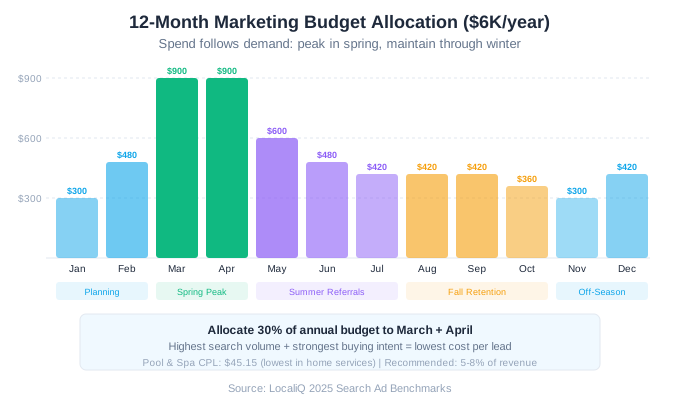
For a pool service company spending $500/month on average ($6,000/year), the budget should follow demand curves. Spend more when search volume and buying intent peak (March-April) and less when demand drops (November-January). Here is a monthly allocation that maximizes return.
| Month | Budget Allocation | Spend Amount ($6K/yr) | Primary Focus |
|---|---|---|---|
| January | 5% | $300 | GBP audit, email campaign setup |
| February | 8% | $480 | Early-bird email, light Google Ads |
| March | 15% | $900 | Google Ads ramp, door hangers, social ads |
| April | 15% | $900 | Peak Google Ads, Facebook ads, Nextdoor |
| May | 10% | $600 | Referral program launch, review generation |
| June | 8% | $480 | Referral incentives, social media content |
| July | 7% | $420 | Referral push, upsell emails |
| August | 7% | $420 | Retention emails, annual plan promotion |
| September | 7% | $420 | Closing bookings, personal outreach |
| October | 6% | $360 | Review generation, cover sales |
| November | 5% | $300 | Holiday promotion, gift certificates |
| December | 7% | $420 | Year planning, early-bird teasers |
These amounts assume a company doing $150,000-$250,000 in annual revenue. The 5-8% of revenue guideline scales up or down with your business size. A $500,000 company should spend $25,000-$40,000/year on marketing, with the same seasonal distribution pattern.
Which Marketing Channels Should You Use Each Season?
Not every marketing channel works the same in every season. Google Ads converts best in spring when search intent is highest. Referral programs perform best in summer when customers are actively using and showing off their pools. Email marketing is most important in fall for retention and winter for pre-season sales.
| Channel | Best Season | Cost | Expected Return |
|---|---|---|---|
| Google Ads | Spring (Mar-Apr) | $300-$500/mo | $45 cost per lead (Pools & Spas avg) |
| Google Business Profile | Year-round | Free | 4x more website visits when fully optimized |
| Referral program | Summer (May-Jul) | $25-$50 per referral | 3-5x higher conversion than other channels |
| Email marketing | Fall/Winter | $20-$50/mo | $36 return per $1 spent (industry avg) |
| Facebook/Instagram | Spring/Summer | $200-$400/mo | $30-$60 cost per lead |
| Door hangers/flyers | Spring (Mar-Apr) | $50-$100/mo | 2-5% response rate |
| Nextdoor | Spring/Summer | Free-$100/mo | High trust, 44% close rate on referrals |
| Google reviews | Year-round | Free (time only) | 97% of consumers read reviews before hiring |
The highest-ROI marketing combination for pool service companies under $500/month budget: optimized Google Business Profile (free), steady review generation (free), a simple referral program ($25-$50/referral), and seasonal email campaigns ($20-$50/month). Add Google Ads only when you have capacity to handle more leads.
Ready to streamline your pool service business?
Pool Founder gives you route optimization, automated invoicing, chemical tracking, and everything else you need to run a more profitable pool business.
Frequently Asked Questions
How much should a pool service company spend on marketing?
Industry standard for service companies is 5-8% of gross revenue. A pool company doing $200,000/year should budget $10,000-$16,000 annually for marketing, allocated heavily toward spring (March-April) when search volume and buying intent peak.
When should pool companies start advertising for spring?
Start in February with early-bird email campaigns to existing customers. Launch Google Ads in late February or early March targeting "pool opening near me" and "pool service [city]." Peak spend should be March and April, when homeowners are actively searching for service.
What is the best marketing channel for pool service companies?
Google Business Profile optimization combined with steady review generation offers the highest ROI at zero cost. After that, a referral program with $25-$50 incentives produces leads with 3-5x higher conversion rates than paid advertising. Google Ads is the best paid channel with a $45.15 average cost per lead for pool and spa companies.
Should pool companies market during the off-season?
Yes. Off-season marketing builds the brand awareness that drives spring bookings. Companies that maintain visibility with Google Business Profile posts, email campaigns, and social media through winter see stronger spring demand than those that go completely dark from November to March.
How do you prevent customers from canceling after summer?
Send retention emails in August about fall closing packages and annual service plans that include closing, winter checks, and spring opening at a bundled rate. Personal phone calls or texts to your top 20% of customers retain at 3-5x the rate of email alone. Make it easy and valuable to stay year-round.